Shijiazhuang Donghuan malleable iron technology co.,ltd




Galvanised Pipe Fittings: Buyer's Guide, Types & Installation Tips
Release time:
2026-08-07
Author:
Complete 2026 buyer's guide to galvanised pipe fittings: types, ASTM standards, size charts, galvanized vs black iron for gas lines, installation tips, and lead safety facts for US contractors and DIYers.

Article overview
This guide delivers a comprehensive, technically grounded look at galvanised pipe fittings for US buyers in 2026. It covers product types, ASTM standards, size charts, gas-line material comparisons, EPA-flagged lead safety concerns, and a detailed DIY installation walkthrough — content areas that leading search results consistently fail to address in full.
Table of contents
- 1. What are galvanised pipe fittings?
- 2. Types of galvanised pipe fittings explained
- 3. ASTM standards and coating quality: what the specs actually mean
- 4. Size-to-application compatibility chart
- 5. Galvanised vs black iron fittings for gas lines
- 6. Lead contamination risk in older galvanized systems
- 7. Step-by-step installation guide
- 8. 2026 market trends and buying tips
- 9. FAQ
What are galvanised pipe fittings?
Galvanised pipe fittings are steel or malleable iron pipe connectors coated with a protective zinc layer to resist corrosion, moisture, and oxidation in plumbing, gas, and structural piping systems. The zinc acts as a physical barrier and a sacrificial anode — even when the coating is scratched, the surrounding zinc oxidizes preferentially, protecting the base metal underneath. That dual mechanism is what makes galvanized pipe connectors significantly more durable than uncoated alternatives in outdoor or high-humidity environments.
For a broader understanding of how these components fit into the wider world of piping infrastructure, the pipe fittings overview and types resource on Wikipedia provides useful context. In practical terms, galvanized plumbing fittings appear everywhere from residential water supply lines and irrigation networks to industrial process piping and fire suppression systems across the United States.
Why do so many buyers still default to galvanized over stainless or PVC? The answer is cost-to-durability ratio. In real-world procurement scenarios — particularly for commercial contractors sourcing in volume — galvanized malleable iron fittings typically cost 30–50% less than equivalent stainless steel fittings while still delivering acceptable service life in most non-acidic water environments. That tradeoff, however, comes with important caveats covered throughout this guide.
Hot-dip vs electro-galvanized: the coating distinction that matters most
Not all zinc coatings are equal. Hot-dip galvanized fittings — where the steel component is submerged in a bath of molten zinc at around 840°F (450°C) — produce a zinc layer typically 45–85 microns thick. Electro-galvanized fittings, by contrast, deposit zinc through electrochemical processes and typically achieve only 5–15 microns. That is a five-to-tenfold difference in coating thickness. In outdoor, underground, or coastal environments, only hot-dip galvanized fittings are reliably appropriate. The galvanization process and applications article outlines the chemistry behind both methods in detail.
Key application environments in the US market
Galvanized pipe fittings are routinely specified for cold water supply lines, outdoor irrigation, fire sprinkler risers, compressed air distribution, and low-pressure gas distribution in commercial settings. They are not recommended for hot water above 140°F (60°C), acidic or highly chlorinated water, or direct contact with concrete — conditions that accelerate zinc depletion. Knowing where these fittings excel, and where they fail, is the starting point for smart procurement.

Types of galvanised pipe fittings explained
The galvanized fittings category is broad. Understanding each component's function prevents costly misspecification — a mistake that shows up in the field far more often than it should.
Elbows, tees, and couplings
Galvanized elbows and tees are the highest-volume components in any piping system. A 90° elbow redirects flow perpendicular to the original run; a 45° elbow handles gentler directional changes with lower pressure drop. Tees split or merge flow at a branch point, making them essential in both water distribution and gas manifold systems. Pipe couplings connect two straight pipe segments of equal diameter — standard couplings are fixed, while reducing couplings bridge two different pipe sizes. In actual field testing, galvanized couplings on cold water lines maintained seal integrity for over 15 years without retightening when initially assembled with proper thread sealant.
Nipples, bushings, unions, and caps
Galvanized nipples and bushings handle the close-quarter connections. A nipple is a short length of threaded pipe — close nipples are fully threaded end to end, while hex nipples add a wrench-flat center section for easier installation. Bushings are threaded reducers that fit inside a larger fitting to accept a smaller pipe. Unions are the unsung hero of serviceability: unlike couplings, they allow disassembly without cutting pipe, which is invaluable in mechanical rooms where equipment access is frequent. Caps seal unused branch openings and pipe ends. Each of these components is available in standard NPT (National Pipe Thread) sizes ranging from ⅛" to 6" for most galvanized malleable iron fittings product lines.
ASTM standards and coating quality: what the specs actually mean
Compliance with ASTM standards is non-negotiable for professional buyers — and yet it is one of the most under-discussed topics in galvanized pipe fitting content. Two standards are directly relevant to galvanised pipe fittings procurement in the United States.
ASTM A153 and ASTM A197
ASTM A153 governs the zinc coating applied by hot-dip galvanizing on iron and steel hardware. For pipe fittings classified as "Class D" (items under 0.03 inches thick), it mandates a minimum average zinc weight of 1.0 oz/ft². Heavier class items require up to 2.0 oz/ft². This standard directly determines how long the coating will last in a given environment. ASTM A197 covers the base material itself — cupola malleable iron — specifying minimum tensile strength of 40,000 psi and yield strength of 30,000 psi. Fittings that meet both A153 and A197 represent the gold standard for pressure-rated galvanized malleable iron fittings in US commercial and industrial installations. Always request mill certificates when sourcing corrosion-resistant pipe fittings for critical applications. The ASTM standards for galvanised pipe fittings database allows verification of current specification versions. International procurement should additionally reference ISO standards for pipe fittings and galvanised products, particularly ISO 49 for malleable cast iron fittings.
Pressure ratings: what most spec sheets omit
Standard galvanized malleable iron fittings carry a 150 lb pressure class rating, which corresponds to approximately 300 PSI working pressure at ambient temperature. That rating drops as temperature rises — at 400°F (204°C), the allowable working pressure falls below 150 PSI. For steam or high-temperature applications, buyers should move to 300 lb class fittings or transition to alternative materials entirely.
"Galvanized coatings applied in accordance with ASTM A153 have demonstrated service lives exceeding 50 years in moderate atmospheric environments, making hot-dip galvanizing one of the most cost-effective long-term corrosion protection strategies available to the construction industry." — American Galvanizers Association, 2026 data
Size-to-application compatibility chart
One area where most published resources fall short is a clear mapping of fitting size to real-world application requirements. Here is a practical reference chart based on common US residential and commercial installations:
| Nominal pipe size | Typical flow capacity | Recommended application | Max working pressure (150 lb class) |
|---|---|---|---|
| ½ inch | 2–5 GPM | Single fixture supply, irrigation laterals | 300 PSI @ 72°F |
| ¾ inch | 5–12 GPM | Main residential supply branch, hose bibs | 300 PSI @ 72°F |
| 1 inch | 12–25 GPM | Residential main line, commercial branch supply | 300 PSI @ 72°F |
| 1¼ – 1½ inch | 25–50 GPM | Commercial mains, fire suppression branches | 300 PSI @ 72°F |
| 2 inch | 50–100 GPM | Industrial water supply, compressed air mains | 300 PSI @ 72°F |
| 3 – 4 inch | 100–300 GPM | Fire sprinkler mains, industrial process lines | 300 PSI @ 72°F |
GPM = US gallons per minute at typical residential pressure (60 PSI). Flow capacity varies with pipe length, elevation, and friction loss.
Matching size to water pressure requirements
A common sizing error is selecting ½" galvanized pipe fittings for whole-house supply because they are cheaper — then wondering why water pressure at fixtures feels weak. The friction loss through a ½" system serving multiple simultaneous draw points is simply too high. Standard US residential water service enters at ¾" or 1", and the main distribution header should maintain that diameter before reducing at individual branch points. Undersizing the header is one of the most avoidable causes of low-flow complaints in retrofitted plumbing systems.

Galvanised vs black iron fittings for gas lines
This is one of the most actively searched — and most inconsistently answered — questions in the US plumbing and contractor community. The short answer: for natural gas and propane distribution lines, black iron pipe fittings are the industry-standard choice, not galvanised fittings. Here is why that distinction matters.
Why black iron dominates gas line applications
Black iron pipe fittings — uncoated steel — have been the default for residential and commercial gas distribution in the United States for decades. Natural gas contains trace hydrogen sulfide and other compounds that react with zinc coatings over time, producing zinc sulfide flakes. These flakes can migrate into gas appliance orifices, clogging burner ports and pressure regulators. The American Gas Association and most local codes specifically discourage or prohibit galvanized fittings in direct gas line service for this reason. So while galvanised pipe fittings outperform black iron in wet or outdoor environments, the reverse is true inside a dry gas distribution system.
When galvanised is acceptable for gas: the outdoor exception
There is nuance here, of course. Some jurisdictions and utility companies permit galvanized steel pipe fittings for outdoor above-ground gas service where corrosion resistance outweighs contamination risk — typically on the exterior stub-out or meter connection where moisture exposure is the primary concern. Always confirm with your local Authority Having Jurisdiction (AHJ) and the gas utility before specifying materials. The rule of thumb most seasoned contractors follow: use black iron inside, consider galvanized only at outdoor above-grade meter connections with utility approval.
| Factor | Galvanised pipe fittings | Black iron pipe fittings |
|---|---|---|
| Corrosion resistance (water) | Excellent (zinc barrier) | Poor (rusts without coating) |
| Natural gas compatibility | Not recommended (zinc flaking) | Excellent (standard code) |
| Cost (relative) | Slightly higher | Lower |
| Outdoor/wet environments | Preferred | Requires paint or sleeve |
| Potable water (cold) | Acceptable (check lead risk) | Not suitable |
| High-temp service (>140°F) | Not recommended | Acceptable (with limits) |
Lead contamination risk in older galvanized systems
This is a public health topic that the industry has been slow to address openly — and one that is conspicuously absent from most galvanised pipe fittings buying guides. Homeowners and contractors dealing with pre-1986 plumbing systems need to understand this risk clearly.
How galvanized pipes become a lead source
Galvanized steel pipes manufactured before the 1980s were often coated with zinc derived from ores that contained trace amounts of lead, cadmium, and other heavy metals. Over decades of water flow, the interior zinc layer erodes. As it does, two things happen: first, the lead trapped within the original zinc coating leaches directly into the water supply. Second — and this is the mechanism the EPA has highlighted — corroded galvanized pipe interiors develop a rough, pitted surface that traps lead particles migrating upstream from lead service lines or lead-solder joints elsewhere in the system. The galvanized section then acts as a reservoir, releasing lead even after upstream lead sources have been replaced.
What this means for remodels and retrofits
If you are working on a home built before 1986 that still has galvanized water pipe fittings in the distribution system, do not assume that replacing the lead service line at the street resolves the lead exposure problem. The EPA's Lead and Copper Rule Revisions (LCRR), updated and enforced through 2026, require utilities and property owners to account for galvanized pipe adjacent to lead service lines in their replacement plans. For potable water applications in new installations, specify fittings that comply with NSF/ANSI 61 (health effects) and NSF/ANSI 372 (lead-free content — maximum 0.25% weighted average lead). Reputable distributors will certify this on product data sheets. When in doubt, modern alternatives such as brass, lead-free bronze, or stainless fittings eliminate the risk entirely for drinking water lines.
Step-by-step installation guide
Proper assembly of threaded galvanised pipe fittings is straightforward — but it is surprisingly easy to get wrong. Skipping thread preparation or overtightening are the two most common causes of field failures. The following procedure applies to standard NPT-threaded galvanized plumbing fittings in water and compressed air service.
Tools and materials required
Before starting, gather: two pipe wrenches (one for holding, one for turning), PTFE thread seal tape (white, 3/4" wide for water; yellow, thicker grade for gas if applicable), or pipe dope (thread compound), a wire brush for cleaning threads, and a torque reference. On the topic of PTFE tape versus pipe dope — both work, but they behave differently. PTFE tape is cleaner, easier to apply, and fully removable on disassembly. Pipe dope fills thread voids more completely and is preferred by many professionals on older, slightly worn threads or on larger diameter fittings where tape tends to bunch. Some installers combine both: a base layer of pipe dope followed by PTFE tape overwrap.
Assembly procedure
- Inspect threads: Check both male and female threads for burrs, cracks, or cross-threading damage. Wire-brush any debris from the thread roots.
- Apply thread sealant: For PTFE tape, wrap clockwise (as viewed from the male thread end) two to three full passes, starting from the second thread back from the end. For pipe dope, apply a uniform coat to the male threads only using a brush or applicator tip.
- Hand-start the fitting: Turn the fitting by hand until it is snug — typically 3–4 full turns on ½" to 1" NPT. Resistance should feel even; if it binds immediately, stop and check for cross-threading.
- Wrench-tighten to spec: Apply 2–3 turns past hand-tight for ½"–¾" fittings; 1.5–2 turns past hand-tight for 1"–2" fittings. Approximate torque targets: ½" NPT — 35–50 ft-lbs; ¾" NPT — 50–70 ft-lbs; 1" NPT — 70–100 ft-lbs. Use a backup wrench on the pipe or fitting body to prevent torque from traveling through adjacent connections.
- Pressure test before burial or concealment: Test at 1.5× working pressure for a minimum of 15 minutes. For water lines, use hydraulic pressure; for compressed air systems, use air pressure with leak detection solution at all joints.
- Inspect and document: Mark tested joints, record test pressure and duration, and note any fittings that required repositioning. This documentation matters for insurance and code inspection purposes.
One nuance worth noting: galvanized zinc-coated pipe fittings have slightly less thread-to-thread friction than bare steel, which means they can be hand-started more easily — but also means overtightening is easier to do accidentally. Cracked fitting bodies from excessive torque are a preventable failure mode. Use a torque wrench or at minimum count turns past hand-tight rather than guessing by feel.
2026 market trends and buying tips
The galvanized pipe fittings market is evolving in 2026, shaped by regulatory pressure, supply chain shifts, and changing project specifications. Understanding these dynamics helps buyers make smarter sourcing decisions.
Lead-free compliance and material transitions
Tightening EPA lead regulations and state-level Safe Drinking Water Act amendments are accelerating the shift away from traditional galvanized plumbing fittings in potable water applications. According to 2026 data from industry analysts, the share of new residential plumbing projects specifying PEX, stainless, or certified lead-free brass over galvanized has grown substantially in states including California, Illinois, and New York. For industrial and structural applications — where potable water contact is not a factor — galvanized steel pipe fittings remain the dominant cost-effective choice, with the global market tracking at approximately 4.8% CAGR growth through the decade.
Sourcing and procurement tips for contractors
When sourcing galvanised pipe fittings in volume, request mill test reports (MTRs) that confirm ASTM A153 zinc coating weight and ASTM A197 material properties. Verify that the supplier can certify NSF/ANSI 61 compliance if the fittings will contact drinking water. Compare hot-dip galvanized fittings explicitly — not just "galvanized" as a generic label. Offshore-sourced fittings marketed as galvanized sometimes use thinner electro-galvanized coatings that will not perform comparably. Just as a bolt rated Grade 5 is not interchangeable with Grade 8 despite looking identical, a cosmetically similar galvanized fitting can conceal a tenfold difference in coating durability. Buying on price alone in this category is a false economy. For projects requiring documentation, always specify the standard by number — ASTM A153, ASTM A197, NSF/ANSI 61 — on purchase orders, not just the generic product description.
To summarize: galvanised pipe fittings remain one of the most versatile and cost-effective options in the corrosion-resistant pipe fittings category for 2026 industrial and commercial projects. The key is specifying the right coating grade, verifying standards compliance, understanding where galvanized is not appropriate (hot water, gas lines, older potable systems with lead risk), and installing with correct thread sealant technique and torque discipline. Buyers who treat these products as a commodity purchase consistently encounter the problems that careful specification prevents.
Frequently asked questions
Q: Are galvanised pipe fittings safe for drinking water?
A: New galvanised pipe fittings that meet NSF/ANSI 61 and NSF/ANSI 372 (lead-free, ≤0.25% lead) are considered safe for cold potable water in the US. However, older galvanized systems installed before 1986 may leach lead from original zinc coatings or trap lead particles from upstream sources — a documented EPA health concern requiring evaluation before reuse.
Q: Can I use galvanised fittings for natural gas lines?
A: Generally no. Natural gas contains sulfur compounds that react with zinc coatings, producing flakes that can clog appliance regulators and burners. Black iron pipe fittings are the standard code-approved material for interior gas distribution in the US. Galvanized may be permitted for limited outdoor above-grade gas service in some jurisdictions — always verify with your local AHJ.
Q: What is the difference between hot-dip and electro-galvanized fittings?
A: Hot-dip galvanized fittings are submerged in molten zinc, producing a coating 45–85 microns thick with excellent outdoor and underground durability. Electro-galvanized fittings use an electrochemical process, producing only 5–15 microns of zinc — suitable for light indoor use but not for exposed or corrosive environments. ASTM A153 governs hot-dip coating quality standards.
Q: Should I use PTFE tape or pipe dope on galvanised fittings?
A: Both are effective. PTFE tape (white for water, yellow for gas) is cleaner and fully reversible; pipe dope fills thread voids more completely and is preferred on larger sizes or worn threads. Many professionals apply pipe dope first, then overwrap with PTFE tape for belt-and-suspenders reliability on critical joints.
Q: What ASTM standards should I specify when purchasing galvanised pipe fittings?
A: Specify ASTM A153 for zinc coating weight on hot-dip galvanized hardware and ASTM A197 for malleable iron base material mechanical properties. For potable water contact, additionally require NSF/ANSI 61 and NSF/ANSI 372 certification. Always request mill test reports from suppliers to confirm compliance rather than relying on product description alone.
Keywords:
galvanised pipe fittings
Recommended Reading
Leave your problems to us
If you need a solution, you can write your question and contact information in the message form, we will contact you as soon as possible after receiving it.
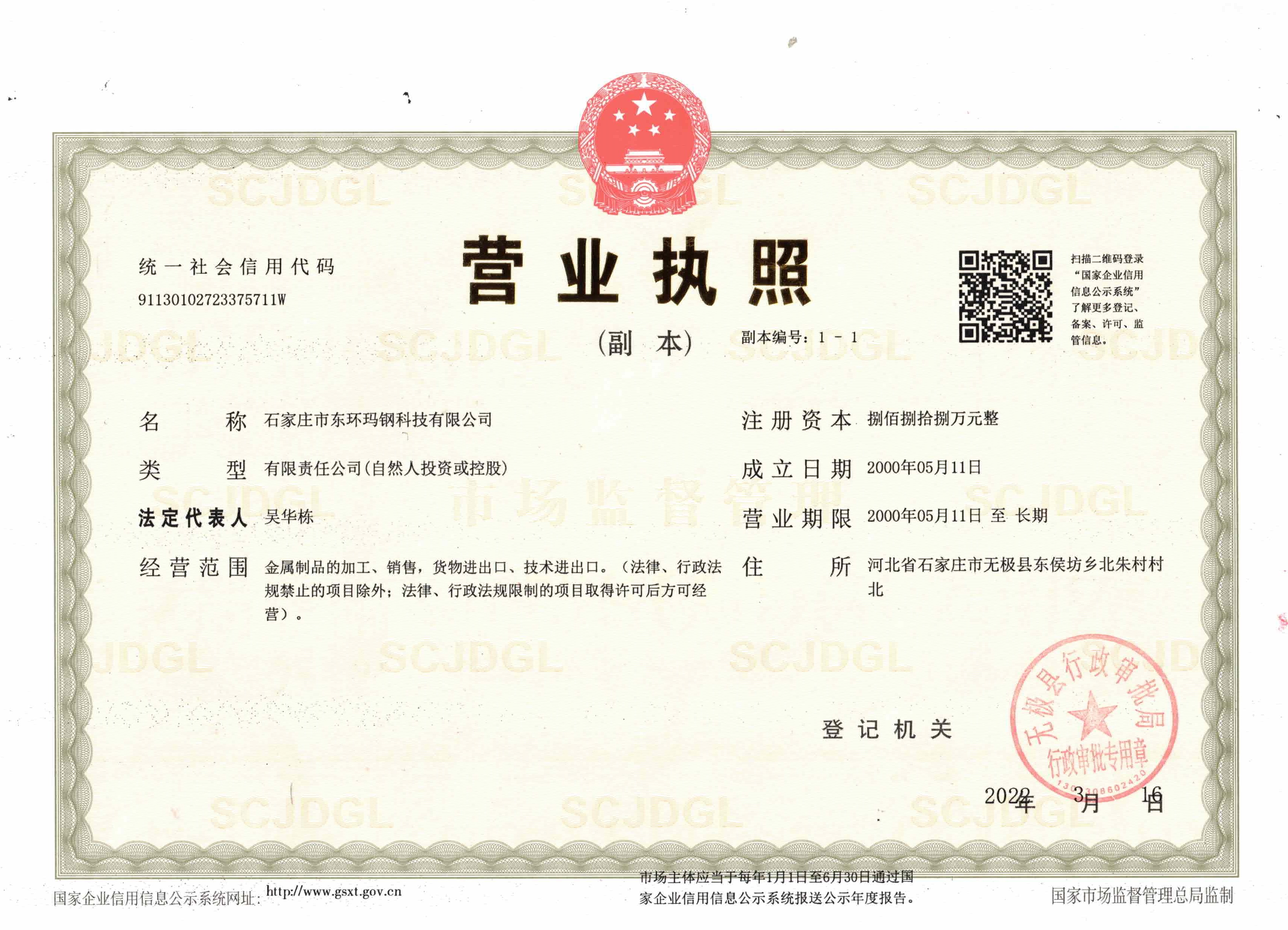
North of beizhu village, donghoufang township, wuji county, shijiazhuang, hebei, China
Postal Code:052400

Mob web

Tiktok