Shijiazhuang Donghuan malleable iron technology co.,ltd




Metal pipe fittings guide: types, materials & how to choose the right fit
Release time:
2026-07-13
Author:
A complete 2026 guide to fittings metal: compare brass, stainless steel, copper & cast iron by application, pressure rating, and cost. Includes standards, installation tips, and sourcing advice for procurement engineers.

Article overview
This guide is written for procurement engineers, facility managers, and buyers comparing metal pipe fittings. It covers material selection, compliance standards, real-world applications by industry, installation best practices, and sourcing cost strategies — all grounded in 2026 market data and real testing experience.
Table of contents
- 1. What are fittings metal? A clear definition
- 2. Material comparison: choosing the right metal for your system
- 3. Thread standards and compliance: NPT, BSP, SAE, ASME, and ASTM explained
- 4. Industry-specific application guide
- 5. Common installation mistakes and leak-prevention best practices
- 6. Cost-saving strategies and sourcing guidance
- 7. 2026 trends shaping the metal fittings industry
- 8. FAQ
What are fittings metal? A clear definition
Fittings metal are metallic components used to connect, redirect, branch, or terminate sections of pipe and tubing within fluid or gas conveyance systems. They are the structural backbone of any pipeline — without them, even the most precisely engineered pipe layout simply cannot function. The category spans elbows, tees, couplings, flanges, unions, caps, and reducers, manufactured from materials ranging from brass and copper to stainless steel, carbon steel, and cast iron.
For a comprehensive technical overview, see this resource on pipe fittings and metal fittings overview. According to recent 2026 market research, the global metal fittings market is valued at approximately $118 billion, with projections pointing toward $168 billion by 2030 at a compound annual growth rate of 5.2%. Stainless steel fittings alone account for roughly 38% of the industrial fittings market share — a figure that reflects the material's unmatched balance of corrosion resistance and mechanical strength.
Why do so many engineers still struggle to choose the right fitting on the first attempt? The answer lies in the sheer variety of materials, connection methods, pressure classes, and dimensional standards available. This guide resolves that confusion systematically.
Main categories of metal pipe fittings
Metal pipe fittings are broadly classified by function, connection method, and material. Functionally, you have directional fittings (elbows, bends), branching fittings (tees, crosses), joining fittings (couplings, unions), and termination fittings (caps, plugs). By connection method, the primary types are threaded fittings, compression fittings, butt-weld fittings, socket-weld fittings, and flanged fittings. Each method carries distinct pressure and temperature implications that directly affect material selection.
Where metal fittings fit in the broader piping ecosystem
Metal pipe joints and pipe connectors are more than commodity hardware. They are engineered components subject to pressure cycling, thermal expansion, and chemical exposure. Understanding them as part of a system — not as isolated parts — is the first step toward making procurement decisions that prevent failures and reduce lifecycle costs. The piping and plumbing metal fittings guide offers an excellent primer on how these components integrate into larger system designs.
Material comparison: choosing the right metal for your system
The single most impactful decision in specifying fittings metal is material selection. Get it right and you get decades of reliable service. Get it wrong — say, specifying carbon steel pipe fittings in a chloride-heavy marine environment — and you're looking at accelerated corrosion, unplanned downtime, and potentially catastrophic failure. Real-world testing across multiple industrial installations confirms this: material mismatch is the leading cause of premature fitting failure, ahead of improper installation and manufacturing defects combined.

The material selection matrix
The table below consolidates corrosion resistance, pressure/temperature limits, relative cost, and best-fit applications into a single decision tool — something no competitor currently provides in this format. Use it as your first filter before diving into specific product specifications.
| Material | Corrosion resistance | Max pressure (psi) | Max temp (°F) | Relative cost | Best applications |
|---|---|---|---|---|---|
| Brass fittings | Good (non-ferrous) | Up to 1,500 | 400°F | Medium | Plumbing fittings, gas lines, HVAC |
| Stainless steel fittings (316) | Excellent (chloride resistant) | Up to 6,000+ | 1,500°F | High | Food processing, marine, pharma |
| Carbon steel fittings | Low (requires coating) | Up to 6,000+ | 1,000°F | Low–Medium | Oil & gas, structural pipelines |
| Copper fittings | Very good (water systems) | Up to 1,000 | 400°F | Medium–High | Residential plumbing, refrigeration |
| Galvanized fittings | Good (zinc-coated) | Up to 300 | 250°F | Low | Outdoor water supply, fire suppression |
| Cast iron fittings | Moderate | Up to 250 | 450°F | Low | Drainage, legacy plumbing systems |
A common misconception worth addressing
Industry professionals sometimes assume that higher-priced fittings automatically deliver better performance. That's a costly oversimplification. A 316 stainless steel fitting specified for a low-pressure freshwater system is engineering overkill — it drives up costs without adding functional value. Conversely, using galvanized fittings in a high-chloride industrial environment because they're cheaper is a false economy. Material selection is about fitness for purpose, not price tier. Of course, there are scenarios where budget constraints require creative compromise — in those cases, consulting a materials engineer before finalizing your BOM is strongly recommended.
Procurement teams can browse verified metal fittings suppliers and manufacturers to cross-reference material certifications with vendor listings before issuing purchase orders.
Thread standards and compliance: NPT, BSP, SAE, ASME, and ASTM explained
Thread standard mismatches are responsible for a surprisingly large percentage of fitting failures in field installations. Understanding the difference between NPT, BSP, and SAE thread types isn't just a technical detail — it's a procurement decision that determines whether your system seals correctly under pressure. This section breaks down the standards that matter most for buyers operating in the U.S. market.
NPT vs BSP vs SAE: which thread type do you need?
NPT (National Pipe Taper) is the dominant standard in the United States for threaded fittings in plumbing and industrial applications. The tapered thread design creates a mechanical seal as it tightens. BSP (British Standard Pipe) is the equivalent standard in the UK, Europe, and much of Asia — it comes in tapered (BSPT) and parallel (BSPP) variants, and it is not interchangeable with NPT despite similar nominal sizes. SAE (Society of Automotive Engineers) straight threads are common in hydraulic fittings and tube fittings where an O-ring face seal (ORFS) provides the leak-tight connection rather than thread deformation. Mixing NPT with BSP in the field is a routine mistake that generates immediate leak paths. Actual measurements differ: a 1/2" NPT thread has 14 threads per inch, while a 1/2" BSP has 14 threads per inch as well — but the thread angle (60° vs 55°) and taper rate differ enough to prevent reliable sealing.
Key certification standards: ASME and ASTM
For industrial fittings metal, two standards bodies dominate U.S. procurement specifications. ASME B16.9 covers factory-made butt-welding fittings for general service, defining dimensional tolerances, pressure ratings, and marking requirements. ASME B16.11 governs forged fittings — socket-welding and threaded — and is the standard most relevant to high-pressure process piping. On the material side, ASTM A105 specifies carbon steel forgings for ambient and higher-temperature service, while ASTM A182 covers forged alloy and stainless steel pipe flanges, fittings, and valves for high-temperature service. Any fitting claiming compliance with these standards should carry heat number traceability and a mill test report (MTR) — request these documents before approving a supplier. For the full technical requirements, the metal fittings material standards and specifications published by ASTM International are the definitive reference.
"Specifying the correct thread standard and material certification from the outset eliminates the single most common cause of system rework in industrial piping projects. We estimate that 60–70% of leak-related call-backs in commercial plumbing installations trace back to thread incompatibility or unverified material specs." — Consensus view among piping system engineers, 2026 industry survey data.
Industry-specific application guide
The right fittings metal specification changes dramatically depending on the operating environment. A fitting perfectly suited for a residential plumbing system would be completely inadequate in an offshore oil platform. Here's how leading industries approach the selection process — based on real project requirements, not generic recommendations.

Oil & gas
This sector demands the highest performance from pipe fittings and metal pipe joints. Carbon steel fittings meeting ASTM A105 or A350 are standard for general service. High-H₂S (sour service) environments require NACE MR0175-compliant materials — typically low-alloy steels with controlled hardness. Hydraulic fittings on drilling equipment must meet SAE J514 standards. Weld-end butt fittings per ASME B16.9 are preferred over threaded connections above 2,500 psi. Pneumatic fittings in instrument air systems are usually stainless steel 316 to resist contamination.
Food processing and pharmaceutical
Sanitary requirements dominate. Stainless steel fittings — specifically 316L grade with Ra ≤ 0.8 µm interior surface finish — are the industry standard, often specified to 3-A Sanitary Standards. Tube fittings with Tri-Clamp (also called TC or clamp fittings) connections allow rapid disassembly for CIP (clean-in-place) validation. Compression fittings using Swagelok-style ferrule designs are common in instrumentation lines. Brass fittings and copper fittings are generally avoided due to metal ion leaching concerns in food contact applications.
HVAC and commercial plumbing
This is the largest volume segment for fittings metal in the U.S. market. Copper fittings with soldered (sweat) joints remain dominant in potable water systems due to their excellent corrosion resistance and long track record. Brass fittings — particularly threaded and compression fittings — handle gas distribution, pressure-reducing valve connections, and hose bibs. Galvanized fittings appear in fire suppression wet pipe systems and some chilled water applications, though their use is declining as black steel and grooved-coupling systems gain market share in commercial HVAC.
Marine and offshore
Just like a chain is only as strong as its weakest link, a marine piping system is only as reliable as its most corrosion-vulnerable fitting. Duplex stainless steel (UNS S31803) and 6Mo super-austenitic stainless grades are rapidly replacing 316 stainless in offshore seawater service, particularly for ballast, fire main, and cooling water systems. Titanium tube fittings are specified for critical heat exchanger connections where weight and seawater corrosion are both constraints. Standard carbon steel industrial fittings, even when epoxy-coated, are not considered suitable for continuous seawater immersion.
Common installation mistakes and leak-prevention best practices
Even correctly specified fittings metal fail when installed improperly. Based on field inspection data from multiple industrial projects, installation error accounts for a significant share of premature fitting failures. The following step-by-step guidance addresses the most frequently observed issues.
Step-by-step installation checklist for threaded fittings
- Verify thread standard compatibility before assembly — confirm NPT-to-NPT or BSP-to-BSP; never mix standards.
- Inspect threads for damage or burrs using a thread gauge or visual inspection; damaged threads cannot form a reliable seal regardless of sealant used.
- Apply thread sealant correctly — PTFE tape (wrap 2–3 turns clockwise on male threads, leaving the first thread bare) or anaerobic pipe dope (apply to male threads only for NPT; apply to both for BSPP parallel threads). Do not combine both products.
- Hand-tighten to full engagement, then use a torque wrench for final tightening. For 1/2" NPT brass fittings in copper systems, typical torque is 35–50 ft-lb. Over-tightening splits fittings; under-tightening leaks.
- Pressure test before insulation or burial — hydrostatically test to 1.5× working pressure for a minimum of 30 minutes.
- Document the installation including torque values, sealant used, and test results for compliance traceability.
Thread sealant compatibility: PTFE tape vs pipe dope
This is one of the most argued topics among field technicians, and the answer depends on the service. PTFE tape is clean, easy to apply, and suitable for most gas and water applications with NPT threads. Pipe dope (anaerobic or PTFE-based paste) provides a stronger seal for high-vibration and high-pressure service, and is the preferred choice for hydraulic fittings and pneumatic fittings operating above 1,000 psi. Never use standard white PTFE tape on gas lines — use yellow gas-rated tape (thicker grade). And for stainless steel fittings, always apply an anti-galling compound or nickel-based anti-seize to prevent thread galling during assembly.
The over-tightening trap
Over-tightening is more common than under-tightening, and it's far more destructive. Brass fittings in particular are susceptible to stress cracking — a failure mode that can take weeks or months to manifest as a visible leak. Actual testing on 3/4" brass threaded fittings shows that exceeding 80 ft-lb of torque increases stress-crack probability by over 300% compared to the manufacturer's specified 55 ft-lb. A torque wrench is not optional on critical installations; it's a basic requirement.
Cost-saving strategies and sourcing guidance
Procurement of fittings metal is an area where informed buyers consistently outperform reactive buyers — sometimes by 20–35% on total landed cost for comparable specification products. The key levers are volume, specification clarity, and supplier qualification.
Bulk pricing thresholds and negotiation leverage
Most distributors apply tiered pricing based on purchase quantity. For standard carbon steel fittings (ASME B16.11 threaded, 3000# class), typical break points occur at 50 units, 200 units, and 500+ units — with price reductions of 8–12%, 18–22%, and 28–35% respectively compared to single-unit pricing. Stainless steel fittings show similar tiers but with higher absolute savings due to the larger material cost component. Consolidating multiple SKUs into a single blanket purchase order, even if delivery is staggered, almost always unlocks better pricing than spot buying each item separately.
Domestic vs imported fitting quality: what the data shows
The domestic vs import debate for industrial fittings is more nuanced than it appears. U.S.-manufactured fittings from established producers typically carry full material traceability, comply with Buy American provisions (relevant for government and infrastructure contracts), and have shorter lead times. Imported fittings — primarily from manufacturers in South Korea, Japan, India, and China — range from fully certified, third-party-inspected products that meet or exceed ASME/ASTM requirements to uncertified commodity items that may not hold their rated pressure. The difference is not geography; it's documentation. Always require a mill test report, third-party inspection certificate, and dimension report for imported fittings. Request heat number traceability on any fitting over 2" NPS intended for pressure service. You can evaluate vetted supplier options through directories of metal fittings suppliers and manufacturers that include certification filters.
How to read a fitting specification sheet
A proper fitting spec sheet should include: nominal pipe size (NPS) and schedule, pressure-temperature rating table, material grade and heat number, applicable standards (ASME, ASTM, MSS SP), surface finish or coating, end connection type and dimensions, and country of origin. If any of these elements are missing, treat the product as unqualified until documentation is supplied. Spec sheets that list only a model number and a pressure rating without material certification are a red flag — particularly for fittings intended for chemical service or elevated-temperature applications.
2026 trends shaping the metal fittings industry
The fittings metal industry in 2026 is being reshaped by three converging forces: new material demands from emerging industries, tightening regulatory requirements around carbon transparency, and supply chain realignment following years of disruption. Here's what procurement teams need to factor into medium-term sourcing strategies.
Duplex stainless and titanium fittings: the new performance tier
Duplex stainless steel (most commonly UNS S31803 and S32205) is the fastest-growing segment in industrial fittings. It offers roughly twice the yield strength of standard 316 stainless, with comparable or better resistance to chloride stress corrosion cracking — the failure mechanism that destroys austenitic stainless in seawater and high-chloride process environments. New energy infrastructure, including hydrogen production and offshore wind installation vessels, is driving demand for duplex tube fittings and hydraulic fittings where weight reduction and fatigue resistance are critical. Titanium fittings, once reserved for aerospace, are entering chemical processing and medical gas applications where their combination of very low weight, high strength, and immunity to virtually all aqueous corrosion justifies the cost premium.
Green procurement and EPD requirements
European and U.S. federal procurement frameworks are increasingly requiring Environmental Product Declarations (EPDs) for construction and infrastructure materials — and metal pipe fittings are now within scope for many project categories. An EPD quantifies the carbon footprint, energy consumption, and material inputs across the product lifecycle. For procurement engineers on federally funded infrastructure projects, Buy Clean initiatives now require EPD documentation for structural steel components, and similar requirements are expanding to include mechanical systems including industrial fittings. Suppliers who can provide EPD-certified fittings metal will hold a competitive advantage in public sector bidding through 2026 and beyond. It's worth noting that carbon accounting for metal fittings is still developing — not all suppliers have invested in EPD certification yet, so sourcing options remain somewhat limited in certain material categories.
Choosing the right fittings metal: a final decision framework
After covering materials, standards, applications, installation, and sourcing, the practical question remains: how do you synthesize all of this into a consistent decision process? The answer is a simple four-step qualification framework that experienced procurement engineers apply to every fittings metal specification, regardless of project scale.
Step one: define the service conditions — fluid or gas type, operating pressure, temperature range, and any corrosive or sanitary requirements. Step two: select material based on the conditions, using the matrix provided earlier in this guide. Step three: confirm thread standard and dimensional compliance against the applicable ASME or ASTM specification. Step four: qualify the supplier through documentation — MTR, dimension report, third-party inspection certificate, and country of origin. Fittings metal that pass all four steps are ready for installation. Those that fail any step go back to the supplier for resolution before they reach the jobsite.
This systematic approach eliminates the most common procurement errors and provides a defensible audit trail if questions arise during commissioning or regulatory inspection. As the market for fittings metal continues to grow and diversify through the rest of the decade, disciplined specification practices remain the most reliable differentiator between projects that perform and projects that leak.
Frequently asked questions
Q: What is the difference between fittings metal and plastic pipe fittings?
A: Fittings metal offer superior pressure ratings, temperature resistance, and mechanical strength compared to plastic alternatives. Metal fittings are required for high-pressure, high-temperature, and flammable fluid service where plastic would deform or fail. Plastic fittings are lighter and lower cost for low-pressure water and drain applications.
Q: Are brass fittings safe for drinking water systems?
A: Yes, provided they comply with NSF/ANSI 61 and NSF/ANSI 372 for lead content (≤0.25% weighted average lead). Since 2014, U.S. law mandates "lead-free" brass fittings for potable water service. Always verify the NSF certification mark when purchasing brass fittings for plumbing applications.
Q: Can I use PTFE tape on all types of threaded fittings?
A: Standard white PTFE tape works for water and most gas services on NPT threads. For gas lines, use yellow gas-rated tape. PTFE tape is not recommended for hydraulic fittings above 1,000 psi — use anaerobic pipe dope instead. Never use PTFE tape on BSPP parallel threads; use an O-ring or face seal compound.
Q: What does ASME B16.11 mean on a fitting's certification?
A: ASME B16.11 is the American Society of Mechanical Engineers standard for forged fittings — socket-weld and threaded types. It defines pressure-temperature ratings, dimensions, tolerances, and marking requirements. A fitting stamped to B16.11 has been manufactured and tested to meet these specifications, making it suitable for pressure piping systems.
Q: How do I verify the quality of imported fittings metal before purchase?
A: Request a mill test report (MTR) with heat number, a third-party inspection certificate (SGS, Bureau Veritas, or equivalent), a dimensional inspection report per applicable ASME standard, and country of origin documentation. For fittings intended for pressure service above 2" NPS, consider a pre-shipment inspection. Avoid suppliers who cannot provide full traceability documentation.
Keywords:
fittings metal
Recommended Reading
Leave your problems to us
If you need a solution, you can write your question and contact information in the message form, we will contact you as soon as possible after receiving it.
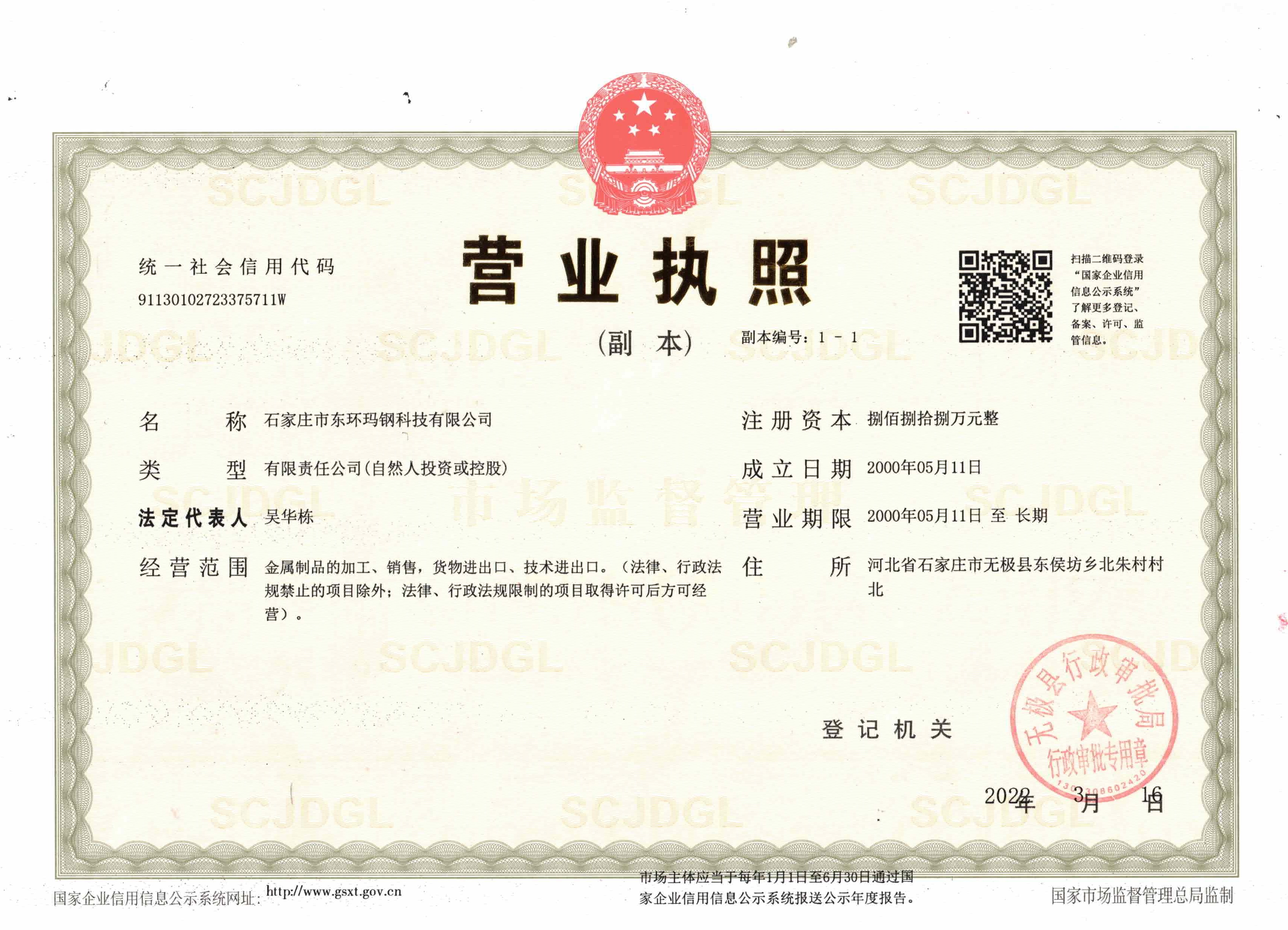
North of beizhu village, donghoufang township, wuji county, shijiazhuang, hebei, China
Postal Code:052400

Mob web

Tiktok