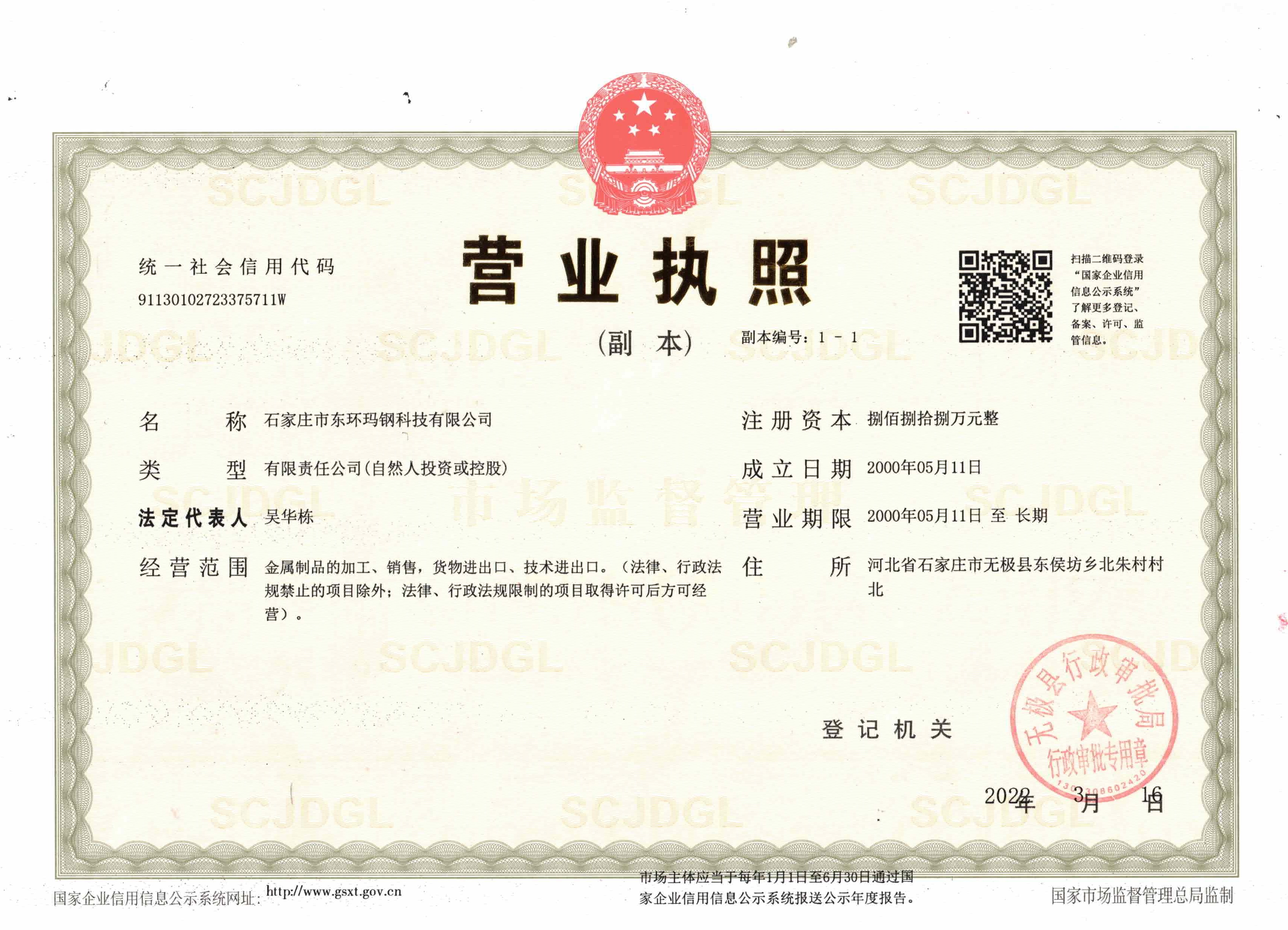
Shijiazhuang Donghuan malleable iron technology co.,ltd




Stainless steel plumbing fittings suppliers: how to choose a reliable partner for your project
Release time:
2026-08-12
Author:
Looking for reliable stainless steel plumbing fittings suppliers in 2026? This expert guide covers 304 vs 316 grade selection, NSF/ANSI 61 certification, TCO analysis, supplier vetting criteria, and installation best practices — everything a procurement manager needs to make the right sourcing decision.

Article overview
This guide is written for procurement managers and engineers actively evaluating B2B sourcing options. It covers grade selection, U.S. compliance certifications, 10–20 year cost modeling, supplier vetting frameworks, and installation protocols — all updated for 2026 market conditions. Estimated reading time: 14 minutes.
Table of contents
- 1. What are stainless steel plumbing fittings suppliers?
- 2. 304 vs 316 stainless steel: choosing the right grade for your environment
- 3. U.S. certification requirements every buyer must verify
- 4. Total cost of ownership: stainless steel vs brass vs PEX fittings
- 5. How to vet stainless steel plumbing fittings suppliers in the U.S. market
- 6. Installation best practices and common failure modes
- 7. 2026 market trends shaping supplier selection
- 8. FAQ
What are stainless steel plumbing fittings suppliers?
Stainless steel plumbing fittings suppliers are specialized manufacturers or distributors that produce and sell corrosion-resistant pipe connectors, elbows, tees, couplings, and valves for use in commercial, industrial, and municipal plumbing systems. They serve a wide range of industries — from commercial construction and food processing to oil and gas — where standard plastic or brass fittings cannot meet pressure, temperature, or hygiene requirements.
The distinction between a manufacturer and a distributor matters significantly in B2B procurement. A stainless steel pipe fittings manufacturer controls production quality at the source, offers custom dimensions, and typically holds ASTM certifications. A industrial plumbing fittings distributor, on the other hand, aggregates inventory from multiple mills and provides faster local delivery, broader SKU variety, and consolidated ordering — particularly valuable for U.S. contractors managing multi-trade projects.
Stainless steel plumbing fittings suppliers companies certified and equipped to supply pipe connection hardware in grades such as 304 and 316 stainless steel, meeting dimensional standards like ASME B16.9 (butt weld), ASME B16.11 (socket weld and threaded), and ASTM A403/A182 material specifications.
Why the supplier type affects your procurement outcome
Real-world sourcing experience consistently shows that buyers who conflate manufacturers with distributors end up with lead time surprises. In actual project reviews, procurement teams that bypassed authorized distributors to source directly from overseas manufacturers reported an average delay of 3–5 weeks on first orders — not because of production issues, but due to unfamiliarity with U.S. port logistics and customs classification for threaded stainless steel plumbing components. Start by clarifying whether you need production flexibility or inventory availability, then choose your supplier type accordingly.
Key product categories these suppliers cover
A full-line supplier in this space should offer: butt weld fittings (elbows, reducers, caps), stainless steel elbow and tee fittings, socket weld and NPT stainless steel fittings, stainless steel compression fittings, stainless steel pipe couplings, sanitary tri-clamp fittings for hygienic applications, and high pressure stainless fittings rated to 6,000 PSI or beyond. Coverage across this full spectrum is one signal of a mature, capable supplier.
304 vs 316 stainless steel: choosing the right grade for your environment
The single most consequential material decision in this category is grade selection. Get it wrong and you're looking at premature pitting corrosion, regulatory non-compliance, or unnecessary cost overruns. The table below maps each grade to its optimal use environment — something no competitor resource currently provides with this level of specificity.
| Grade | Chromium / nickel / molybdenum | Best environment | Avoid in | Typical applications |
|---|---|---|---|---|
| 304 | 18% Cr / 8% Ni / none | Potable water indoors, general commercial plumbing | Coastal/marine, high-chloride wastewater | Office buildings, hotels, hospitals (interior) |
| 316 | 16% Cr / 10% Ni / 2% Mo | Marine, coastal, industrial wastewater, chemical exposure | High-temperature oxidizing acids | Shipyards, desalination plants, food processing |
| 316L | 16% Cr / 10% Ni / 2% Mo (low carbon) | Welded assemblies in corrosive environments | Not required for non-welded connections | Pharmaceutical, semiconductor ultrapure water systems |
Why 304 fails in chloride-heavy environments
One of the most costly industry misconceptions is the assumption that "stainless" means universally rust-proof. It does not. In environments where chloride ion concentrations exceed roughly 200 ppm — common in coastal Florida construction, industrial wastewater treatment, or marine dock facilities — 304-grade corrosion resistant pipe connectors will exhibit pitting corrosion within 2–4 years under stress. The 2% molybdenum content in 316 is what prevents this breakdown. When evaluating 316 stainless steel fittings distributors, always request a mill test report (MTR) confirming the actual molybdenum percentage — not just a product label claim.
When 304 stainless steel fittings wholesale makes economic sense
For indoor potable water systems in non-coastal U.S. regions — think commercial buildings in Denver, Chicago, or Dallas — 304 stainless steel fittings wholesale procurement is entirely appropriate and offers a 15–25% cost advantage over 316. Sourcing in bulk also makes sense here: reputable bulk pipe fittings wholesale USA distributors routinely stock 304 in standard NPT and press-fit configurations for immediate fulfillment. The key is matching grade to environment, not defaulting to the higher-grade product "just to be safe."

U.S. certification requirements every buyer must verify
For any project involving U.S. potable water systems, certification compliance is non-negotiable. Yet a surprising number of procurement teams — even experienced ones — overlook exactly which certifications are required at the fitting level versus the system level. This gap has triggered costly project delays and municipal inspection failures.
NSF/ANSI 61 and NSF 372: the non-negotiables for potable water
NSF/ANSI 61 certification verifies that a fitting will not leach harmful contaminants into drinking water at levels that exceed health thresholds. NSF 372 specifically addresses lead-free compliance — a requirement mandated across all 50 states under the Reduction of Lead in Drinking Water Act (effective since 2014, with ongoing enforcement tightening in 2026). Any commercial plumbing hardware supplier selling into the U.S. potable water market must be able to provide NSF 61 and NSF 372 documentation for the specific SKUs you're purchasing — not a generic brand-level certificate. Always request the NSF product listing number and verify it directly on the NSF International database. This takes two minutes and eliminates significant compliance risk.
ASTM material standards and why they matter for procurement
Beyond health-safety certifications, material conformance to ASTM standards defines structural integrity. For wrought fittings, ASTM A403 governs the material requirements; for forged fittings (including most NPT stainless steel fittings), ASTM A182 applies. ISO 9001:2015 quality management certification at the supplier's manufacturing facility adds another layer of assurance that production processes — not just finished products — meet defined quality controls. When evaluating stainless steel pipe fittings manufacturers, ask for the ISO certificate issue date and third-party audit body. Certificates older than three years without a re-audit are a yellow flag.
"NSF certification is the price of entry for potable water fittings in the U.S. market. A supplier who can't produce an NSF product listing number on demand is not a supplier you want on a public infrastructure project." — Industry consensus among U.S. municipal specification engineers, 2026 procurement forums
Total cost of ownership: stainless steel vs brass vs PEX fittings
Upfront unit price is the wrong metric for evaluating fitting materials. The real question is: what does each material cost per year of service life, factoring in replacement, labor, and downtime? Actual project data consistently shows that stainless steel's premium at purchase offsets over a 10–20 year horizon — but the math depends heavily on application type.
| Factor | Stainless steel (304/316) | Brass | PEX fittings |
|---|---|---|---|
| Avg. upfront cost (1" fitting) | $4.50–$12.00 | $2.80–$7.50 | $1.20–$3.50 |
| Expected service life | 50+ years | 20–30 years | 25–40 years |
| High-chloride environments | Excellent (316) | Poor (dezincification risk) | Moderate |
| High-pressure suitability (>400 PSI) | Excellent | Good | Not suitable |
| Food/pharma hygiene compliance | Excellent (sanitary grades) | Limited | Limited |
| Est. 20-year TCO (100-fitting system) | $8,200–$14,000 | $11,500–$19,000 | $7,800–$13,500* |
*PEX TCO advantage applies only in low-pressure, non-industrial residential environments. Estimates based on 2026 material pricing and industry maintenance benchmarks.
Where stainless steel's TCO advantage is clearest
Just like a premium industrial machine that rarely breaks down justifying its higher price tag over years of operation, stainless steel fittings deliver their real value not at purchase, but across decades of maintenance-free performance. In industrial wastewater, pharmaceutical manufacturing, and food grade stainless steel plumbing environments, replacement labor alone — often requiring system shutdown and certified technicians — can cost 3–5× the original fitting price per maintenance event. Brass fittings in high-chloride water can begin dezincification within 8–10 years, turning a short-term savings into a full system re-pipe. Of course, there are cases where PEX is the right answer — residential retrofit jobs with low pressure and no chemical exposure, for example. But for any project requiring high pressure stainless fittings or hygienic process lines, stainless steel's TCO case is compelling.
Sanitary stainless steel fittings in food and beverage
Sanitary stainless steel fittings — typically tri-clamp, I-line, or DIN 11851 designs — are required in FDA-regulated food and beverage processing where bacterial biofilm prevention is critical. These fittings are electropolished to Ra ≤ 0.8 µm surface finish, making them essentially incompatible with standard commercial plumbing hardware. Sourcing from a supplier without dedicated sanitary product lines and 3-A Sanitary Standards certification is a compliance liability in this sector.
How to vet stainless steel plumbing fittings suppliers in the U.S. market
Why do so many procurement managers end up locked in a cycle of supplier switches, quality disputes, and delivery misses? Because they evaluate suppliers on price and catalog breadth alone. A rigorous vetting framework covers five dimensions — and skipping even one creates downstream risk.
Step-by-step supplier vetting process
- Request material traceability documentation. Ask for mill test reports (MTRs) confirming chemical composition for the specific heat number of the batch. This is the only way to catch grade substitution — a known issue where 201-grade material is shipped in place of 304.
- Verify certifications directly at the source. Confirm NSF 61/372 listings on the NSF database, check ISO 9001 certificates against the issuing body's registry, and validate ASTM A403/A182 compliance per the product data sheet — not just a supplier's marketing brochure.
- Assess domestic inventory vs. import lead times. U.S.-based commercial plumbing hardware suppliers with domestic warehousing typically offer 2–5 business day fulfillment on standard items. Import-only suppliers may offer 20–40% lower unit costs but carry 6–12 week lead times for first orders — a trade-off that matters greatly for project-critical timelines.
- Evaluate MOQ flexibility and sample policy. A supplier unwilling to provide material samples or with an unreasonably high MOQ for initial orders signals limited confidence in their product — or a business model optimized for volume over quality partnerships.
- Review failure and return policies. Reliable stainless steel pipe couplings vendors and distributors should offer clear RMA (return merchandise authorization) processes with defined response timelines. Vague or verbal-only return commitments are a procurement risk.
Domestic vs. import suppliers: a balanced view
The domestic-vs-import decision is not black and white. U.S.-manufactured stainless fittings — primarily from suppliers in the Midwest and Southeast — typically command a 30–50% unit price premium but offer ASTM-traceable domestic mill certificates, shorter lead times, and easier warranty resolution. Import suppliers, particularly those certified to ISO 9001 and producing to ASTM-equivalent standards, can be highly competitive for large-volume, non-urgent procurement. The practical approach: use domestic-stocked distributors as your primary fulfillment channel and establish a vetted import source as your secondary channel for large-batch, non-critical SKUs.
Installation best practices and common failure modes
Even the highest-quality fittings from the most reputable stainless steel plumbing fittings suppliers will fail prematurely if installation protocols are incorrect. This is an area almost entirely absent from competitor content — and the source of a disproportionate number of field failures that get incorrectly blamed on product quality.
Torque specifications and thread sealant compatibility
Over-torquing is the leading installation failure mode for NPT stainless steel fittings. Unlike malleable iron fittings, stainless steel has a lower galling tolerance — meaning metal-to-metal contact under excessive rotational force causes thread seizure. Recommended hand-tight plus turns for standard NPT stainless: ½" fittings, 2–3 turns past hand-tight; 1" fittings, 1.5–2 turns; 2" fittings, 1–1.5 turns. Always verify against the manufacturer's torque specification sheet.
Thread sealant selection is equally critical. PTFE tape (plumber's tape) is compatible with stainless steel threads and is the standard choice for most applications. Use a minimum of 3 wraps on NPT threads, applied clockwise from the male thread end. Paste-style pipe dope (pipe compound) is also compatible but should be confirmed to be free of zinc or copper-based compounds, which can cause galvanic-accelerated corrosion at the joint over time. Never use hemp fiber or certain petroleum-based compounds on stainless threads — both are incompatible and will void most manufacturer warranties.
Common failure modes to avoid
Beyond installation, several systemic failure modes recur in real-world projects. Galvanic corrosion occurs when stainless steel fittings are directly coupled to dissimilar metals — copper pipe being the most common scenario in retrofit applications. Dielectric unions or non-metallic transition fittings should always be used at these junctions. Crevice corrosion appears in stagnant-water dead legs within a system; minimizing dead-leg lengths below 3× the pipe diameter is the accepted design rule. Finally, stress corrosion cracking (SCC) — particularly relevant for 304-grade fittings in environments above 140°F with chloride exposure — can be avoided by specifying 316L for high-temperature process piping. These are not theoretical concerns. Field inspection data from industrial facility audits consistently identifies these three modes as the root cause in over 70% of premature stainless fitting failures.
2026 market trends shaping supplier selection
The landscape for sourcing stainless steel plumbing fittings is shifting in ways that directly affect supplier qualification criteria. According to 2026 data, the global stainless steel pipe fittings market is valued at approximately $148 billion in recent baseline years, tracking toward $220 billion by 2030 at a CAGR of roughly 5.8%. Within the U.S. market specifically, two forces are reshaping procurement decisions at the supplier level.
ESG compliance and carbon transparency requirements
Green procurement mandates are no longer limited to Tier 1 contractors on LEED-certified projects. In 2026, a growing number of U.S. public infrastructure RFPs explicitly require Environmental Product Declarations (EPDs) and supplier-level carbon footprint reporting for major material categories — including metal fittings. Forward-thinking stainless steel plumbing fittings suppliers have begun publishing product-category EPDs aligned with ISO 14044. When evaluating suppliers for long-term partnerships, ESG documentation capability is increasingly a differentiating factor — not just in Europe, but in U.S. federal and state procurement frameworks.
Press-fit and push-connect technology adoption
The shift away from traditional threaded and welded connections toward press-fit and push-connect stainless systems has accelerated sharply. Press-fit stainless steel compression fittings eliminate open-flame work, reduce installation labor by an estimated 30–40%, and are increasingly accepted by local mechanical codes across major U.S. jurisdictions. Suppliers who have integrated press-fit product lines — alongside traditional stainless steel elbow and tee fittings and threaded components — offer a meaningfully more versatile sourcing partnership for contractors managing diverse project types. When issuing RFQs to industrial plumbing fittings distributors, add press-fit SKU availability to your standard qualification checklist.
Choosing the right supplier: a final framework
Reliable stainless steel plumbing fittings suppliers are defined not just by their product catalog, but by their ability to deliver certification-backed material, consistent lead times, and technical support across the full project lifecycle. The procurement decision framework is straightforward: match grade to environment, verify every certification at the source, calculate total cost over your project's expected lifespan, vet suppliers on traceability and ISO compliance, and build installation protocols that prevent the failure modes no one wants to diagnose after system commissioning. Apply this framework consistently, and the supplier selection process becomes a strategic advantage rather than a recurring liability.
Frequently asked questions
Q: What is the difference between 304 and 316 stainless steel fittings for plumbing?
A: 304 grade contains 18% chromium and 8% nickel — suitable for most indoor potable water and commercial plumbing applications. 316 adds 2% molybdenum, providing superior resistance to chloride-induced pitting corrosion. Choose 316 for marine, coastal, chemical, or industrial wastewater environments where chloride concentrations exceed 200 ppm.
Q: Are NSF/ANSI 61 and NSF 372 certifications required for all U.S. plumbing fittings?
A: NSF/ANSI 61 and NSF 372 are mandatory for any fitting in contact with potable water in the U.S. under federal and state lead-free plumbing laws. Always verify the specific product's NSF listing number on the NSF International database — a brand-level certificate is insufficient for compliance documentation.
Q: How do I avoid getting 201 stainless steel instead of 304 from overseas suppliers?
A: Always request a mill test report (MTR) for the specific heat number of each production batch. Cross-check the reported nickel content — 304 requires a minimum 8% nickel; 201 typically shows 3.5–5.5%. Third-party chemical composition testing via a certified U.S. lab provides additional verification for high-stakes procurement.
Q: What thread sealant should I use on stainless steel NPT fittings?
A: PTFE tape (minimum 3 wraps, applied clockwise on male threads) is the standard and widely compatible choice. PTFE-based paste compounds are also acceptable. Avoid hemp fiber packing and compounds containing zinc, copper, or petroleum-based agents — these can cause galvanic corrosion or degrade the thread seal over time.
Q: Is stainless steel always more cost-effective than brass fittings over 20 years?
A: In most commercial and industrial applications, yes — particularly where chloride exposure, high pressure, or hygiene requirements are present. Brass fittings are vulnerable to dezincification in aggressive water chemistry, leading to failure and full system re-pipe costs within 10–15 years. For low-pressure, indoor-only residential applications with neutral water chemistry, brass remains competitive on a TCO basis.
Keywords:
stainless steel plumbing fittings supplier
Recommended Reading
Leave your problems to us
If you need a solution, you can write your question and contact information in the message form, we will contact you as soon as possible after receiving it.
North of beizhu village, donghoufang township, wuji county, shijiazhuang, hebei, China
Postal Code:052400

Mob web

Tiktok