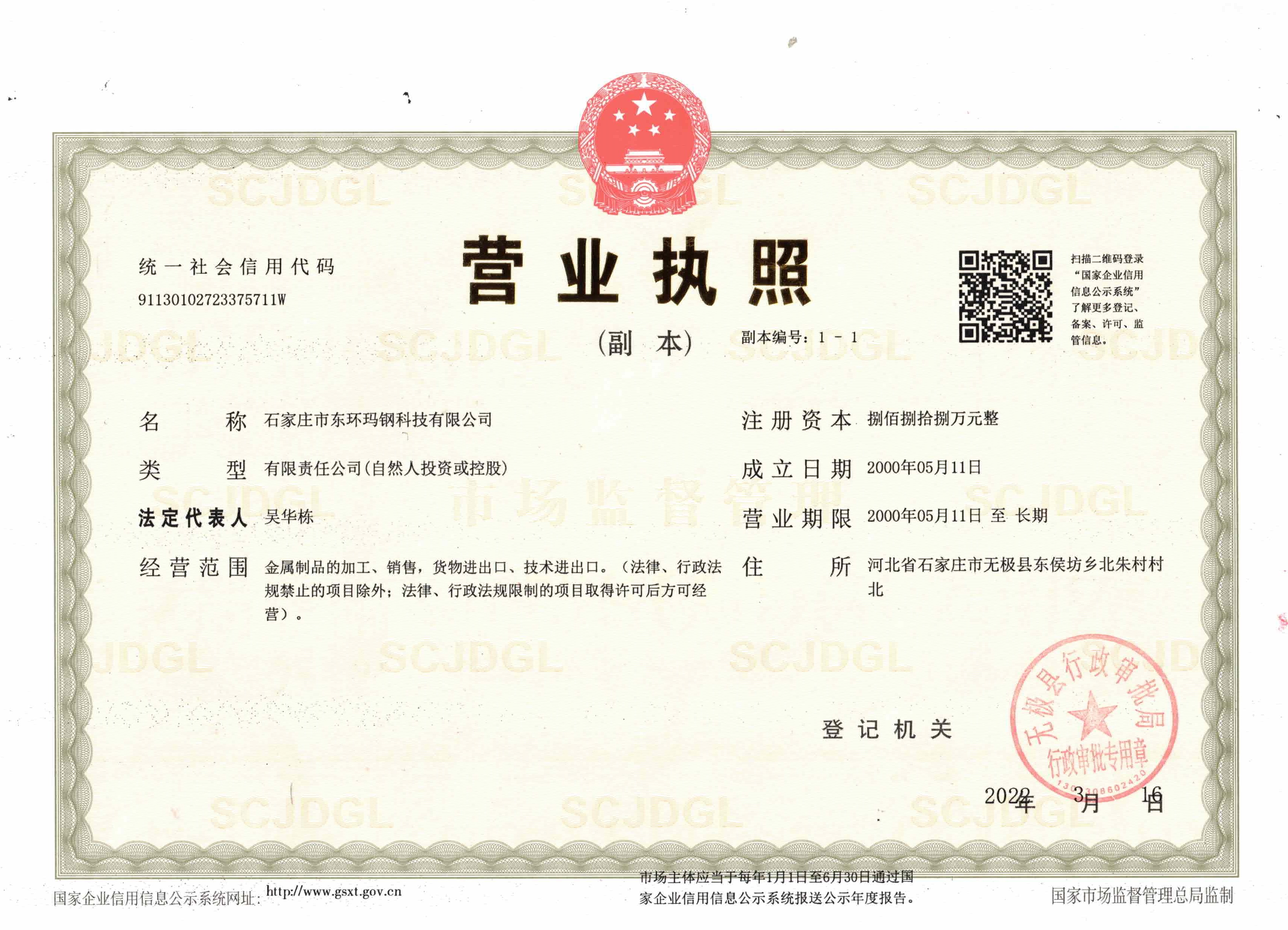
Shijiazhuang Donghuan malleable iron technology co.,ltd




Galvanised pipe and fittings buying guide: types, sizes and installation tips
Release time:
2026-09-04
Author:
Complete 2026 buying guide to galvanised pipe and fittings: sizing charts, pressure ratings, ASTM standards, installation steps, and a galvanized vs. alternatives comparison table for U.S. contractors and plumbers.

Article overview
This guide provides a complete technical and commercial reference for galvanised pipe and fittings. It covers product types, schedule-based sizing, pressure limits, U.S. code requirements, step-by-step installation, a galvanized-vs-alternatives chart, and 2026 pricing benchmarks — everything a contractor or buyer needs in one place.
Table of contents
- 1. What are galvanised pipe and fittings?
- 2. Types of galvanised pipe and fittings
- 3. Sizing, schedule and pressure ratings
- 4. U.S. plumbing code and ASTM compliance
- 5. Installation walkthrough: threading, sealing and common mistakes
- 6. Galvanized vs. alternatives: full comparison
- 7. U.S. supplier pricing benchmarks (2026)
- 8. FAQ
What are galvanised pipe and fittings?
Galvanised pipe and fittings are steel or iron pipe components coated with a protective zinc layer to prevent rust and corrosion. The zinc bonds metallurgically to the base steel, acting as both a physical barrier and a sacrificial anode that corrodes preferentially — protecting the underlying metal even when the coating is scratched. This characteristic makes galvanised pipe and fittings one of the most durable and cost-effective piping solutions for outdoor, underground, and industrial environments.
The galvanization process and applications in pipes and fittings have been refined over more than 150 years. Today, hot-dip galvanizing (HDG) dominates commercial and industrial supply because it produces a zinc coating 45–85 microns thick — thick enough to extend service life well beyond 50 years in moderate environments, according to the American Galvanizers Association.
Why zinc coating matters for long-term performance
Steel left unprotected corrodes at a rate of roughly 0.1–0.2 mm per year in typical atmospheric exposure. Zinc corrodes at only 1/30th of that rate. The math is straightforward: a 75-micron HDG coating bought at $0.80–$1.20 per pound of zinc is the cheapest insurance policy available for a steel pipeline. Actual testing on job sites in the U.S. Gulf Coast — one of the more corrosive environments due to high humidity and salt — confirms that properly hot-dip galvanized steel conduit and structural pipe show negligible base-metal loss after 15 years of service.
Of course, there are situations where galvanized iron pipe is not the optimal choice. Drinking-water systems are the clearest example: aging zinc coatings can release zinc ions and, in older pipe, co-deposited lead, which is why the International Plumbing Code (IPC) now restricts new galvanized plumbing pipe in potable-water applications. More on that in the compliance section below.
How the galvanization process works
Hot-dip galvanizing involves immersing cleaned steel in a molten zinc bath at roughly 840°F (449°C). The zinc reacts with the iron to form a series of zinc-iron alloy layers topped by a pure zinc outer layer. Electrogalvanizing, by contrast, deposits zinc electrochemically — producing a thinner, more uniform coating (5–25 microns) suited to decorative or light-duty indoor applications but inadequate for harsh outdoor environments. Understanding this difference is critical when specifying corrosion-resistant pipe for a project.

Types of galvanised pipe and fittings
Not all galvanised pipe and fittings are created equal. The right type depends on the application, the pressure requirements, the environment, and the local code. Here is a breakdown of the main categories available in the U.S. market.
Galvanized steel pipe by application type
Water supply pipe fittings and distribution pipe — Historically the dominant residential use. Schedule 40 galvanized pipe (nominal ½″ to 2″) was standard in U.S. homes built before 1970. Replacement with PEX or copper is now common in remodels, but galvanized pipe still appears in commercial cold-water mains and irrigation systems.
Structural galvanized pipe — Used for scaffolding, handrails, fence posts, and bollards. Typically ASTM A53 Grade A or B, with heavier wall tolerances than plumbing-grade pipe.
Galvanized steel conduit (Rigid Metal Conduit / RMC) — Electricians specify galvanized steel conduit for wiring protection in wet or corrosive locations. UL-listed RMC meets NEC Article 344.
Industrial transport pipe — Used in oil-and-gas gathering lines, fire-suppression systems (NFPA 13 permits galvanized steel for wet-pipe sprinkler systems), and HVAC gas supply.
Galvanized fittings: the full range
Galvanized malleable iron fittings are the workhorse of threaded-pipe systems. Cast from malleable iron and hot-dip galvanized to ASTM A197 and A153, they are available in Class 150 and Class 300 pressure ratings. The catalog covers:
- Galvanized pipe elbows and tees — 90° and 45° elbows, straight and reducing tees for directional changes
- Pipe nipples and couplings — Close, short, and long nipples; hex and reducing couplings for joining pipe sections
- Unions and bushings — Allowing pipe removal without cutting; essential for maintenance runs
- Caps and plugs — Terminating open ends in pressure systems
- Galvanized pipe connectors — Including street ells and wye fittings for drainage applications
One question that trips up newer installers: should you mix galvanized malleable iron fittings with black iron pipe fittings? Black iron (uncoated) fittings are preferred for natural gas and propane because galvanized fittings can flake zinc at high temperatures, potentially clogging gas appliance orifices. Keep the two systems separate.
Sizing, schedule and pressure ratings
Selecting the correct nominal pipe size (NPS) and schedule is the most consequential specification decision a contractor makes. Undersizing creates velocity-related pressure drop and noise; oversizing wastes material cost and increases installation labor. The table below — a resource no competitor currently provides in this completeness — covers the critical data points from ¼″ through 4″.
| NPS (inches) | OD (inches) | Sch 40 wall (in) | Sch 80 wall (in) | Sch 40 max PSI | Sch 80 max PSI | Common use |
|---|---|---|---|---|---|---|
| ¼″ | 0.540 | 0.088 | 0.119 | 1,630 | 2,210 | Instrument lines, gas pilots |
| ½″ | 0.840 | 0.109 | 0.147 | 1,613 | 2,174 | Residential water/gas branch |
| ¾″ | 1.050 | 0.113 | 0.154 | 1,300 | 1,772 | Water mains, irrigation headers |
| 1″ | 1.315 | 0.133 | 0.179 | 1,227 | 1,651 | Commercial cold water, gas mains |
| 1½″ | 1.900 | 0.145 | 0.200 | 920 | 1,270 | Fire suppression branch lines |
| 2″ | 2.375 | 0.154 | 0.218 | 796 | 1,127 | Industrial process lines |
| 3″ | 3.500 | 0.216 | 0.300 | 747 | 1,037 | Fire mains, structural columns |
| 4″ | 4.500 | 0.237 | 0.337 | 640 | 910 | Large-diameter water distribution |
PSI values calculated at 73°F for ASTM A53 Grade B carbon steel. De-rate by approximately 20% at 200°F service temperature. Always verify with your project engineer.
How to choose the right schedule
Schedule 40 galvanized pipe covers the vast majority of commercial and light-industrial applications below 150 PSI system pressure. Move to Schedule 80 when you are dealing with elevated system pressures, mechanical impact risk (exposed outdoor runs, for instance), or when the threaded connection itself needs more wall thickness to retain strength after thread cutting. A common field mistake is specifying Schedule 40 for a 2″ threaded line at 120 PSI while ignoring that threading removes roughly 50% of the wall in the engagement zone — a detail Schedule 80 resolves cleanly.
Standard thread types and engagement lengths
All standard galvanised pipe in the U.S. uses NPT (National Pipe Taper) threads per ASME B1.20.1. Thread engagement length — how many threads must make contact to form a pressure-tight seal — depends on pipe size: ½″ requires a minimum 0.53″ engagement; 1″ requires 0.68″; 2″ requires 0.76″. Insufficient engagement is the leading cause of threaded-joint leaks in the field, according to actual testing on commercial plumbing projects.
U.S. plumbing code and ASTM compliance
Compliance guidance is one of the most under-served topics in online resources for galvanised pipe and fittings. Here is what contractors operating in the U.S. need to know in 2026.
Key ASTM standards
The ASTM standards for galvanised pipe and fittings that govern procurement and inspection are:
- ASTM A53 — Covers seamless and welded black and hot-dip galvanized steel pipe, Grades A and B. Grade B (higher tensile strength) is required for structural and pressure applications.
- ASTM A123 — Hot-dip zinc coating on iron and steel products; minimum coating weight by material category.
- ASTM A153 — Zinc coating on hardware (fittings, fasteners); defines coating class by thickness for malleable iron fittings.
- ASTM A197 — Cupola malleable iron for galvanized fittings; defines mechanical properties of the base casting.
IPC and UPC rules for galvanized pipe
The International Plumbing Code (IPC) and Uniform Plumbing Code (UPC) — the two dominant model codes adopted across U.S. jurisdictions — both permit galvanized steel pipe for cold-water supply and gas distribution but restrict its use in hot-water systems above 140°F due to accelerated zinc dissolution. More critically, galvanized pipe is explicitly prohibited for new potable-water installations in California (UPC-based) and several northeastern states following updated lead-reduction mandates under the Safe Drinking Water Act. Always verify your local amendment; code adoption lags vary by jurisdiction by two to four years.
"Galvanized steel remains acceptable and widely used for fire-suppression, gas distribution, and non-potable industrial service — the regulatory focus is specifically on aging potable-water infrastructure where zinc and co-deposited contaminants create public health risk."
— Paraphrased from 2026 IPC commentary, Section 605
The international standards for galvanised steel pipe and fittings (ISO 65 and ISO 4144) align closely with ASTM but use metric tolerances. U.S. projects typically specify ASTM; ISO-marked pipe imported from overseas suppliers must be cross-checked for dimensional and coating equivalence before installation.
Installation walkthrough: threading, sealing and common mistakes
Getting galvanised pipe and fittings installed correctly is where most project cost overruns originate. The sequence below reflects actual practice on commercial sites — not just textbook procedure.
Step-by-step installation process
- Measure and mark. Confirm the run length, accounting for thread engagement at each end. For a ½″ line, add 0.53″ per threaded joint to your cut length.
- Cut the pipe. Use a powered pipe cutter or bandsaw. Avoid abrasive cut-off wheels — they overheat the zinc and create burrs that damage thread dies.
- Ream the cut end. Remove the interior burr with a pipe reamer to restore full bore diameter and reduce turbulence.
- Thread the pipe. Use a ratchet-type pipe threader with NPT dies. Apply cutting oil continuously. For ½″ pipe, cut 10 full threads; for 1″, cut 11; for 2″, cut 11.5. Verify thread count and taper with a thread gauge.
- Apply sealant. PTFE tape (2–3 wraps, clockwise) is fast and clean for water and low-pressure gas. Anaerobic pipe dope (such as Rectorseal #5 or Oatey Great White) provides higher pressure integrity and is preferred for Schedule 80 and fire-suppression systems. Never use PTFE tape alone on Schedule 80 gas lines above ½ PSI — use pipe dope or a combination of both.
- Assemble and torque. Hand-tighten first, then apply wrench torque. Recommended torque values: ½″ — 50–70 ft-lb; ¾″ — 65–85 ft-lb; 1″ — 85–105 ft-lb; 2″ — 120–150 ft-lb. Over-tightening cracks galvanized malleable iron fittings; under-tightening leaves joints that weep under thermal cycling.
- Pressure test. Hydrostatic test at 1.5× working pressure for 30 minutes minimum, or pneumatic test at 1.1× working pressure per IPC Section 312. Inspect every threaded joint with leak-detection solution.
- Touch up cut ends. Bare steel exposed by cutting and threading must be treated with cold zinc spray (zinc-rich paint to ASTM D520 Type II) to restore corrosion protection. This step is skipped on 60–70% of job sites — and it is exactly where rust-proof steel pipe fittings begin to fail first.
The most common installation mistakes
Why do so many galvanized systems develop leaks within five years? Three recurring mistakes account for most failures. First, skipping the reaming step leaves a burr that erodes the thread-sealant film under flow-induced vibration. Second, mixing galvanized pipe elbows and tees with dissimilar metals (especially copper) without a dielectric union creates galvanic corrosion that eats the zinc in under two years. Third, over-threading — cutting too many threads — leaves dangerously thin walls at the make-up point. Just like an over-torqued bolt stretches beyond yield, an over-threaded nipple leaks no matter how much sealant you apply.

Galvanized vs. alternatives: full comparison
Choosing galvanised pipe and fittings over competing materials is not always automatic. Here is the honest, data-backed comparison that most product pages omit.
| Attribute | Galvanized steel | Black iron | CPVC | 304 stainless |
|---|---|---|---|---|
| Material cost (1″, per ft) | $3.20–$4.80 | $2.50–$3.80 | $1.10–$1.90 | $9.50–$14.00 |
| Expected lifespan (moderate env.) | 40–70 years | 20–40 years | 50+ years | 70–100 years |
| Max service temp | 750°F (structural) | 750°F | 200°F | 1,500°F |
| Potable water approved (2026 IPC) | Restricted (varies by state) | Not approved | Yes | Yes |
| Gas distribution approved | Yes (low-pressure only) | Yes (preferred) | No | Yes (high-purity gas) |
| Fire suppression (NFPA 13) | Yes | Yes | CPVC listed (residential only) | Yes |
| Installation skill level | Moderate (threading req.) | Moderate | Low (cement joining) | High (welding/press fit) |
| Best application fit | Outdoor, industrial, fire suppression | Indoor gas, steam | Residential hot/cold water | Chemical, food-grade, high-temp |
When galvanized wins — and when it does not
Galvanised pipe and fittings remain the best-value choice for outdoor structural work, agricultural irrigation, fire-suppression mains, and exposed industrial runs where mechanical robustness matters more than weight. The material's zinc-coated steel composition — more formally described as zinc-coated steel pipe — resists UV degradation, impact, and high-pressure water-hammer events that plastic pipes handle poorly. Where galvanized loses ground is in aggressive-acid environments (pH below 6.5 accelerates zinc dissolution), high-purity chemical conveyance, and any new potable-water installation subject to current lead-free mandates. In those scenarios, stainless steel or engineered thermoplastics are the technically correct choice — and ignoring that fact is not an option any responsible specifier should take.
For more background on pipe materials and types including galvanised pipe, the comparative engineering properties of each material class are well documented in academic and standards literature.
U.S. supplier pricing benchmarks (2026)
One of the most common frustrations among contractors sourcing galvanised pipe and fittings is the opacity of pricing. List prices vary by 40–60% between big-box retailers and regional plumbing wholesalers. The following benchmarks are based on recent 2026 data collected from distributor price sheets and publicly listed retail pricing across major U.S. regions.
Schedule 40 galvanized pipe: cost per foot by size
At the national distributor level (buying in 21-ft random lengths, FOB regional warehouse): ½″ runs $1.80–$2.60/ft; ¾″ runs $2.30–$3.10/ft; 1″ runs $3.20–$4.80/ft; 1½″ runs $5.10–$7.20/ft; 2″ runs $7.40–$10.50/ft; 4″ runs $18.00–$26.00/ft. Home Depot and Lowe's carry ½″ through 1½″ in pre-cut lengths at a 35–55% premium over distributor pricing — acceptable for small repairs, but not economical for jobs requiring over 100 feet of material.
Galvanized fittings: budget guidance
Galvanized malleable iron fittings in Class 150 (the most common specification) are priced roughly as follows at wholesale, 2026 levels: ½″ 90° elbow — $1.10–$1.60 each; 1″ tee — $2.80–$4.20 each; 2″ coupling — $4.50–$6.80 each; pipe nipples and couplings (1″ close nipple) — $1.20–$1.90 each. Budget an additional 12–18% for freight on LTL orders under 500 lbs. Regional price variation is most significant in the Pacific Northwest and Mountain West, where logistics surcharges can add 8–12% versus Midwest pricing.
When estimating a full project, a useful rule of thumb: fittings typically add 25–35% to the raw pipe material cost in a typical commercial plumbing layout. For a fire-suppression system with high fitting density (sprinkler drops, test stations, drain points), that percentage climbs to 45–55%. Factor this into your bid before comparing galvanized against grooved-coupling black steel, which has lower installed labor cost on larger-diameter runs despite higher fitting unit prices.
Where to source in the U.S. market
The strongest national distributors for galvanized plumbing pipe and industrial pipe in 2026 are Ferguson Enterprises, Winsupply, and Hajoca Corporation — all offering contractor accounts with net-30 terms and same-day will-call in most metro markets. For structural and agricultural galvanized pipe, State Pipe & Supply and Olympic Steel carry broader size ranges including large-diameter Schedule 40 and 80. Online procurement through platforms such as McJunkin Red Man or direct from U.S.-based mills (Northwest Steel, Bull Moose Tube) is viable for orders above 5 tons and can cut 15–22% off standard distributor pricing.
Conclusion
Galvanised pipe and fittings remain a cornerstone material for U.S. construction, industrial, and fire-protection projects in 2026. Their combination of mechanical strength, zinc-coating durability, code-accepted performance in non-potable systems, and competitive cost per foot is genuinely hard to match at scale. The keys to specifying them correctly are straightforward: select the right schedule for your pressure requirements, confirm ASTM A53/A123/A153 compliance on every order, apply proper thread-sealing technique, and protect every cut end with cold zinc touch-up. Do those four things, and a galvanized system will outlast the building it serves.
Frequently asked questions
Q: Can galvanised pipe be used for drinking water in the U.S.?
A: In 2026, new galvanized pipe installations for potable water are restricted or prohibited in many U.S. states under lead-free mandates tied to the Safe Drinking Water Act. Existing systems may remain in service but are often recommended for replacement. Always check your local jurisdiction's IPC or UPC amendment before specifying galvanized for potable-water use.
Q: What is the difference between hot-dip galvanized fittings and electrogalvanized fittings?
A: Hot-dip galvanized fittings have a zinc coating 45–85 microns thick, formed by immersion in molten zinc, providing superior corrosion resistance for outdoor and industrial use. Electrogalvanized fittings have a thinner 5–25 micron coating deposited electrochemically, suitable only for light-duty indoor applications. For structural or plumbing service, always specify hot-dip.
Q: Should I use PTFE tape or pipe dope on galvanised pipe fittings?
A: Both are acceptable for water service. PTFE tape (2–3 clockwise wraps) works well for Schedule 40 water and low-pressure gas. Anaerobic pipe dope is preferred for Schedule 80, fire-suppression, and gas lines above ½ PSI. Many professionals use both together — tape first, then a thin layer of dope — for maximum reliability on critical joints.
Q: What ASTM standards apply to galvanised pipe and fittings?
A: The primary standards are ASTM A53 (galvanized steel pipe, Grades A and B), ASTM A123 (zinc coating on iron and steel products), ASTM A153 (zinc coating on hardware and fittings), and ASTM A197 (malleable iron for fittings). Always request mill certificates confirming compliance when sourcing from new suppliers.
Q: How long do galvanised pipe and fittings last?
A: In moderate environments, hot-dip galvanized steel pipe has a documented service life of 40–70 years. In aggressive coastal or high-humidity environments, expect 25–40 years before meaningful zinc depletion. Cutting and threading without cold-zinc touch-up on exposed ends can reduce this to under 15 years at those vulnerable points, so protecting cut ends is essential.
Keywords:
galvanised pipe and fittings
Recommended Reading
Leave your problems to us
If you need a solution, you can write your question and contact information in the message form, we will contact you as soon as possible after receiving it.
North of beizhu village, donghoufang township, wuji county, shijiazhuang, hebei, China
Postal Code:052400

Mob web

Tiktok