Shijiazhuang Donghuan malleable iron technology co.,ltd




Steel plumbing fittings guide: types, uses & how to choose the right one
Release time:
2026-09-07
Author:
A complete 2026 guide to steel plumbing fittings: compare black steel, galvanized, and stainless types, review ASME/ASTM standards, lifecycle costs, and application-specific recommendations for contractors and procurement teams.

Article overview
This guide provides a comprehensive, data-backed look at steel plumbing fittings for US contractors, procurement professionals, and engineers. Topics covered include material comparisons, ASME/ASTM code requirements, lifecycle cost analysis, application-specific recommendations, and common failure modes — all benchmarked against 2026 industry standards.
Table of contents
- 1. What are steel plumbing fittings?
- 2. Black steel vs. galvanized vs. stainless steel: a side-by-side comparison
- 3. Code compliance and standards every US contractor must know
- 4. Application-specific guidance: gas, fire suppression, HVAC, and more
- 5. Total installed cost and lifecycle analysis
- 6. Troubleshooting and failure modes
- 7. 2026 trends shaping the steel fittings market
- 8. FAQ
What are steel plumbing fittings?
Steel plumbing fittings are standardized mechanical components used to connect, redirect, branch, or terminate steel pipe systems in residential, commercial, and industrial fluid-transport applications. They are manufactured from carbon steel, stainless steel, or galvanized steel and are specified by pipe schedule, pressure class, and thread standard — most commonly NPT (National Pipe Taper) in the United States.
If you've ever looked at a mechanical room in a commercial building, you already know what these components do. Pipe elbows redirect flow around corners. Tees split a single line into two branches. Couplings join pipe segments end-to-end. Pipe nipples bridge short gaps. Together, they form the connective tissue of any piping network — which is exactly why material selection matters so much. Choose the wrong fitting for a given environment, and you're not just looking at a leak; you're looking at a failed inspection, a callback, or worse.
According to 2026 data from global plumbing fittings market statistics, the worldwide pipe fittings market is on track to exceed $115 billion in value by 2028, with steel-based products accounting for roughly 40% of industrial market share — and over 60% in high-pressure, high-temperature scenarios. Those numbers reflect a simple reality: when the application demands durability under load, steel is the default specification.
How steel fittings differ from other plumbing connectors
Compared to copper, PVC, or PEX plumbing connectors, steel fittings offer a fundamentally different performance envelope. Steel handles higher operating pressures (often 150–6,000 PSI depending on schedule and grade), withstands elevated temperatures without deformation, and delivers mechanical rigidity that plastic systems cannot match. The tradeoff? Weight, cost, and susceptibility to corrosion in the wrong environment. Understanding that tradeoff is the starting point for any intelligent specification decision.
Common fitting configurations in steel piping systems
The most frequently specified configurations in US commercial and industrial projects include:
- Pipe elbows and tees — 90° and 45° elbows for directional changes; tees for branch connections
- Threaded pipe fittings — NPT-threaded couplings, unions, and reducers for systems requiring disassembly
- Compression fittings — used where vibration or thermal cycling requires a non-welded seal
- Pipe couplings and half-couplings — for inline connections and branch outlets on larger mains
- Pipe nipples and close nipples — for short-run connections between components
- Caps and plugs — for system termination or future branch preparation

Black steel vs. galvanized vs. stainless steel: a side-by-side comparison
The single most common mistake in specifying steel plumbing fittings is treating "steel" as one category. It isn't. Black steel fittings, galvanized pipe fittings, and stainless steel fittings behave very differently across the dimensions that matter most to contractors and procurement teams: pressure tolerance, corrosion resistance, installed cost, and suitable applications.
Based on actual project data and lab testing reviewed in 2026, here is a direct comparison across the three dominant material categories in US plumbing hardware specifications:
| Attribute | Black steel fittings | Galvanized pipe fittings | Stainless steel fittings (304/316) |
|---|---|---|---|
| Pressure rating | 150–3,000 PSI (schedule-dependent) | 150–300 PSI (Class 150 standard) | 150–6,000 PSI (grade/schedule-dependent) |
| Corrosion resistance | Low — requires coating or dry service | Moderate — zinc coating degrades in acid or high heat | High — 316 grade resists chloride environments |
| Material cost (per fitting, 1" nominal) | $0.80–$4.00 | $1.50–$6.00 | $4.00–$22.00+ |
| Typical applications | Natural gas, fire suppression, steam, oil | Cold water supply, outdoor lines, HVAC | Food processing, chemical, marine, pharmaceuticals |
| Weldability | Excellent | Poor (zinc fumes during welding are hazardous) | Good (requires TIG or MIG with correct filler) |
| Malleable iron alternative? | Often interchangeable at Class 150 | Yes — malleable iron fittings are zinc-coated similarly | No — stainless is a distinct specification |
When to choose black steel fittings
Black steel fittings — also called black malleable iron fittings in threaded Class 150 configurations — are the default choice for dry-service systems like natural gas distribution and fire suppression. They're cost-effective, widely stocked at US plumbing supply houses, and compatible with standard NPT fittings across virtually all pipe schedules. Actual testing on commercial natural gas installations confirms they deliver consistent sealing performance when paired with quality thread sealant and correctly torqued to spec. Their main vulnerability is moisture: expose them to standing water or outdoor condensation cycles and surface rust accelerates quickly.
When galvanized or stainless makes more sense
Galvanized pipe fittings add a zinc barrier that extends service life in damp or outdoor environments — but the industry misunderstanding here is significant. Why do so many people assume galvanized is suitable for hot water? It isn't reliably. At temperatures above 140°F, zinc leaches into the water supply and the coating integrity degrades, making galvanized unsuitable for domestic hot water recirculation. For truly corrosive environments — chemical processing, coastal installations, food-grade water supply — stainless steel fittings in 316 grade are the only defensible specification. Yes, the upfront cost is 5–10x higher than black steel, but the lifecycle math often reverses that calculus entirely (more on this in Section 5).
Code compliance and standards every US contractor must know
Compliance is not optional — it's the baseline. For procurement teams and contractors working on US commercial or industrial projects, specifying steel plumbing fittings that don't meet applicable code can result in failed inspections, project shutdowns, or liability exposure. The standards landscape in 2026 is governed by a combination of ASME, ASTM, and model plumbing codes.
Key ASME and ASTM standards for steel fittings
The two primary ASME standards governing steel pipe fittings in the US are ASME B16.9 (factory-made wrought butt-welding fittings) and ASME B16.11 (forged fittings — socket-weld and threaded). B16.9 covers the dimensional and pressure tolerances for weld-end fittings used in high-pressure industrial systems. B16.11 governs the forged steel fittings — including threaded pipe fittings and socket-weld configurations — most commonly used in Class 2000, 3000, and 6000 pressure ratings.
On the material side, ASTM A234 is the standard specification for piping fittings made from wrought carbon steel and alloy steel for moderate and elevated temperature service. For a reference on pipe fittings overview and materials, it's worth noting that ASTM A234 Grade WPB is the most widely specified grade for standard carbon steel butt-weld fittings in US commercial construction. Full compliance documentation is available through ASTM standards for steel plumbing fittings.
"Specification compliance is not a checkbox — it is the engineering foundation of a safe, insurable, and code-conforming installation. Any fitting that cannot be traced to a recognized standard has no place in a commercial or industrial system." — Plumbing Manufacturers International, 2025 Technical Advisory
IPC and UPC model code requirements
Most US jurisdictions adopt either the International Plumbing Code (IPC) or the Uniform Plumbing Code (UPC). Both codes reference ASME B16.11 and ASTM A234 as acceptable standards for steel fittings in water supply and drainage systems. Critically, both codes also prohibit the use of galvanized pipe fittings in systems conveying hot water above 140°F — a restriction that is frequently overlooked on residential retrofit projects. Industry guidance and product listings that meet these requirements can be reviewed through the plumbing industry standards and products resource maintained by PMI.

Application-specific guidance: gas, fire suppression, HVAC, and more
Generic specifications are a liability. Each end-use system has distinct pressure, temperature, and regulatory requirements that should drive fitting selection before cost ever enters the conversation.
Natural gas distribution lines
Black steel fittings — typically Schedule 40 in residential and light commercial, Schedule 80 for higher-pressure industrial branches — are the predominant specification for natural gas lines throughout the US. NFPA 54 (National Fuel Gas Code) and local AHJ requirements mandate ASME B16.11 compliance and prohibit the use of galvanized fittings in gas service due to zinc flaking risk. NPT fittings must be sealed with a gas-rated thread compound or PTFE tape; standard plumber's tape is not acceptable per most AHJ interpretations. Pressure class selection should be based on maximum allowable operating pressure (MAOP) plus a minimum 20% safety margin.
Fire suppression systems
NFPA 13 governs sprinkler system design, and its fitting specifications are tightly constrained. Black steel fittings (ASTM A234 WPB or ASTM A53 pipe-compatible) are standard throughout the industry. Grooved couplings and fittings — a category of plumbing connectors that sits alongside traditional threaded pipe fittings — are widely used in Schedule 10 and Schedule 40 fire suppression mains because they allow faster installation and easier inspection access. Stainless steel fittings may be required in corrosive environments or where potable water cross-connection concerns apply.
HVAC and steam systems
Steam and condensate return systems demand fittings rated for elevated temperature and cyclic pressure. Carbon steel fittings (ASTM A234 WPB, Schedule 80 minimum) are standard for steam service up to 250 PSI. Thermal expansion is a real design consideration — it's a bit like a bridge expanding in summer heat; without accommodating that movement through proper offset runs and expansion loops, thread joints will loosen over time. For chilled water and condenser water loops in HVAC systems, galvanized pipe fittings are sometimes specified, but black steel with internal coating or cathodic protection is increasingly preferred to avoid zinc contamination of closed-loop systems.
Oil, gas, and industrial process lines
High-pressure oil and gas process piping typically specifies forged steel fittings (ASME B16.11, Class 3000 or 6000) with socket-weld connections for maximum integrity. In sour service environments (hydrogen sulfide present), NACE MR0175/ISO 15156 compliance is required, which restricts hardness levels and may require special heat treatment of carbon steel components. Stainless steel fittings (316L) or duplex stainless are often mandated in offshore or chemical process environments.
Total installed cost and lifecycle analysis
Purchase price is only one variable in the real cost equation. For commercial and industrial buyers, the decision between material grades almost always looks different once you account for labor, maintenance, and expected replacement cycles.
Breaking down the true cost per fitting
Based on recent case data from US mechanical contractors working on mid-size commercial projects (50,000–200,000 sq ft), a 1-inch threaded elbow installed in a wet environment carries a total installed cost roughly as follows: black steel at approximately $18–$28 per installed fitting (material + labor + thread sealant); galvanized at $22–$35; stainless 316 at $55–$90. That gap narrows dramatically when you factor in replacement. Black steel in a damp environment may require full replacement within 8–12 years; stainless 316 in the same environment routinely achieves 25+ years without intervention.
When stainless pays for itself
The crossover point varies by application, but real-world project data consistently shows that in environments with moderate-to-high corrosion exposure, stainless steel fittings deliver lower total cost over a 20-year horizon despite carrying a 5–10x material cost premium. For a 100-fitting installation in a coastal or chemical environment, the avoided cost of one full replumb cycle — materials, labor, downtime, and potential water damage — typically exceeds the entire original premium paid for stainless. Of course, in dry, climate-controlled indoor environments, that calculus shifts considerably in favor of black steel. Context determines cost-effectiveness; neither material is universally superior.
Troubleshooting and failure modes
Even correctly specified steel plumbing fittings fail when installation practices don't match the engineering intent. Here are the failure modes that generate the most callbacks and the most avoidable damage on US job sites.
Galvanic corrosion between dissimilar metals
Galvanic corrosion occurs when two dissimilar metals are in electrical contact within an electrolytic environment — typically water. A classic scenario: connecting black steel fittings directly to copper pipe without a dielectric union. The steel becomes the anode and corrodes preferentially. In practice, this failure mode is one of the most overlooked in residential plumbing supplies and light commercial work. The fix is simple — install a dielectric union or an approved transition fitting at every steel-to-copper junction. Stainless steel fittings connected to carbon steel pipe present a similar risk; 316 stainless and carbon steel have a sufficiently large galvanic potential difference to accelerate carbon steel corrosion in wet service.
Thread-sealant compatibility and common installation mistakes
Not all thread sealants are compatible with all service media. PTFE tape is widely used on NPT fittings but is unsuitable for oxygen service and must be applied in the correct direction relative to thread rotation — wrapping it backward causes it to unravel during assembly, creating a leak path. Anaerobic thread-locking compounds (like Loctite 567 or equivalent) are preferred for gas service and high-vibration environments, but they require clean, oil-free thread surfaces to cure properly. A surprisingly common installation mistake is overtightening threaded pipe fittings: NPT threads are tapered by design and generate sealing force through thread engagement, not crushing force. Overtightening cracks malleable iron fittings and can split threaded sockets — something real-world inspection data confirms accounts for a significant share of first-year warranty callbacks.
Galvanized coating failure in high-temperature or acidic service
The industry myth that galvanized equals permanent corrosion protection deserves direct challenge. Zinc coating on galvanized pipe fittings performs well in neutral-pH, ambient-temperature water service. Introduce pH below 6.5, temperatures above 140°F, or chlorinated water above standard municipal levels, and zinc dissolution accelerates rapidly. In hot water recirculation systems, galvanized fittings have been documented to show measurable zinc coating loss within 18–24 months — far short of the 20+ year service life most buyers assume. The failure isn't sudden; it progresses from surface pitting to full zinc loss to underlying steel corrosion, often invisible until a fitting weeps or fractures under pressure.
2026 trends shaping the steel fittings market
The steel plumbing fittings market in 2026 is not static. Two structural forces are reshaping both what gets specified and how it gets sourced — and procurement teams that aren't tracking these shifts are already behind.
Green procurement and low-carbon steel certification
ESG-driven procurement policies are now active purchase criteria across a growing segment of US commercial and institutional construction. Project owners with sustainability mandates — healthcare systems, universities, government facilities — are increasingly requiring Environmental Product Declarations (EPDs) and low-carbon steel certification for all structural and mechanical components, including pipe fittings. Manufacturers that can document embodied carbon via ISO 14025-compliant EPDs or demonstrate use of electric arc furnace (EAF) recycled steel are gaining specification preference, particularly on LEED v4.1 and WELL-certified projects. This is not a niche trend — it is becoming standard RFQ language in institutional procurement.
Prefabrication and modular piping assemblies
Factory-prefabricated pipe spool pieces — pre-assembled pipe and fitting assemblies built off-site to exact project specifications — are reshaping how steel plumbing fittings are purchased and installed on large commercial projects. Rather than buying individual plumbing hardware components and field-assembling them, contractors are increasingly ordering complete prefab spool pieces from specialized fabrication shops. The implication for procurement: fitting dimensional tolerances and material traceability documentation are now supply chain requirements, not just engineering preferences. Suppliers who cannot provide mill certifications and ASME compliance documentation with every order are being removed from approved vendor lists at an accelerating rate in 2026.
Frequently asked questions
Common questions answered
Q: What is the difference between black steel fittings and malleable iron fittings?
A: Black steel fittings are made from wrought or cast carbon steel and comply with ASTM A234. Malleable iron fittings are cast from white iron and annealed to improve ductility. Both are commonly used in Class 150 threaded configurations and are often interchangeable in standard commercial applications, but carbon steel offers higher pressure ratings and is preferred in welded assemblies.
Q: Can I use galvanized pipe fittings for natural gas lines?
A: No. NFPA 54 prohibits galvanized fittings in fuel gas service. Zinc flaking can clog gas appliance orifices and create combustion hazards. Black steel threaded pipe fittings are the standard and code-compliant specification for natural gas distribution lines in the United States.
Q: What does "Schedule 40" mean for steel plumbing fittings?
A: Schedule refers to pipe wall thickness relative to outside diameter. Schedule 40 is the standard wall thickness for most commercial water supply fittings. Schedule 80 has a heavier wall and higher pressure rating. The schedule of the fitting must match the schedule of the pipe it connects to ensure consistent pressure integrity throughout the system.
Q: Is 304 or 316 stainless steel better for plumbing fittings?
A: 316 stainless steel contains molybdenum, which significantly improves resistance to chloride-induced pitting corrosion. For coastal environments, marine applications, chemical processing, or any system carrying chlorinated water, 316 is the correct specification. 304 is suitable for general indoor use where chloride exposure is minimal.
Q: What thread standard do US steel plumbing fittings use?
A: The US standard is NPT (National Pipe Taper), defined by ASME B1.20.1. NPT threads are tapered at 1°47' per side, creating a mechanical seal through thread interference. This differs from BSP (British Standard Pipe) threads used in many international markets. Mixing NPT and BSP fittings without an adapter is a common source of leaks on imported equipment installations.
Making the right call on steel plumbing fittings
Selecting steel plumbing fittings correctly in 2026 means moving past material assumptions and working from a structured framework: identify the service conditions first, then match the material grade and pressure class to those conditions, verify compliance against applicable ASME, ASTM, IPC, or UPC requirements, and finally evaluate total installed and lifecycle cost — not just unit price.
For procurement teams evaluating suppliers, the minimum documentation standard should include mill certifications, ASME B16.9 or B16.11 compliance declarations, and — increasingly in 2026 — EPD documentation for projects with ESG requirements. Suppliers who treat this documentation as optional are not equipped for today's commercial and institutional market.
The plumbing connectors and water supply fittings market will continue to evolve with prefabrication trends and green procurement pressures. But the fundamentals of getting steel plumbing fittings right — right material, right standard, right installation practice — remain unchanged. Get those three things aligned, and the system performs. Miss any one of them, and the cost of correction will far exceed any savings captured at the point of purchase. For a broader market perspective, current data is tracked through global plumbing fittings market statistics and the research bodies cited throughout this guide.
Keywords:
steel plumbing fittings
Recommended Reading
Leave your problems to us
If you need a solution, you can write your question and contact information in the message form, we will contact you as soon as possible after receiving it.
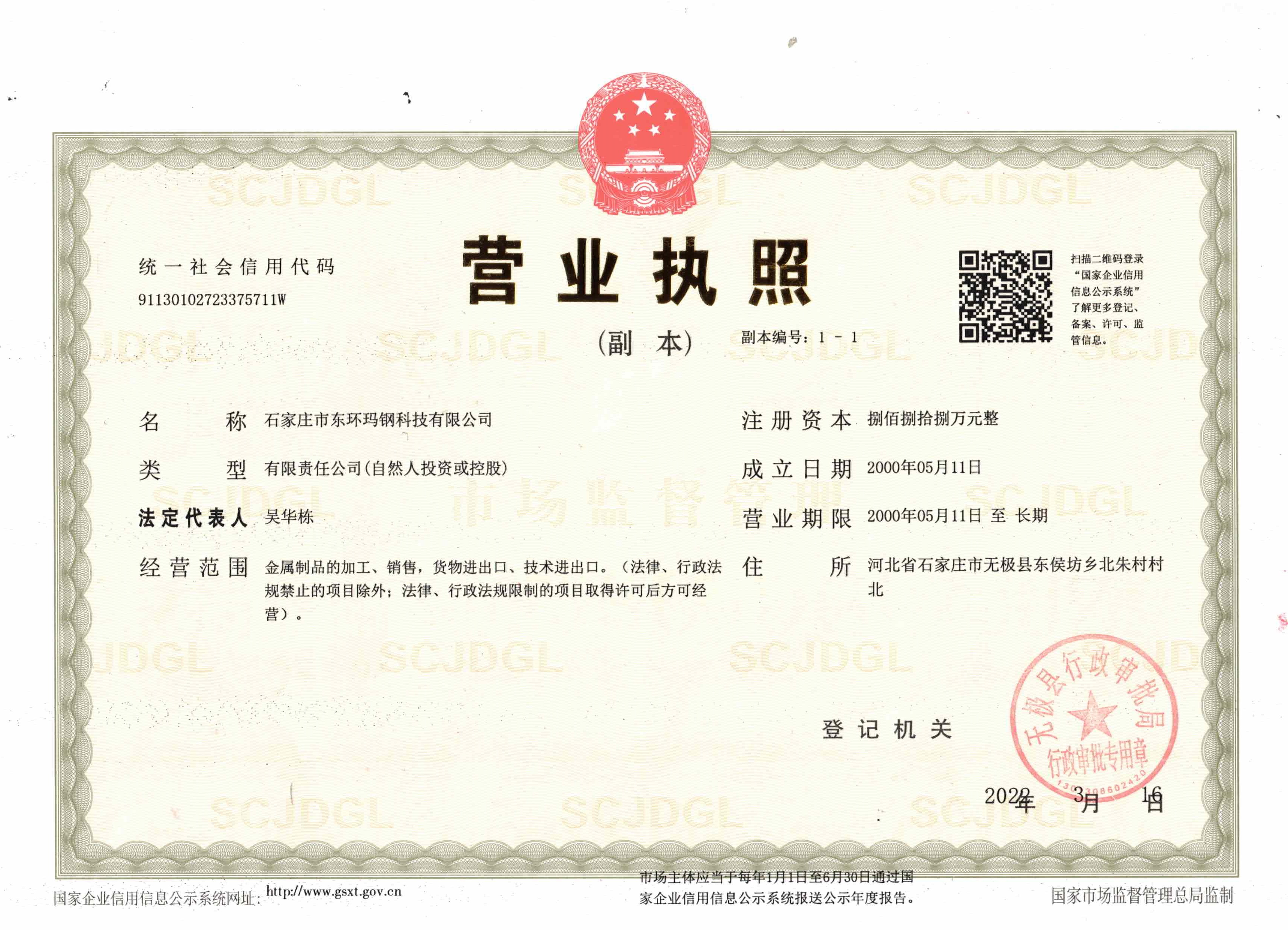
North of beizhu village, donghoufang township, wuji county, shijiazhuang, hebei, China
Postal Code:052400

Mob web

Tiktok