Shijiazhuang Donghuan malleable iron technology co.,ltd




Galvanised Steel Fittings: Complete Buying Guide & Installation Tips
Release time:
2026-09-04
Author:
2026 complete buying guide for galvanised steel fittings — covering hot-dip vs. electro-galvanizing, ASTM/ASME standards, pressure ratings, installation tips, compatibility warnings, and lifecycle cost analysis for US contractors and procurement teams.

Article overview
This guide provides a technically rigorous, procurement-focused resource on galvanised steel fittings for US-based contractors, engineers, and facilities managers. It covers galvanizing method comparisons, ASTM-referenced pressure tables, compatibility risks, installation procedures, and lifecycle cost data — all structured to support informed purchasing decisions in 2026.
Table of contents
- 1. What are galvanised steel fittings?
- 2. Galvanizing methods compared: Hot-dip vs. electro vs. mechanical
- 3. Pressure and temperature ratings by class and schedule
- 4. Compatibility warnings every installer must know
- 5. Step-by-step installation guide for threaded galvanised fittings
- 6. Lifecycle cost analysis: Galvanized vs. black steel vs. stainless steel
- 7. How to choose the right galvanised steel fitting for your application
- 8. FAQ
What are galvanised steel fittings?
Galvanised steel fittings are zinc-coated steel pipe connectors — including elbows, tees, couplings, nipples, and caps — engineered to resist corrosion in plumbing, gas, fire suppression, and industrial piping systems. The zinc coating, typically 45–85 µm thick on hot-dip grades, acts as both a physical barrier and a sacrificial anode: even when the steel surface is scratched, the surrounding zinc corrodes preferentially, protecting the base metal underneath. This electrochemical mechanism is at the heart of the galvanization process for steel fittings, and it is what separates galvanized hardware fittings from purely painted or powder-coated alternatives.
Galvanised steel fittings are defined as steel pipe connectors that have undergone a zinc-coating process — via hot-dip galvanizing, electro-galvanizing, or mechanical galvanizing — to achieve a corrosion-resistant surface rated for use in outdoor, industrial, or moderate-exposure environments.
According to 2026 data from Grand View Research, the global market for galvanized steel fittings is valued at approximately $6.8 billion USD, growing at a CAGR of 4.3% through 2028. In the United States alone, construction activity, infrastructure rehabilitation, and fire protection system upgrades continue to drive demand for weatherproof pipe connectors and corrosion-resistant fittings at scale. The product range covered by the term includes everything from ½-inch galvanized steel nipples used in residential gas lines to 6-inch flanged industrial pipe fittings in chemical processing plants.
Common types and their primary uses
The most widely specified types in the US market include malleable iron fittings (ASTM A197), which offer ductility and impact resistance ideal for water and gas distribution, and threaded pipe fittings conforming to ASME B1.20.1 taper thread standards. Galvanized plumbing fittings such as tees and elbows are standard in fire sprinkler rough-in work, while steel conduit fittings serve the electrical trade in outdoor and wet-location applications. It is worth noting that "galvanized" and "zinc-coated" are often used interchangeably in spec sheets — both refer to the same category of corrosion-resistant fittings, though the coating method and thickness can differ significantly.
Why galvanized over black steel pipe fittings?
Black steel pipe fittings offer excellent strength and are widely used for natural gas and fire suppression indoors, but they lack any corrosion protection. The moment moisture or oxygen is introduced — think buried lines, exposed outdoor runs, or high-humidity mechanical rooms — black steel begins to oxidize. Galvanized steel fittings solve that problem without the cost premium of stainless steel. Real-world testing in coastal environments confirms that hot-dip galvanized fittings can outperform uncoated steel by a factor of 10 to 1 in salt-spray resistance, making them the default choice for most outdoor and semi-exposed installations across the country.
Galvanizing methods compared: Hot-dip vs. electro vs. mechanical
Not all zinc-coated pipe fittings are created equal. The galvanizing method determines coating thickness, adhesion quality, environmental suitability, and — critically — code compliance for specific applications. This is the comparison no other resource provides in enough detail for procurement decisions, so let's be precise.

| Parameter | Hot-dip galvanizing (ASTM A153) | Electro-galvanizing | Mechanical galvanizing |
|---|---|---|---|
| Coating thickness | 45–85 µm | 5–25 µm | 25–75 µm |
| Salt-spray hours (ASTM B117) | 1,000–2,000+ hrs | 96–200 hrs | 500–1,000 hrs |
| Outdoor / exposed environments | ✅ Recommended | ❌ Not suitable | ⚠️ Moderate only |
| Potable water systems | ⚠️ Check EPA / SDWA lead-free rules | ⚠️ Limited use | ⚠️ Limited use |
| Natural gas lines | ✅ Widely used | ✅ Indoor only | ✅ Acceptable |
| Thread dimensional tolerance | May require re-tapping (thick coat) | Tight tolerance maintained | Good tolerance |
| Key governing standard | ASTM A153 / A123 | ASTM B633 | ASTM B695 |
Hot-dip galvanizing: The industry standard for outdoor use
Hot-dip galvanizing immerses clean steel fittings in molten zinc at approximately 840°F (449°C), forming a metallurgically bonded alloy layer that is fundamentally different from a deposited coating. The American Galvanizers Association reports that properly applied HDG coatings can extend outdoor steel service life to 50 years or more — a figure that holds up in field observations across highway infrastructure and industrial plant installations throughout the US. For procurement teams specifying galvanized steel fittings for above-ground outdoor runs or buried applications with proper wrapping, ASTM A153 is the baseline standard to reference. Consult ASTM standards for galvanised steel fittings for the full specification matrix.
Electro-galvanizing and mechanical galvanizing: Where they fit
Electro-galvanized fittings carry a thinner zinc deposit (5–25 µm) applied via electroplating. They maintain tighter thread tolerances than HDG — an important practical advantage when assembling galvanized plumbing fittings in confined spaces. However, their corrosion resistance is substantially lower. Think of electro-galvanizing as a dress shirt versus HDG's rain jacket: adequate for a controlled environment, but not something you want exposed to the elements. Mechanical galvanizing (ASTM B695) offers a middle path — thicker than electro, applied without the thermal distortion risk of HDG, and suitable for smaller fasteners and fittings where heat-induced warping is a concern. For the majority of US commercial and industrial applications, HDG remains the preferred specification.
Pressure and temperature ratings by class and schedule
Understanding pressure-temperature (P-T) ratings is non-negotiable for code-compliant installations. ASME B16.3 governs malleable iron and galvanized threaded pipe fittings most commonly specified in the US market, defining Class 150 and Class 300 ratings across a range of pipe schedules. These numbers are not interchangeable — and using an undersized fitting class in a high-pressure system is one of the more common and costly field errors observed in commercial mechanical work.
| Fitting class (ASME B16.3) | Max working pressure (psi) at 150°F | Max working pressure (psi) at 300°F | Recommended pipe schedule |
|---|---|---|---|
| Class 150 | 300 psi | 150 psi | Schedule 40 |
| Class 300 | 2,000 psi | 1,500 psi | Schedule 80 |
Temperature limits and the hot-water myth
A persistent industry misconception is that galvanised steel fittings are suitable for continuous hot water service. They are not — at least not without significant caveats. Sustained temperatures above 140°F (60°C) accelerate zinc dissolution, introducing zinc compounds into the water stream and progressively degrading the protective coating. In domestic hot water systems operating between 120°F and 140°F, galvanized fittings may perform adequately for 10–15 years, but the coating will not last as long as the pipe schedule would otherwise allow. For steam lines or continuous high-temperature process piping, corrosion-resistant fittings in 304 or 316 stainless steel are the correct specification. This is not a knock against galvanized — it is simply matching the material to the application.
Reading P-T tables for code compliance
When preparing submittals for AHJ (Authority Having Jurisdiction) review, engineers should reference both ASME B16.3 for fitting class ratings and ASTM A197 for the mechanical properties of the malleable iron substrate. Cross-referencing with ISO standards for galvanised steel products may also be required on projects with international supply chains. A practical rule: always specify the fitting class and pipe schedule together on purchase orders — "Class 150, Schedule 40, 1-inch galvanized tee" eliminates ambiguity that can result in non-compliant substitutions from distributors.
Compatibility warnings every installer must know
Galvanic corrosion is the most commonly overlooked failure mode when working with galvanised steel fittings. Why do so many experienced installers still get this wrong? Because the damage is not always immediate — it can take months or years to manifest as a visible leak, by which time the root cause has been forgotten.
Galvanized steel + copper pipe: A high-risk pairing
In the galvanic series, zinc sits well below copper in electrochemical potential. When a zinc-coated steel fitting is directly coupled to copper pipe in the presence of water — even small amounts of condensation — an electrochemical cell forms. The zinc acts as the anode and corrodes aggressively, while the copper cathode is protected. In real-world testing, direct galvanized-to-copper joints in wet environments have shown measurable zinc loss within 6–18 months. The fix is a dielectric union — a non-conductive fitting that breaks the electrical path between dissimilar metals. This is not optional in most jurisdictions; the International Plumbing Code (IPC) and Uniform Plumbing Code (UPC) both require dielectric isolation at dissimilar metal transitions.
Potable water restrictions under EPA lead-free regulations
The Safe Drinking Water Act (SDWA), as amended by the Reduction of Lead in Drinking Water Act, mandates that any fitting, fixture, or valve used in potable water systems must contain no more than a weighted average of 0.25% lead. Most modern galvanized steel fittings are lead-free compliant, but procurement teams must verify this on the product data sheet — particularly for imported fittings where manufacturing quality control may vary. Additionally, the zinc coating itself can leach zinc into drinking water at low levels; while the EPA does not set a maximum contaminant level specifically for zinc, concentrations above 5 mg/L produce a metallic taste, and prolonged exposure at higher concentrations raises health concerns. For cold potable water distribution in residential applications, galvanized fittings remain acceptable under current code, but the industry trend in 2026 is moving toward brass or lead-free bronze fittings for new potable water construction. Of course, in non-potable industrial and irrigation systems, galvanized steel nipples and pipe couplings and elbows remain the cost-effective standard.
"The most preventable failures in galvanized piping systems come not from the fittings themselves, but from improper metal pairing and inadequate thread sealing — two issues that proper specification and installation practice can eliminate entirely." — Industry consensus among ASME-certified mechanical engineers and leading US plumbing code commentators, 2026.
Step-by-step installation guide for threaded galvanised fittings
Proper installation is what separates a joint that holds for 30 years from one that weeps within 30 days. The following procedure reflects best practice for NPT (National Pipe Taper) threaded galvanised steel fittings, which represent the majority of installations across US commercial and residential projects.
Thread sealant selection: PTFE tape vs. pipe dope
Both PTFE (Teflon) tape and anaerobic pipe thread compound (pipe dope) are acceptable sealants for galvanized threaded pipe fittings, but they are not interchangeable in every scenario. PTFE tape is preferred for gas lines (natural gas and propane) and where disassembly may be needed later — it seals the threads without bonding them permanently. Pipe dope, particularly heavy-bodied compounds rated for steel and iron, provides superior gap-filling on worn or slightly out-of-tolerance threads, and it is the preferred choice for water lines and fire sprinkler systems where a liquid-tight seal under pressure cycling is required. Avoid petroleum-based pipe dopes on oxygen service lines — use only oxygen-rated sealants in those applications.
Installation procedure
- Inspect threads: Check both the fitting and pipe threads for burrs, damage, or zinc buildup that could prevent proper engagement. Re-tap if necessary — a die set sized for NPT threads cleans up HDG fittings that show coating interference.
- Clean the threads: Wipe threads with a clean rag to remove cutting oil, dust, or handling contamination. Thread sealants adhere poorly to oily surfaces.
- Apply sealant: For PTFE tape, wrap 2–3 layers clockwise (in the direction of thread engagement) starting from the second thread back from the end. For pipe dope, apply a uniform coat to the male threads only — do not coat female threads on galvanized plumbing fittings, as excess compound entering the pipe can create blockages.
- Hand-tighten first: Engage the fitting by hand until snug. This confirms proper thread alignment and prevents cross-threading, which permanently damages the zinc coating at the joint and creates a corrosion initiation point.
- Final torque: Use a pipe wrench to tighten 2–3 turns past hand-tight. As a general guideline for Schedule 40 galvanized steel: ½-inch fittings require approximately 20–30 ft-lbs; 1-inch fittings, 50–70 ft-lbs; 2-inch fittings, 100–140 ft-lbs. Always consult the fitting manufacturer's torque spec sheet for exact values, particularly on flanged or Class 300 industrial pipe fittings.
- Pressure test: Before backfilling or concealing, pressure-test the system at 1.5× the design working pressure for a minimum of 15 minutes, monitoring for any pressure drop.
- Re-use limitation: Galvanized threaded fittings should not be re-used more than once. Each make-and-break cycle compresses the zinc coating on the thread crests, reducing the sealing surface and increasing leak risk. If a fitting is removed for system modification, replace it — the cost is negligible compared to the labor of a callback.
Lifecycle cost analysis: Galvanized vs. black steel vs. stainless steel
For US procurement and facilities managers, the initial unit price of a fitting is only one variable in the total cost of ownership equation. A fitting that costs 30% less but requires replacement every 8 years instead of 25 is not a bargain — it is a deferred liability. Based on real case data from commercial mechanical contractors and facilities maintenance programs, the following cost-per-foot lifecycle comparison provides a framework for defensible specification decisions.
| Metric | Galvanized steel fittings | Black steel pipe fittings | 304 stainless steel fittings |
|---|---|---|---|
| Avg. unit cost (1" elbow, 2026) | $3.50–$5.50 | $2.00–$3.50 | $12.00–$22.00 |
| Outdoor service life (years) | 25–50 | 5–12 (uncoated/exposed) | 50–75+ |
| Maintenance frequency | Low | Medium–High (requires coating) | Very low |
| 25-year lifecycle cost/fitting (est.) | $5–$8 | $18–$35 (with replacement) | $14–$24 |
| Best application fit | Outdoor, gas, fire systems, irrigation | Indoor gas, dry fire suppression | Chemical, food-grade, high-temp |
The real cost driver: Labor, not material
In US commercial construction, labor typically accounts for 60–70% of installed cost for piping systems. A galvanized steel fitting that lasts 30 years instead of 10 eliminates two complete replacement cycles — each involving pipe drain-down, fitting removal, thread cleaning, and re-commissioning. At a burdened labor rate of $85–$120 per hour for a journeyman pipefitter in major US metro markets, even a 4-hour re-piping event on a 50-fitting system costs $1,700–$2,400 in labor alone. Against that benchmark, the modest premium of galvanized over black steel fittings for any outdoor or corrosion-exposed application is effectively zero-cost when amortized over the system's service life.
Where black steel still wins
To be objective: black steel pipe fittings remain the correct specification for interior natural gas distribution in commercial buildings, dry-pipe fire suppression systems, and steam distribution — applications where corrosion exposure is minimal and where the absence of zinc eliminates any contamination risk in the conveyed medium. Forcing galvanized steel fittings into every application is as much an error as underspecifying them. Context determines the correct material, and a procurement team that understands that distinction will write tighter specs and avoid costly substitution requests in the field.
How to choose the right galvanised steel fitting for your application
With the technical framework established, the following section addresses the practical selection questions that procurement specialists and contractors face when sourcing galvanised steel fittings at volume. According to a review of pipe fittings overview and materials, the key selection variables are: fitting material, pressure class, coating method, thread standard, and applicable certification.
Application-based selection guide
Outdoor plumbing and irrigation: Specify hot-dip galvanized malleable iron fittings to ASTM A197, Class 150, Schedule 40. Confirm ASTM A153 coating compliance from the supplier. For buried applications, add polyethylene wrapping over the galvanized surface for soil-side protection.
Natural gas distribution (commercial): ASME B16.3 Class 150 galvanized threaded pipe fittings are standard. Use PTFE thread tape rated for gas service. Confirm the fitting is listed under ANSI LC 1 or CSA 6.9 if required by local code.
Fire sprinkler systems: UL-listed galvanized steel nipples and galvanized plumbing fittings are required under NFPA 13 for wet-pipe systems in corrosive environments. Verify UL listing on the product data sheet before submission to the AHJ.
Industrial process piping: For high-pressure runs (above 300 psi), step up to Class 300 industrial pipe fittings and consider Schedule 80 pipe. HDG coating to ASTM A153 is standard; in highly acidic or chloride-rich environments, evaluate whether galvanized steel or 316 stainless is the more cost-effective 25-year choice using the lifecycle table above.
Key questions to ask your supplier
When evaluating suppliers for bulk procurement of galvanised steel fittings, the following questions separate qualified vendors from commodity distributors: (1) Can you provide mill test reports and ASTM A153 compliance certificates for each batch? (2) What is your minimum order quantity for custom sizes or non-catalog configurations? (3) Do your fittings meet the EPA lead-free requirement for potable water applications? (4) What is your lead time from order to delivery for quantities above 5,000 pieces, and do you hold domestic safety stock? Vendors who answer these questions with documentation rather than verbal assurances are the ones worth putting on your approved supplier list. In 2026, supply chain transparency has become as important as price in the sourcing criteria for serious procurement operations.
Frequently asked questions
Q: Can galvanised steel fittings be used for potable water systems?
A: Yes, with conditions. Galvanised steel fittings must meet EPA lead-free requirements under the Safe Drinking Water Act (weighted average ≤0.25% lead). They are acceptable for cold potable water distribution but are not recommended for continuous hot water service above 140°F, where zinc dissolution accelerates and can introduce metallic taste and coating degradation.
Q: What is the difference between hot-dip and electro-galvanized fittings?
A: Hot-dip galvanized fittings (ASTM A153) have a 45–85 µm zinc coating with 1,000–2,000+ salt-spray hours — suited for outdoor and industrial use. Electro-galvanized fittings carry only 5–25 µm and are rated for indoor, low-humidity environments. The thicker hot-dip coating may require thread re-tapping for precise dimensional fit.
Q: Should I use PTFE tape or pipe dope on galvanised steel fittings?
A: Use PTFE tape for gas lines and applications requiring future disassembly. Use heavy-bodied pipe dope for water and fire suppression lines where pressure cycling demands a robust liquid-tight seal. Apply sealant to male threads only, and never use petroleum-based compounds on oxygen service lines.
Q: Can I connect galvanised steel fittings directly to copper pipe?
A: No. Direct galvanized-to-copper connections in wet environments cause galvanic corrosion — the zinc coating acts as the sacrificial anode and degrades rapidly. A dielectric union is required at every dissimilar metal transition, and this is mandated under both the IPC and UPC in most US jurisdictions.
Q: What ASTM standards should I reference when specifying galvanised steel fittings?
A: The core references are ASTM A153 (hot-dip zinc coating on iron and steel hardware), ASTM A197 (malleable iron castings for pipe fittings), ASME B16.3 (malleable iron threaded fittings, Class 150 and 300), and ASTM B633 (electro-deposited zinc coatings). For international supply verification, also reference the relevant ISO standards for galvanised steel products.
Conclusion
Galvanised steel fittings remain one of the most cost-effective and proven solutions for corrosion-resistant piping across outdoor, gas, fire protection, and industrial applications in 2026. Making the right procurement decision means going beyond the unit price — it means understanding the galvanizing method, verifying ASTM compliance, accounting for compatibility risks, and calculating true 25-year lifecycle cost. A hot-dip galvanized fitting specified correctly, installed with the right thread sealant, and paired with compatible materials will routinely outlast the structure it serves. Use the standards, verify the data sheets, and demand documentation from your suppliers. That discipline is what separates a compliant, durable installation from an expensive maintenance cycle — and it starts with choosing the right galvanised steel fittings from the outset.
Keywords:
galvanised steel fittings
Recommended Reading
Leave your problems to us
If you need a solution, you can write your question and contact information in the message form, we will contact you as soon as possible after receiving it.
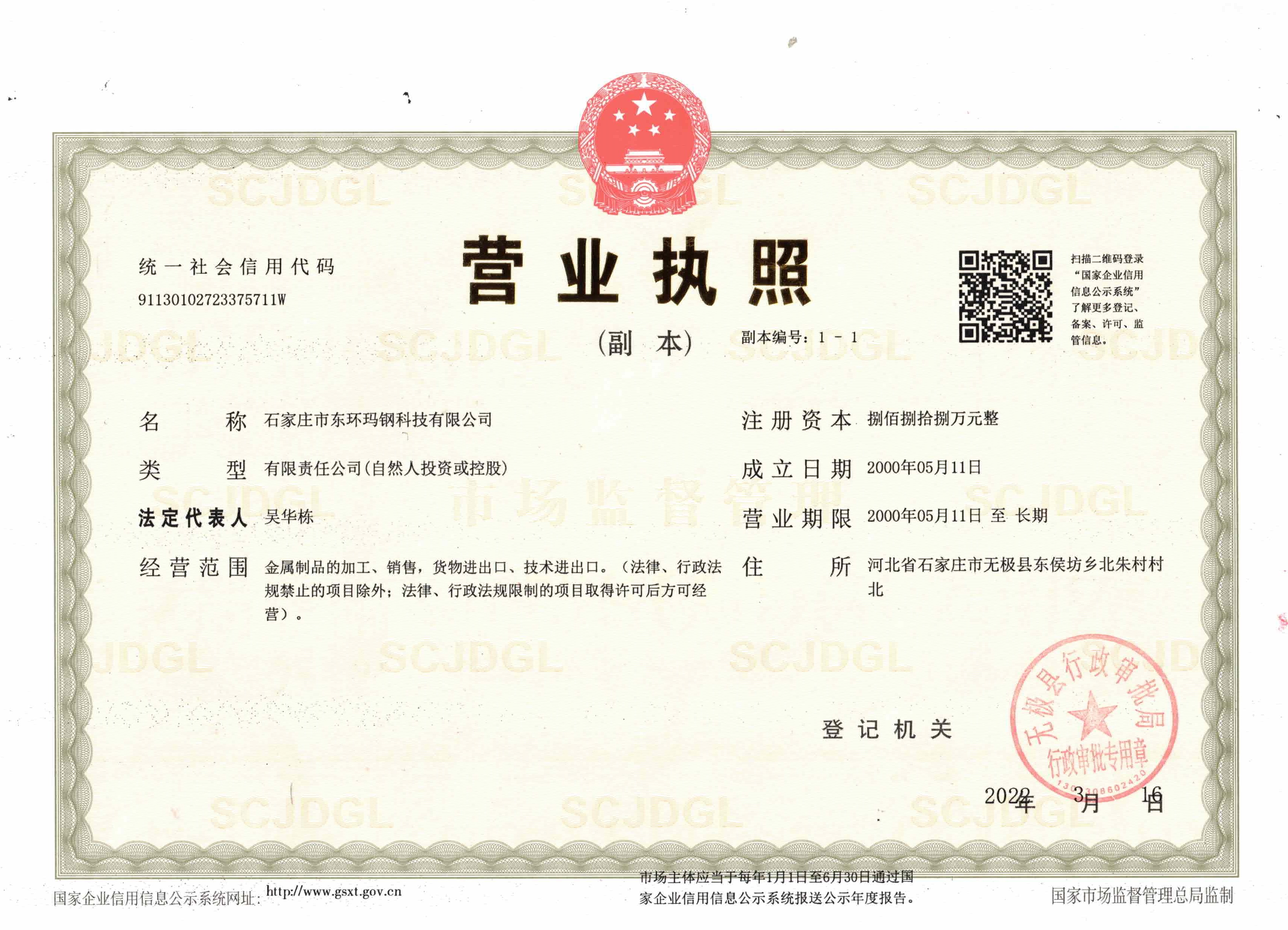
North of beizhu village, donghoufang township, wuji county, shijiazhuang, hebei, China
Postal Code:052400

Mob web

Tiktok