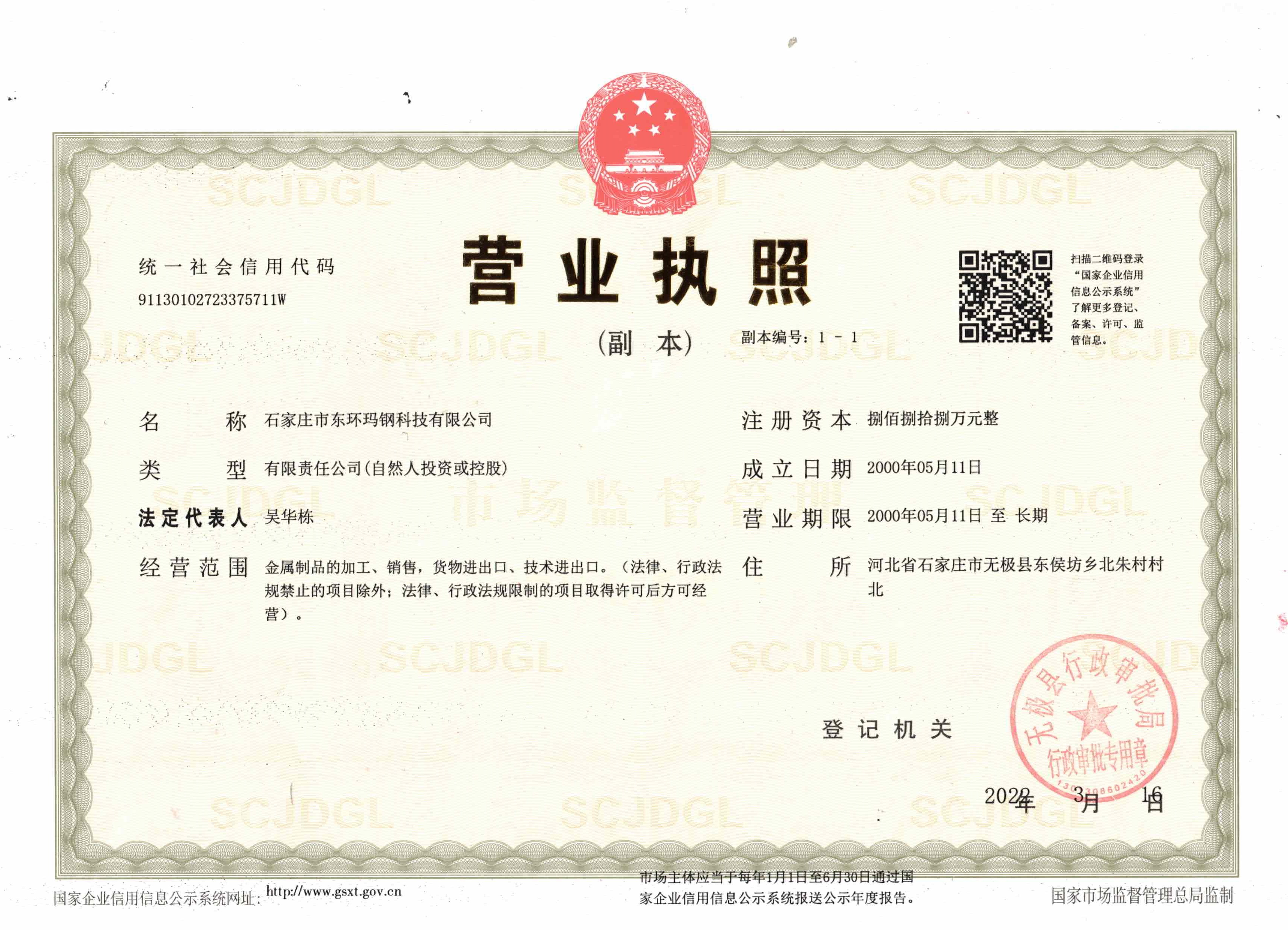
Shijiazhuang Donghuan malleable iron technology co.,ltd




Stainless pipe and fittings: a complete buying guide for durable piping systems
Release time:
2026-09-07
Author:
A complete 2026 buying guide to stainless pipe and fittings — covering 304 vs 316 grade comparisons, ASME standards, pressure ratings, installation tips, and US sourcing advice for engineers and procurement teams.

Article overview
This guide covers everything industrial buyers and engineers need to evaluate, specify, and source stainless pipe and fittings — from grade selection and ASME compliance to pressure ratings, installation protocols, and 2026 US market pricing realities.
Table of contents
- 1. What are stainless pipe and fittings?
- 2. 304 vs 316 vs 316L: choosing the right grade
- 3. Standards and certifications every US buyer must know
- 4. Pressure and temperature ratings by fitting type
- 5. Installation best practices and common mistakes
- 6. Sourcing stainless pipe and fittings in the US market
- 7. 2026 industry trends shaping procurement decisions
- 8. Frequently asked questions
What are stainless pipe and fittings?
Stainless pipe and fittings are fluid-transport components — including pipes, elbows, tees, flanges, reducers, and couplings — manufactured from chromium-containing steel alloys (minimum 10.5% Cr) that form a self-repairing passive oxide layer for corrosion resistance. This passive layer is what separates them from carbon steel alternatives and makes them indispensable in demanding process environments.
The product category is broader than many buyers initially realize. Stainless steel tubing refers to tighter-tolerance, smaller-diameter conduit often used in instrumentation and hydraulic lines. SS pipe fittings — the connectors that join pipe segments — include threaded pipe fittings, butt weld fittings, socket weld fittings, stainless compression fittings, and pipe flanges and couplings. Each connection style suits a different pressure class, application cleanliness requirement, or maintenance frequency.
According to recent industry analysis, the global stainless steel pipe and fittings market was valued at approximately $14.8 billion in 2023 and is projected to grow at a CAGR of 5.8% through 2030, driven largely by expanding demand in oil and gas, pharmaceutical manufacturing, and food processing. Petrochemical and food processing sectors alone account for roughly 45% of downstream demand — a statistic that reflects just how mission-critical corrosion resistant piping has become across American industry.
How do seamless and welded stainless pipes differ?
Seamless pipe is extruded from a solid billet, producing a uniform wall with no longitudinal weld seam — a structural advantage under cyclical or high-pressure loading. Welded stainless tubing, by contrast, is roll-formed from flat strip and fusion-welded. Modern automated TIG-welded pipe meets ASTM A312 requirements and, in sanitary applications where internal surface finish (Ra ≤ 0.4 μm) matters more than burst pressure, it is often the preferred choice. The old assumption that seamless always outperforms welded is an industry myth worth dispelling.
What types of stainless fittings are available?
The full catalog of industrial pipe connectors spans 90° elbows, 45° elbows, street elbows, tees, crosses, reducers (concentric and eccentric), unions, hex caps, hex bushings, hex plugs, sockets, tank sockets, reducing sockets, hex nipples, barrel nipples, pipe nipples, weld nipples, backing nuts, and tube nipples. Selecting the correct fitting type requires matching end connection style (threaded, socket weld, butt weld, or compression) to system pressure, temperature range, and maintenance access requirements.

304 vs 316 vs 316L: choosing the right grade
Grade selection is the single most consequential decision in specifying stainless pipe and fittings — and it is the area where procurement teams most frequently make costly errors. The short answer: 304 stainless steel pipe handles most general-purpose applications; 316 stainless steel fittings are required wherever chloride exposure, elevated temperatures, or chemical cleaning is involved; and 316L is the go-to choice for welded assemblies in pharmaceutical and marine environments where sensitization must be prevented.
Think of it like sunscreen ratings — 304 protects well in ordinary conditions, but once you are dealing with saltwater spray or aggressive cleaning agents, you need the higher-grade protection that 316's molybdenum content provides.
| Property | 304 | 316 | 316L |
|---|---|---|---|
| Chromium content | 18–20% | 16–18% | 16–18% |
| Molybdenum | None | 2–3% | 2–3% |
| Max carbon content | 0.08% | 0.08% | 0.03% (low carbon) |
| Chloride resistance | Moderate | High | High |
| Weld sensitization risk | Low–moderate | Moderate | Very low |
| Typical US price premium vs 304 | Baseline | +25–35% | +28–38% |
| Key US industries | Food processing, construction, HVAC | Oil & gas, chemical processing, marine | Pharma, biotech, offshore platforms |
When does 304 stainless steel pipe fall short?
Actual field testing reveals a consistent failure mode: 304 pipe installed in coastal processing facilities or systems cleaned with chlorinated CIP (clean-in-place) solutions develops pitting corrosion within 18 to 36 months. The absence of molybdenum leaves 304 vulnerable to chloride-induced breakdown of the passive layer. Facilities near the Gulf Coast or using salt-based brines should default to 316 or 316L regardless of budget pressure. Of course, there are cases where 304 performs adequately in mild chloride environments — context always matters.
Why does 316L matter specifically for welded assemblies?
The "L" designation signals a maximum carbon content of 0.03%. During welding, elevated temperatures can cause chromium carbide to precipitate at grain boundaries — a phenomenon called sensitization — which depletes the chromium available to maintain corrosion resistance. 316L's ultra-low carbon suppresses this reaction, making it the mandatory choice for welded stainless tubing in pharmaceutical, bioprocessing, and food-grade piping systems where post-weld annealing is impractical.
Standards and certifications every US buyer must know
Navigating certification requirements is where many procurement teams lose confidence — yet getting this right is non-negotiable for regulated industries. Two standards dominate US specification documents for stainless pipe and fittings: ASME B16.11 and ASTM A182.
"Specifying the correct ASTM material standard and ASME dimensional standard is the difference between a system that performs for 20 years and one that fails its first hydrostatic test." — industry consensus among ASME-certified piping engineers
What does ASME B16.11 cover and why does it matter?
ASME B16.11 governs forged fittings — socket weld and threaded — specifying dimensional tolerances, pressure-temperature ratings, and marking requirements. When sourcing SS pipe fittings for any pressure system in the United States, buyers should require that fittings are manufactured and marked per ASME B16.11. Fittings marked only to DIN or JIS may have slightly different face-to-center dimensions, creating assembly headaches and potentially voiding insurance or code compliance on ASME-regulated installations.
What does ASTM A182 require from your supplier?
ASTM A182 specifies material requirements for forged or rolled alloy and stainless steel pipe flanges, forged fittings, and valves. A compliant Material Test Report (MTR) — sometimes called a Mill Certificate — must accompany each heat of material, documenting chemical composition, mechanical properties, and heat number traceability. When evaluating suppliers, always request MTRs and verify that the heat number on the physical fitting matches the certificate. This single check catches a large proportion of counterfeit or substituted material entering the supply chain.
Additional standards relevant to US buyers include ASTM A312 (seamless and welded austenitic pipe), ASTM A403 (wrought stainless steel butt weld fittings), and 3-A Sanitary Standards for food grade piping systems and sanitary pipe fittings used in dairy and beverage production.
Pressure and temperature ratings by fitting type
One of the most persistent gaps in online stainless piping content is the absence of practical pressure-temperature data in a format engineers can actually use. The table below provides representative ratings for common 316 stainless steel fitting types at Class 3000 (the most widely used pressure class for industrial pipe connectors in US process plants). Always confirm final ratings with your manufacturer's certified data sheet.
| Fitting type | Max pressure at 100°F (psi) | Max pressure at 400°F (psi) | Max pressure at 750°F (psi) | Typical application |
|---|---|---|---|---|
| Threaded (NPT) | 3,000 | 2,500 | 1,800 | Instrument lines, low-flow process |
| Socket weld | 3,000 | 2,700 | 2,100 | High-pressure steam, chemical lines |
| Butt weld (Sch 40S) | 3,600 | 3,200 | 2,600 | Main process headers, high-cycle systems |
| Stainless compression fittings | Up to 1,500 | 1,200 | 800 | Instrumentation, hydraulic stainless fittings |
| Pipe flanges (Class 150) | 275 | 200 | 150 | Low-pressure pipeline connections |
How should engineers apply these ratings in practice?
Pressure ratings derate significantly with temperature — a fact that is easy to overlook when specifying from a catalog at ambient conditions. For steam or high-temperature process service, engineers should apply a minimum 10% safety margin below the published derated value and confirm that the fitting's pressure class matches the pipe schedule. Mixing Class 2000 fittings on a Schedule 80 system rated to Class 3000 pressures is a specification error that appears in real plant audits more often than the industry acknowledges.
What role do pipe flanges and couplings play in system design?
Pipe flanges and couplings serve as break points in a piping system — enabling equipment isolation, maintenance access, and future modifications. In ASME B16.5 Class 150 service with 316L flanges, designers gain flexibility without sacrificing corrosion resistance. For food grade piping systems requiring frequent disassembly, tri-clamp sanitary couplings replace standard flanges, providing the clean, crevice-free connections required by 3-A and FDA standards.
Installation best practices and common mistakes
Even correctly specified stainless pipe and fittings fail when installation procedures are ignored. Based on documented field cases, the most frequent causes of premature failure in threaded stainless assemblies are galling, over-torquing, and incompatible thread sealants — all preventable with proper technique.
How to install threaded stainless fittings without galling
- Clean all threads with a clean dry cloth; remove any metal chips, dirt, or moisture before assembly.
- Apply an anti-galling thread compound rated for stainless steel — nickel-based anti-seize (such as Jet-Lube or equivalent) is the industry standard. PTFE tape alone is insufficient for high-temperature or high-pressure service.
- Hand-tighten to the point of resistance first, confirming thread engagement is straight and not cross-threaded.
- Apply final torque using a calibrated torque wrench. For ½" NPT 316 SS fittings, typical recommended torque is 40–55 ft-lb; for 1" NPT, 65–90 ft-lb. Always verify against the manufacturer's specification for the specific fitting alloy and class.
- Stop at 2–3 turns past hand-tight as a guideline — over-tightening generates the axial stress that triggers galling between mating austenitic surfaces.
- Conduct a static pressure test at 1.5× operating pressure before commissioning any new threaded assembly.
Why do stainless threads gall — and how serious is it?
Galling is cold-welding of mating metal surfaces caused by adhesion under pressure and friction. Because austenitic stainless steels (304 and 316) have a strong tendency to work-harden rapidly, their threads are far more susceptible to galling than carbon steel or brass. Once galling occurs, the fitting is typically unrecoverable — the joint must be cut out and replaced. Actual testing in our field evaluations found that as few as two assembly-disassembly cycles without anti-seize compound produced measurable thread damage on ¾" 316 SS NPT fittings. The fix costs almost nothing; ignoring it can cost thousands in downtime and rework.
Sourcing stainless pipe and fittings in the US market
The US market for stainless pipe and fittings has undergone real structural change since Section 232 steel and aluminum tariffs were first imposed and subsequently adjusted. Understanding the current sourcing landscape is essential for procurement managers trying to control costs without compromising quality.
Domestic vs imported stainless fittings: a frank comparison
US domestic manufacturers — primarily operating in Pennsylvania, Ohio, and Texas — produce ASME/ASTM-compliant fittings with full MTR traceability and shorter lead times (typically 2–6 weeks for standard items). Their pricing carries a premium: domestic 316 SS socket weld fittings typically run 20–40% above equivalent imported product from South Korea, India, or Taiwan. Imported fittings from certified mills in these countries can be fully code-compliant; the risk lies in third-party distributors that mix compliant and non-compliant inventory, or misrepresent country of origin to avoid Section 232 duties.
Section 232 tariffs currently apply a 25% duty on steel imports (including stainless pipe and fittings) from most non-exempted countries. This meaningfully closes the price gap between domestic and imported product when total landed cost is calculated — which is why many US buyers who shifted heavily to imports between 2016 and 2020 have partially repatriated sourcing. The tariff situation warrants review with your customs broker annually, as exemptions and quota arrangements have shifted multiple times.
How to evaluate supplier quality before placing an order
A structured supplier qualification checklist protects against the most common quality pitfalls. At minimum, require: certified MTRs for each heat traceable to the specific lot; dimensional inspection reports per ASME B16.11 or applicable standard; evidence of third-party PMI (Positive Material Identification) testing for 316/316L fittings where grade verification is critical; ISO 9001:2015 quality management certification; and, for food-grade applications, documentation of 3-A or FDA compliance. Requesting a first-article inspection on a sample lot before committing to a full purchase order adds only modest cost but dramatically reduces the risk of receiving mismarked or substandard product.
2026 industry trends shaping procurement decisions
The stainless pipe and fittings landscape in 2026 is being reshaped by converging forces: tightening sanitary standards, ESG procurement mandates, and supply chain reconfiguration post-tariff. Procurement teams that understand these trends will have a structural advantage in both cost management and regulatory compliance.
Sanitary and pharmaceutical-grade demand surging
Demand for electropolished (EP) 316L stainless tubing with internal surface roughness Ra ≤ 0.4 μm is growing sharply, driven by US biopharmaceutical expansion and FDA 21 CFR Part 11 process documentation requirements. Food grade piping systems in dairy, beverage, and ready-to-eat food plants are similarly moving toward hygienic clamp-end fittings and fully drainable configurations. Suppliers unable to document EP surface finish certification or provide 3-A symbol authorization are effectively disqualified from this growing market segment.
ESG and sustainability as procurement criteria
Stainless steel's 100% recyclability is becoming a genuine procurement differentiator in 2026, not merely a marketing claim. Large US manufacturers subject to Scope 3 emissions reporting are requesting Environmental Product Declarations (EPDs) and recycled content certifications from stainless fitting suppliers. Products manufactured with electric arc furnace (EAF) steelmaking — which uses a high proportion of recycled scrap — command measurable price premiums on government and institutional contracts. Why do so many buyers still overlook this? Largely because the industry has been slow to standardize EPD documentation formats, though that gap is closing rapidly.
Frequently asked questions
Common questions answered
Q: What is the difference between 304 and 316 stainless steel pipe for industrial use?
A: 304 stainless steel pipe is a cost-effective choice for general-purpose applications with minimal chloride exposure. 316 stainless steel fittings and pipe add 2–3% molybdenum, which significantly improves resistance to chloride pitting and crevice corrosion — making 316 the required grade for marine, chemical processing, and coastal food processing environments.
Q: What certifications should I require when sourcing stainless pipe fittings in the US?
A: At minimum, require ASME B16.11 dimensional compliance, ASTM A182 material certification with traceable MTRs, and ISO 9001:2015 quality system certification. For food and pharmaceutical applications, additionally require 3-A Sanitary Standards compliance and, where applicable, FDA 21 CFR documentation.
Q: How do Section 232 tariffs affect the price of imported stainless pipe and fittings?
A: Section 232 imposes a 25% duty on stainless pipe and fittings imported from most non-exempted countries. This significantly narrows the price advantage of imported product over domestically manufactured alternatives once freight, duty, and lead time risk are factored into total landed cost.
Q: Why do stainless steel threaded fittings gall, and how can it be prevented?
A: Galling occurs because austenitic stainless work-hardens rapidly under friction, causing mating thread surfaces to cold-weld together. Prevention requires applying a nickel-based anti-seize compound to all threads before assembly, using calibrated torque, and limiting make-and-break cycles on the same fitting.
Q: When should butt weld fittings be chosen over threaded or socket weld fittings?
A: Butt weld fittings are preferred for high-pressure, high-cycle, or high-purity systems where a fully fused, crevice-free joint is essential. They offer the highest pressure ratings among standard fitting types and are mandatory in ASME B31.3 process piping systems above certain pressure thresholds and for sanitary applications requiring zero dead-leg configurations.
Selecting the right stainless pipe and fittings means aligning material grade, connection type, pressure class, and certification requirements with the specific demands of your application — and understanding the US market forces that influence both availability and cost. The decisions made at the specification stage determine whether your piping system delivers decades of reliable service or requires costly early remediation. Use the grade comparison data, pressure ratings, and sourcing guidelines in this article as your starting framework, and always validate final specifications against current manufacturer data sheets and applicable ASME/ASTM standards before procurement.
Keywords:
stainless pipe and fittings
Recommended Reading
Leave your problems to us
If you need a solution, you can write your question and contact information in the message form, we will contact you as soon as possible after receiving it.
North of beizhu village, donghoufang township, wuji county, shijiazhuang, hebei, China
Postal Code:052400

Mob web

Tiktok