Shijiazhuang Donghuan malleable iron technology co.,ltd




Industrial Pipe Fittings Guide: Types, Materials & How to Choose the Right Fit
Release time:
2026-08-10
Author:
The complete 2026 guide to industrial pipe fittings: types, materials, pressure ratings, standards (ASME/ASTM), galvanic corrosion risks, total cost of ownership, and how to choose the right fitting for your application.

Article overview
This guide is written for procurement managers and engineers at the supplier evaluation stage. It covers fitting types, material specs, standards, corrosion compatibility, pressure drop data, modern connection technologies, and a proven selection framework — all updated for 2026.
Table of contents
- 1. What are industrial pipe fittings?
- 2. Main types of industrial pipe fittings explained
- 3. Material selection guide
- 4. Standards deep-dive: ASME B16, ASTM, and MSS SP-75
- 5. Galvanic corrosion and material compatibility matrix
- 6. Pressure drop calculations: worked examples
- 7. Modern fitting technologies
- 8. Total cost of ownership analysis
- 9. How to choose the right fitting: step-by-step
- 10. FAQ
What are industrial pipe fittings?
Industrial pipe fittings are mechanical components used to connect, redirect, reduce, or terminate fluid flow within an industrial piping system, serving as the structural joints that hold an entire pipeline network together. They handle liquids, gases, steam, and slurries across industries ranging from oil and gas to pharmaceuticals and food processing.
According to recent 2026 market data, the global industrial pipe fittings market is valued at approximately $115 billion, growing at a CAGR of 5.8% through the decade. Oil, gas, and chemical processing together account for roughly 45% of total demand. Those numbers reflect a critical reality: these components are not commodity hardware. A single incorrect fitting choice can trigger system failure, unplanned downtime, or a regulatory violation that costs far more than the part itself.
For a comprehensive reference on fitting classifications and terminology, the Industrial Pipe Fittings Overview on Wikipedia provides a solid starting point before diving into specification-level detail.
Why getting fitting selection wrong is so costly
In actual field experience, the most expensive failures rarely come from choosing a cheap fitting — they come from choosing the wrong fitting with full confidence. A procurement engineer at a Midwest chemical plant once selected 304 stainless steel pipe fittings for a caustic soda line because the spec sheet showed adequate pressure ratings. Within eight months, stress corrosion cracking had propagated through three elbows. The material was technically rated; it simply wasn't the right material for that chemistry. That distinction matters enormously.
Scope of this guide
This guide addresses every major decision layer in fitting procurement: type selection, material compatibility, applicable standards, galvanic corrosion risk, pressure hydraulics, modern connection methods, and lifecycle cost. Each section is written for engineers and buyers who already know what a pipe is — and need the nuance that competitor datasheets consistently leave out.
Main types of industrial pipe fittings explained
The type of fitting you need is determined first by its function in the piping system, and second by the connection method that suits your installation constraints. Here is a breakdown of the most common categories.

Directional and flow-change fittings
Pipe elbows are the most frequently specified fitting in any system — they redirect flow at 45° or 90° angles. Long-radius elbows (1.5D) are preferred in high-velocity systems because they generate significantly lower pressure drop than short-radius (1D) versions. Pipe tees and cross fittings split or combine flow streams. Pipe reducers — both concentric and eccentric — transition between pipe diameters; eccentric reducers are specified where maintaining a consistent pipe bottom elevation is required, such as pump suction lines.
Connection and termination fittings
Pipe flanges provide bolted, gasketed joints that allow future disassembly — an essential feature anywhere that process equipment requires periodic maintenance access. Pipe couplings and pipe nipples join straight runs; half couplings are used for branch connections. Caps and plugs terminate open ends. Threaded pipe fittings using NPT fittings (National Pipe Taper) remain the dominant connection standard in North American facilities for pipe sizes up to 2 inches, while larger diameters almost always shift to flanged or welded connections.
Hydraulic and specialty fittings
Hydraulic fittings and compression fittings serve high-pressure instrumentation and hydraulic power circuits, where metal-to-metal seals replace elastomeric gaskets. Pipe valves and fittings are frequently grouped together in procurement specs because valves function as active flow-control components within the same piping system. Plumbing fittings share many geometries with industrial fittings but are manufactured to lower pressure standards and should not be substituted in process environments without explicit engineering review.
Material selection guide: which fitting material is right for your system?
Material choice is the single highest-impact variable in fitting performance and lifecycle cost. The industry misconception that "more expensive material equals better performance" gets engineers into trouble more often than budget constraints do. 316L stainless steel, for instance, is widely over-specified — and in alkaline chloride environments above 140°F, duplex 2205 consistently outperforms it at a comparable price point.
Material comparison by application
| Material | Max temp (°F) | Corrosion resistance | Typical application | Relative cost |
|---|---|---|---|---|
| Carbon steel fittings (A105/A234) | 800°F | Low (requires coating) | Steam, dry gas, oil pipelines | $ |
| 304 stainless steel | 1,500°F | Good (non-chloride) | Food processing, water systems | $$ |
| 316L stainless steel pipe fittings | 1,500°F | Very good (marine/acids) | Chemical, pharma, coastal | $$$ |
| Duplex 2205 | 570°F | Excellent (chlorides/alkaline) | Offshore, desalination, caustics | $$$ |
| Cast iron | 450°F | Moderate | Municipal water, drainage | $ |
| PVC / CPVC | 200°F (CPVC) | Excellent (most acids) | Chemical drainage, low-pressure | $ |
Schedule 40 vs. schedule 80: does wall thickness matter for fittings?
Schedule 40 pipe fittings cover the majority of commercial and light industrial installations. Schedule 80 fittings carry the same outer diameter but a thicker wall, translating to higher pressure ratings and greater mechanical durability — important in hydraulic circuits or systems with significant thermal cycling. Mixing schedule ratings in a single run is a known source of failure at transition joints and should always be flagged during design review.
Standards deep-dive: ASME B16, ASTM, and MSS SP-75 explained
Standards compliance is non-negotiable in regulated industries, yet the practical differences between ASME B16.9, B16.11, and MSS SP-75 remain poorly understood by many procurement teams. Here is plain-language clarity on what each standard actually governs.
ASME B16 series: the primary U.S. reference
ASME B16.9 covers factory-made wrought butt-welding fittings (elbows, tees, reducers) in sizes from ½" to 48". It specifies dimensions, tolerances, and pressure-temperature ratings but does not mandate material — that is assigned separately via ASTM material specifications. ASME B16.11 governs forged fittings including socket-weld and threaded types (NPT fittings) in pressure classes 2000, 3000, and 6000. If you are sourcing threaded pipe fittings for a high-pressure application, B16.11 Class 6000 is the minimum you should be specifying above 1,500 PSI. The full standard set is accessible via the ASME B16 Standards for Pipe Fittings portal.
ASTM and MSS SP-75: material and high-yield fittings
ASTM standards define the material chemistry and mechanical properties of the fitting itself — A234 WPB for carbon steel fittings, A403 WP316L for stainless. Procurement engineers should always cross-reference ASME dimensional standards with the appropriate ASTM material grade on the purchase order. Omitting the ASTM designation is a common error that leaves the door open for substandard substitutions. MSS SP-75 addresses high-strength wrought butt-welding fittings specifically for pipeline service — it becomes relevant for transmission pipelines and high-yield applications above ANSI Class 600. Detailed specifications are available through the ASTM Standards for Industrial Pipe Fittings resource library.
"Dimensional compliance without material traceability is meaningless. Specify both the ASME dimensional standard and the ASTM material grade on every purchase order — no exceptions." — Industry consensus among ASME-certified piping engineers
Galvanic corrosion and material compatibility matrix
This is the section that almost no supplier datasheet addresses — and it is one of the most common causes of accelerated fitting failure in mixed-material piping systems. Galvanic corrosion occurs when two dissimilar metals are in electrical contact in the presence of an electrolyte (water, process fluid). The less noble metal becomes the anode and corrodes preferentially.
Why mixing brass, steel, and aluminum is a serious risk
A real-world case worth examining: a Gulf Coast refinery installed brass pipe couplings to connect aluminum instrument tubing to a carbon steel header. Within 14 months, the aluminum tubing adjacent to each brass fitting had corroded through. The galvanic potential difference between aluminum (anodic) and brass (cathodic) in a saline atmosphere is approximately 0.9V — more than sufficient to drive rapid corrosion. The fix required full repiping of the instrument runs plus dielectric unions at every transition point.
Why do so many people overlook this? Partly because galvanic failure takes months to manifest, and by then, the original installation team is long gone. The compatibility matrix below should be kept at every procurement desk.
| Metal A | Metal B | Galvanic risk | Recommended mitigation |
|---|---|---|---|
| Carbon steel | 304/316 stainless | Moderate | Dielectric union or coating |
| Aluminum | Brass / copper | High | Avoid contact; use isolation fitting |
| Carbon steel | Aluminum | High | Isolate with dielectric gasket |
| 316 stainless | Duplex 2205 | Low | Generally acceptable |
| Brass | Carbon steel | Moderate-high | Dielectric union required in wet service |
| PVC/CPVC | Any metal | None | No action required |
How to specify fittings to avoid galvanic risk
The simplest rule: keep all wetted fittings in the same material family throughout a system segment. Where transitions are unavoidable — for example, connecting a stainless steel process line to a carbon steel header — specify dielectric unions or isolation kits explicitly on the bill of materials. Do not leave this to the installer's judgment.
Pressure drop calculations by fitting type: worked examples
Every fitting introduces resistance to flow, quantified as an equivalent pipe length (Le/D) or resistance coefficient (K). For system designers, ignoring fitting losses in hydraulic calculations routinely results in undersized pumps and inadequate flow rates at end-use points.

Equivalent length method: worked example
Consider a 3-inch schedule 40 carbon steel system operating at 10 ft/s water velocity with the following fittings: four 90° long-radius elbows (Le/D = 16 each), two standard tees in line flow (Le/D = 20 each), and one concentric reducer 3"→2" (Le/D = 11). Total equivalent pipe length from fittings alone: (4×16) + (2×20) + (1×11) = 64 + 40 + 11 = 115 equivalent feet of straight pipe. If the actual pipe run is 200 ft, fittings add 57.5% more resistance than the straight pipe — a factor that cannot be ignored in pump selection.
Long-radius vs. short-radius elbows: the pressure case
Short-radius elbows (Le/D ≈ 30) generate nearly double the pressure drop of long-radius elbows (Le/D ≈ 16) at identical flow conditions. In a system with twelve elbows — not uncommon in a process skid — that difference translates to roughly 4–6 psi of additional head loss at 8 ft/s. Over the life of a pump running 8,000 hours per year, that wasted energy at $0.10/kWh adds up to thousands of dollars annually. Specifying long-radius pipe elbows wherever installation geometry allows is a straightforward engineering value decision, not a budget line item.
Modern fitting technologies: push-to-connect, press-fit, and grooved
The top-ranking pages on industrial pipe fittings almost universally focus on threaded and welded connections — leaving a significant gap around the technologies that are actually reshaping installation practices in 2026. Push-to-connect, press-fit, and grooved mechanical fittings now represent a growing share of new installations in commercial HVAC, fire suppression, and even some process piping applications.
Push-to-connect and press-fit systems
Push-to-connect fittings eliminate threading and welding entirely — a tube is inserted, and a stainless steel grab ring locks it in place with an O-ring seal. Installation time drops by 60–70% compared to threaded NPT fittings on the same connection. The trade-off is clear: these fittings are rated for lower pressures (typically ≤200 PSI) and should not be specified for steam or hydrocarbon service. Press-fit fittings (like the Viega ProPress system, widely used in U.S. commercial construction) use a hydraulic crimping tool to create a permanent, leak-free joint on copper or stainless tubing. They are certified for potable water, hydronic heating, and compressed air — and they are transforming mechanical room construction timelines.
Grooved mechanical pipe couplings
Grooved couplings (Victaulic being the dominant U.S. brand) allow rapid disassembly — a genuine operational advantage in systems that require frequent maintenance access. The groove is rolled or cut into the pipe end; a rubber gasket and two-bolt housing create the seal and mechanical joint. They are rated to 750 PSI in standard configurations, making them viable for fire protection, HVAC, and general process water systems. Of course, grooved fittings require consistent pipe-end preparation quality — groove depth and width tolerances directly affect seal integrity, so tooling calibration should be part of any QA protocol.
Smart fittings: the 2026 frontier
Sensor-integrated smart fittings — measuring real-time pressure, temperature, and corrosion potential — are moving from pilot programs to commercial availability in 2026. These devices transmit data to CMMS platforms, enabling condition-based maintenance rather than fixed-interval replacement schedules. Early adopters in petrochemical and LNG facilities report a 20–30% reduction in unplanned maintenance events. The technology is not yet cost-effective for every application, but for critical isolation points and high-consequence joints, the business case is increasingly solid.
Total cost of ownership: upfront cost vs. long-term maintenance
Purchase price is rarely the right metric for evaluating industrial pipe fittings. The true measure is total cost of ownership (TCO) over the system's operational life — a calculation that typically reverses the apparent economics of the cheapest option.
TCO comparison: carbon steel vs. stainless steel in a corrosive water system
Consider a 200-fitting cooling water system in a coastal industrial facility. Carbon steel fittings cost approximately $18 per unit vs. $55 for 316L stainless steel pipe fittings — a $7,400 upfront savings. But carbon steel in a chloride-bearing cooling water environment typically requires protective coating ($3,200 installed), corrosion inhibitor treatment ($1,500/year), and average fitting replacement of 15% per year due to corrosion ($540/year in parts plus $2,400/year in labor). Over a 10-year period, the carbon steel system costs roughly $49,000 more than the stainless system. The stainless steel option is cheaper. This pattern repeats across virtually every corrosive application.
Where carbon steel fittings genuinely win on TCO
In dry steam, dry gas, and non-corrosive hydrocarbon applications, carbon steel fittings remain the economically correct choice. At high temperatures (above 800°F), carbon steel alloys with chromium-molybdenum additions (like A234 WP9) can outperform standard stainless grades. The principle is straightforward: match the material to the actual service environment, not to a perceived prestige hierarchy. For a broad range of vetted suppliers across all material grades, Industrial Pipe Fittings Suppliers and Manufacturers on ThomasNet provides a useful sourcing starting point.
How to choose the right industrial pipe fitting: a step-by-step framework
Selecting industrial pipe fittings correctly requires working through a defined sequence of decisions. Skipping steps — even experienced engineers do this — is where selection errors enter the process. Think of this framework as a checklist, not a suggestion.
The 6-step selection process
- Define the service fluid and chemistry. Identify the fluid (water, steam, acid, hydrocarbon), concentration, temperature, and whether it contains dissolved solids or chlorides. This step determines your material shortlist.
- Establish pressure and temperature ratings. Use the design pressure plus a minimum 10% safety margin. Cross-reference against ASME B16 pressure-temperature tables for your material and class.
- Select fitting type by system function. Change of direction → elbow. Branch connection → tee or weldolet. Diameter transition → reducer. Termination → cap or plug. Isolation/maintenance access → flanged connection.
- Confirm connection method. Space-constrained or high-frequency maintenance environments favor grooved or push-to-connect. Permanent high-pressure joints favor butt-weld per B16.9. Instrument connections favor compression fittings.
- Check material compatibility and galvanic risk. Use the compatibility matrix in Section 5. If mixing material families is unavoidable, specify dielectric isolation explicitly.
- Verify applicable standards and procurement documentation. Specify both the ASME dimensional standard and ASTM material grade. For high-yield pipeline fittings, add MSS SP-75. Request mill test reports (MTRs) on all pressure-retaining components.
PAA: common questions from procurement engineers
What is the difference between ANSI and ASME pipe fittings?
ANSI (American National Standards Institute) and ASME (American Society of Mechanical Engineers) collaborate on shared standards — most pipe fitting standards published under ASME are also recognized as ANSI standards. In practice, "ANSI pipe fittings" and "ASME pipe fittings" refer to the same dimensional standard family. The distinction becomes relevant only when a spec cites a specific revision date.
What does schedule mean for pipe fittings?
Schedule designates wall thickness relative to nominal pipe size. Higher schedule numbers mean thicker walls and higher pressure ratings. Schedule 40 pipe fittings are standard for most commercial applications; Schedule 80 and Schedule 160 serve higher-pressure or more mechanically demanding environments. Always match the fitting schedule to the pipe schedule in a given run.
How do I know if a pipe fitting is rated for my pressure?
Check the ASME B16 pressure-temperature rating table for the applicable material class. The pressure rating is not a single number — it decreases as temperature increases. A Class 300 carbon steel flange rated at 720 PSI at 100°F drops to 500 PSI at 500°F. Always evaluate at maximum operating temperature, not ambient.
Are NPT fittings the same as BSP fittings?
No — NPT (National Pipe Taper) is the U.S. standard with a 60° thread angle; BSP (British Standard Pipe) uses a 55° thread angle. They are not interchangeable. Mixing NPT fittings with BSP counterparts will result in leaks even if they appear to thread together initially. Specify the thread standard explicitly on any international procurement order.
Industrial pipe fittings are the foundation of every fluid handling system — getting them right means understanding not just the part, but the full engineering context in which it operates. Whether you are sourcing carbon steel fittings for a steam header, stainless steel pipe fittings for a pharmaceutical loop, or evaluating modern press-fit systems for a new HVAC build, the principles in this guide apply consistently: define your service conditions first, match material to chemistry rather than to convention, verify standards compliance on paper before anything arrives on site, and always account for lifecycle cost rather than unit price.
Frequently asked questions
Q: What are the most common types of industrial pipe fittings?
A: The most common types are pipe elbows (90° and 45°), tees, reducers, flanges, couplings, pipe nipples, and caps. Each serves a distinct function — elbows redirect flow, tees create branch connections, reducers transition between pipe diameters, and flanges allow bolted, demountable joints for maintenance access.
Q: Which material is best for corrosive chemical service?
A: It depends on the specific chemical. For most acids, 316L stainless steel pipe fittings perform well. For alkaline or high-chloride environments, duplex 2205 offers superior resistance. For concentrated sulfuric acid, Hastelloy C-276 is preferred. Always verify against a chemical compatibility chart at your specific operating temperature.
Q: What is the difference between socket weld and butt weld fittings?
A: Socket weld fittings (ASME B16.11) slip over the pipe end and are fillet-welded around the joint — they are used for smaller pipe sizes (typically ½" to 2") at high pressures. Butt weld fittings (ASME B16.9) are welded end-to-end with the pipe, provide a full-penetration weld, and are standard for larger pipe sizes and critical service applications.
Q: Can I mix different pipe fitting standards (e.g., ASME and DIN) in the same system?
A: Technically possible with adapter fittings, but strongly discouraged without engineering review. ASME and DIN pipe fittings share nominal diameter designations (NPS vs. DN) but differ in actual bore dimensions, wall thickness, and flange face geometry. Forced-fit mixing at joints creates stress concentration and leak points, particularly under thermal cycling conditions.
Q: How do I request a bulk quote for industrial pipe fittings?
A: Prepare a complete bill of materials specifying: nominal pipe size, pressure class, material grade (with ASTM designation), applicable standard (ASME B16.9 or B16.11), end connection type, and required quantity. Submitting MTR (mill test report) requirements upfront reduces quote turnaround time and eliminates later back-and-forth with suppliers.
Keywords:
industrial pipe fitting
Recommended Reading
Leave your problems to us
If you need a solution, you can write your question and contact information in the message form, we will contact you as soon as possible after receiving it.
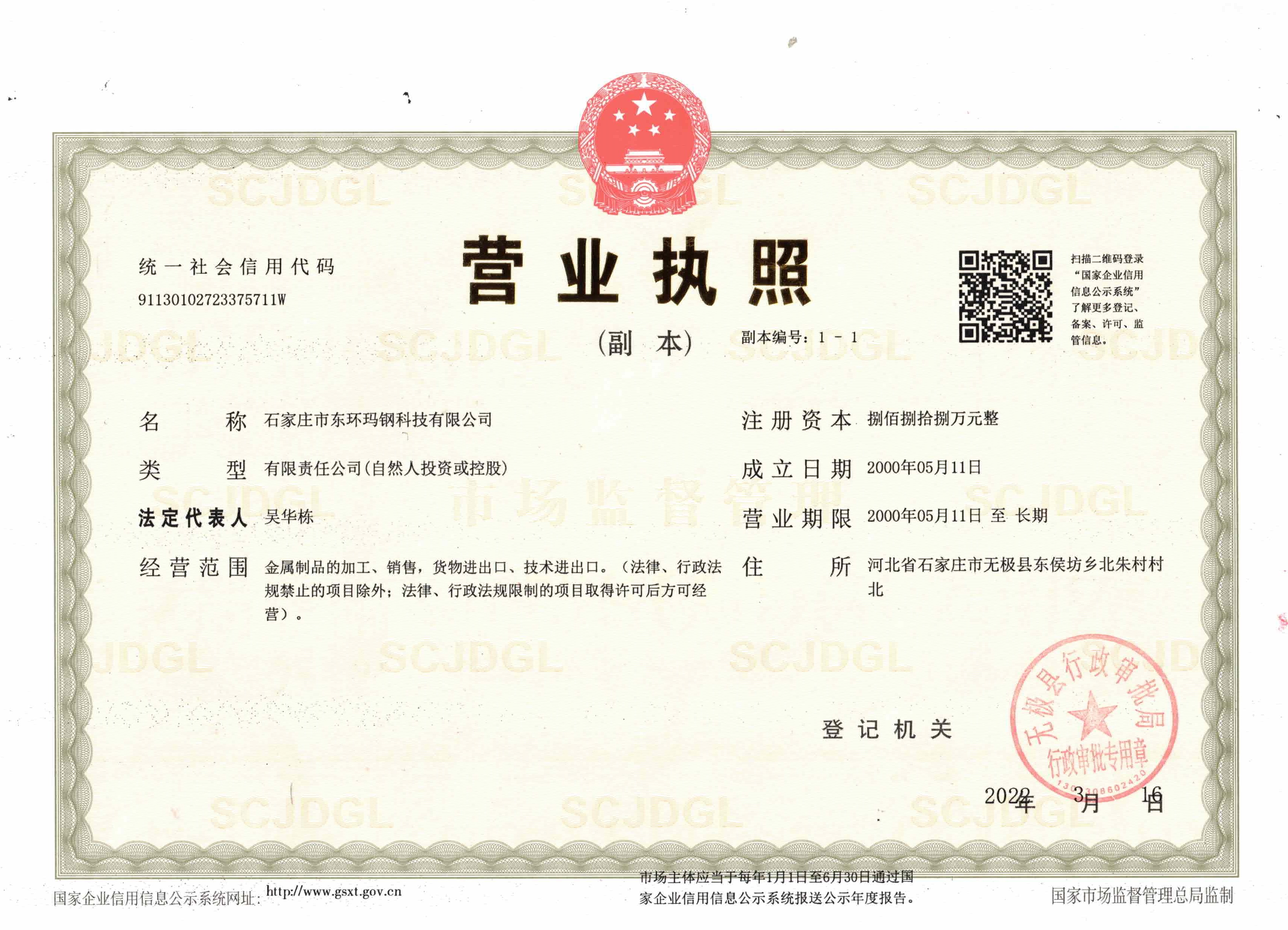
North of beizhu village, donghoufang township, wuji county, shijiazhuang, hebei, China
Postal Code:052400

Mob web

Tiktok