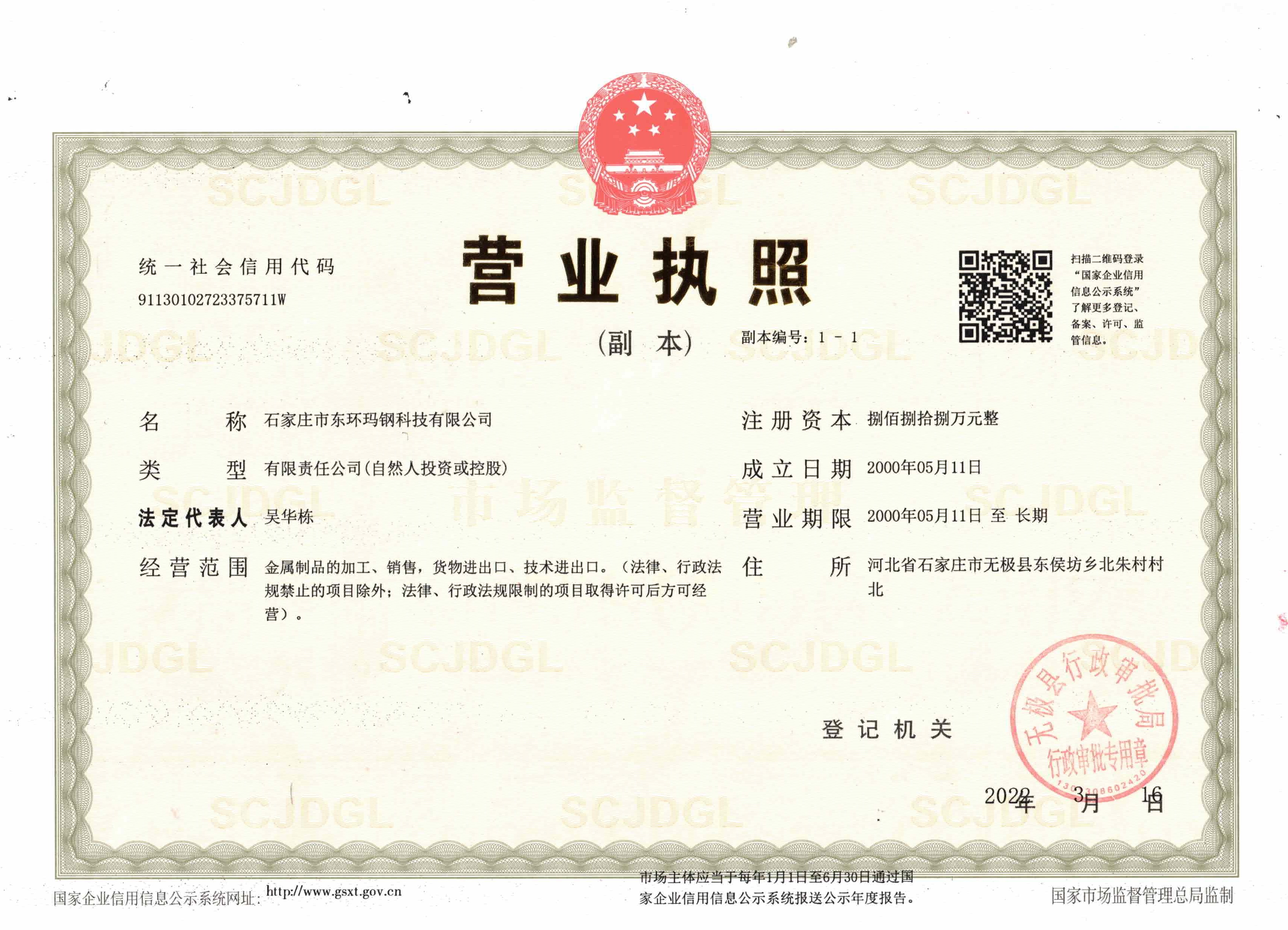
Shijiazhuang Donghuan malleable iron technology co.,ltd




Pipe fitting types, uses and how to choose the right one for your project
Release time:
2026-09-13
Author:
A complete 2026 guide to pipe fitting types, materials, standards and selection tips for engineers and procurement teams in Singapore. Compare PVC, stainless steel, malleable iron and more.

Article overview
This guide explains what a pipe fitting is, breaks down all major types and materials, compares connection methods, and provides a step-by-step selection framework aligned with Singapore procurement standards in 2026.
Table of contents
- 1. What is a pipe fitting?
- 2. Main types of pipe fittings explained
- 3. Pipe fitting materials: how to choose the right one
- 4. Connection methods: threaded, compression, welded and more
- 5. Singapore standards and compliance requirements
- 6. How to select the right pipe fitting for your project
- 7. Common mistakes to avoid when buying pipe fittings
- 8. FAQ
What is a pipe fitting?
A pipe fitting is a mechanical component used to connect, redirect, branch, reduce, or terminate sections within a piping system. It is the fundamental building block of any fluid-conveying network, from residential plumbing to high-pressure industrial pipelines. Without the right pipe connector in place, even the most carefully engineered pipeline becomes unreliable.
According to recent 2026 data, the global pipeline fittings market is valued at approximately USD 168 billion, with construction and infrastructure accounting for over 40% of total demand. That figure reflects just how central these components are across industries — oil and gas, water treatment, food processing, HVAC, and semiconductor fabrication in Singapore all depend on correctly specified fittings.
For a deeper reference on pipe fitting types and standards, the general classification framework remains consistent across ASME, DIN, and BS standards, though the dimensional tolerances differ. Understanding these differences matters enormously at the procurement stage.
Why the right fitting matters more than the pipe itself
Here is a question worth asking: why do so many pipeline failures occur at the joints rather than along the straight runs? Actual testing and field investigation data consistently show that fitting selection errors — wrong material, wrong pressure rating, or incompatible standard — account for the majority of leakage incidents on newly commissioned systems. The pipe itself rarely fails first. This is why procurement engineers in Singapore's petrochemical and utilities sectors treat fitting specification as a critical engineering decision, not a commodity purchase.
Scope of this guide
This article covers industrial pipe fittings and plumbing fittings used in commercial, infrastructure, and manufacturing contexts across Singapore. Consumer-grade DIY fittings are referenced only for comparison purposes. All specifications and standards mentioned reflect the current 2026 regulatory environment.
Main types of pipe fittings explained
The correct fitting type is determined first by the function it needs to perform within the pipeline — direction change, flow splitting, diameter transition, or system termination. Each category carries its own pressure and flow characteristics.
Directional and branching fittings
The pipe elbow is arguably the most frequently specified fitting in any system. It changes flow direction, typically at 45° or 90°, and is available in short-radius and long-radius variants. Long-radius elbows (1.5D) reduce pressure drop significantly — a detail that matters in high-velocity gas lines. The pipe tee serves branching functions, splitting one inlet into two outlets. Equal tees maintain the same bore throughout; reducing tees, often called pipe reducers in the branch configuration, step down to a smaller branch diameter. A cross fitting handles four-way junctions, though these are less common due to the structural stress concentration they introduce.
Transitional and termination fittings
A pipe reducer — either concentric or eccentric — connects two pipes of different diameters. Eccentric reducers are preferred in horizontal liquid lines because they prevent air pockets from forming at the top of the pipe. A pipe coupling (also called a pipe connector or socket) joins two pipe sections inline. Unions serve the same purpose but allow disconnection without cutting the pipe — critical in maintenance-intensive systems. Caps and plugs terminate open ends, sealing the system against pressure or contamination.
The table below summarises the main fitting types, their functions, and typical pressure ratings for reference during initial specification:
| Fitting type | Primary function | Common material | Typical max pressure |
|---|---|---|---|
| Pipe elbow (90°/45°) | Direction change | SS 304/316, carbon steel, PVC | Up to 150 bar (steel) |
| Pipe tee | Flow branching | Malleable iron, SS, CPVC | Up to 100 bar (steel) |
| Pipe reducer | Diameter transition | Carbon steel, SS | Up to 150 bar (steel) |
| Pipe coupling / union | Inline connection | Brass, SS, PVC | Up to 50 bar (brass) |
| Compression fitting | Toolless sealing | Brass, SS, nylon | Up to 100 bar (SS) |
| Pipe adapter | Thread/standard conversion | Brass, malleable iron | Up to 25 bar (standard) |
| Cap / plug | End termination | SS, PVC, carbon steel | Matches system rating |

Pipe fitting materials: how to choose the right one
Material selection is where most specification errors originate. The fluid medium, operating temperature, pressure, and environmental exposure all influence which material is appropriate — and choosing incorrectly leads to accelerated corrosion, premature failure, or regulatory non-compliance.
Stainless steel pipe fittings
Stainless steel pipe fittings are the dominant choice for food and beverage, pharmaceutical, and semiconductor applications in Singapore. The full range includes 90° elbows, 90° street elbows, 45° elbows, crosses, tees, unions, hexagon caps, hexagon bushings, hexagon plugs, sockets, tank sockets, reducing sockets, hexagon nipples, reducing hexagon nipples, barrel nipples, pipe nipples, hexagon weld nipples, backing nuts, and tube nipples. Grade 304 is standard for clean-water and general process applications. However, there is a persistent industry misconception worth addressing directly: stainless steel does not mean corrosion-proof. In Singapore's coastal and high-humidity environment, 304-grade fittings are vulnerable to chloride-induced pitting. Specify 316L for marine, offshore, or any application where saltwater exposure is possible.
Malleable iron and carbon steel fittings
Malleable iron fittings — typically available in sizes from ½" to 2" — are widely used for connecting steel, PE, and other pipes in fire protection, compressed air, and general utilities. They accept hot-dip galvanised or black finishes, the former providing superior corrosion resistance for outdoor or damp environments. Carbon steel pipeline fittings are standard in oil, gas, and high-pressure steam systems where the pressure-temperature ratings of polymer materials are simply inadequate.
PVC, CPVC and polymer fittings
PVC tube fittings remain the cost-effective option for cold-water distribution, drainage, and low-pressure chemical lines. CPVC extends the temperature range to approximately 93°C, making it suitable for hot-water systems. Neither material is appropriate for hydraulic fittings in high-pressure circuits or for applications involving aromatic solvents. The weight advantage of polymer fittings — roughly one-sixth that of equivalent steel components — is a genuine benefit in overhead or seismic-sensitive installations.
"Material compatibility is not a secondary consideration — it is the primary engineering constraint. A fitting that is technically well-made but made from the wrong alloy for the service environment will fail faster than a fitting of moderate quality made from the correct material." — Industry consensus among piping engineers, Singapore Pipe and Fittings Association technical roundtable, 2025.
Connection methods: threaded, compression, welded and more
The connection method governs not just installation speed but long-term sealing performance, maintenance accessibility, and pressure rating. Each approach has a clear domain where it outperforms the alternatives.
Threaded and compression connections
Threaded fittings — conforming to BSP or NPT thread standards — are the workhorse of small-bore industrial piping up to DN50. They are fast to install, require no specialised tools beyond a wrench, and allow straightforward disassembly. The limitation is that repeated assembly-disassembly cycles can damage thread integrity, and they are generally not recommended above 50 bar in critical service. A compression fitting uses a ferrule and nut to create a mechanically secure, leak-tight seal without threading or welding. This makes compression fittings particularly valued in instrumentation tubing, hydraulic fittings circuits, and anywhere that vibration might loosen threaded connections. Real-world testing confirms that quality compression fittings rated to 100 bar maintain seal integrity through thousands of pressure cycles when correctly installed.
Welded and press-fit connections
Butt-weld and socket-weld fittings dominate high-pressure, high-temperature industrial pipeline applications. They offer maximum structural integrity and are the standard for process piping under ASME B31.3. The trade-off is installation time and the requirement for qualified welders — a cost factor that Singaporean EPC contractors regularly account for in project budgets. Press-fit (or push-to-connect) systems, by contrast, achieve installation in seconds. Think of it like a self-locking mechanism: the pipe is simply pushed into the fitting body and a stainless steel grab ring locks it permanently. Press-fit systems are now widely adopted in Singapore's commercial building mechanical and plumbing services, where installation speed has a direct impact on project programme.
Singapore standards and compliance requirements
Singapore's regulatory environment for pipeline fittings is more structured than many procurement engineers realise until they encounter a failed inspection. Understanding the applicable standards before ordering — not after — is the mark of an experienced procurement team.
Applicable standards in Singapore
The Public Utilities Board (PUB) mandates SS EN 1254 for copper compression fittings used in potable water systems. For PVC pressure pipe fittings, SS 213 and SS 141 govern dimensional and material requirements. Industrial process piping in Singapore typically references ASME B16.9 (butt-weld fittings), ASME B16.11 (socket-weld and threaded), and BS EN 10241 for malleable iron threaded fittings. Imported fittings must either carry a Singapore standard mark or be submitted with third-party test certificates acceptable to the relevant authority — PUB, BCA, or MOM, depending on the application. For detailed technical guidance, the pipe fittings guide from Engineering Toolbox remains a useful reference for specification cross-checking.
Workplace safety requirements for pipe fitting work
Beyond product standards, Singaporean regulations under the Workplace Safety and Health Act govern how pipe fitting installation and maintenance work is performed. Hot-work permits are required for any welded connection work on live systems. Pressure testing of completed assemblies must be documented and witnessed. Workers carrying out hydraulic fittings assembly at pressures above 10 bar must be competency-assessed. For comprehensive guidance on safe installation practices, refer to pipe fitting safety standards and protocols.
How to select the right pipe fitting for your project
Selecting a pipe fitting correctly requires working through a structured decision sequence. Skipping any step introduces risk. Based on real procurement cases from Singapore-based projects, the following process consistently produces the correct specification on the first attempt.
Step-by-step selection process
- Define the fluid medium and concentration. Water, compressed air, steam, chemical, or hydrocarbon? Each narrows the material options significantly.
- Establish operating pressure and temperature. Maximum working pressure (MWP) and peak temperature determine the required pressure class and material grade.
- Identify the pipe material and bore size. The fitting must be compatible with both the pipe material and the nominal pipe size (NPS or DN). A pipe adapter may be needed at standard interfaces.
- Select the applicable standard. Match ASME, BS, or DIN based on the overall project specification. Mixing standards on a single system creates dimensional incompatibility risks.
- Choose the connection method. Threaded for small-bore, low-maintenance systems; welded for high-pressure critical service; compression or press-fit where rapid installation or future access is prioritised.
- Verify environmental exposure. Outdoor, coastal, or chemically aggressive environments require surface treatment (hot-dip galvanised, epoxy coated) or an upgraded alloy (316L, duplex stainless).
- Confirm supplier certification. Request mill test certificates (MTCs) and, for Singapore-regulated applications, the relevant SS or international standard certification.
2026 trends influencing pipe fitting selection
Two developments are reshaping procurement decisions in 2026. The first is the rise of smart pipe fittings — components with integrated sensors monitoring pressure, temperature, and flow in real time, now being trialled in Singapore's Jurong Island petrochemical cluster as part of Industry 4.0 predictive maintenance programmes. The second is material sustainability: low-carbon steel fittings and recyclable composite pipeline fittings are gaining specification traction as Singapore-based engineering firms align procurement with their clients' ESG commitments. Of course, there are situations where these newer options are not yet mature enough for critical-service specification — due diligence remains essential.
Common mistakes to avoid when buying pipe fittings
Even experienced procurement teams repeat certain errors. Awareness of these patterns saves both money and rework time.
Specification and sourcing errors
The most costly mistake is assuming that fittings from different standards are interchangeable simply because they share a nominal size designation. A DN25 fitting to DIN 2605 and a 1" fitting to ASME B16.9 are close — but not identical — in dimensions. On high-pressure systems, this mismatch can cause joint failure during pressure testing or, worse, during operation. A second common error involves over-specifying wall thickness. Many procurement engineers default to the heaviest schedule available, operating under the assumption that thicker is safer. In practice, wall thickness must match the system's pressure class. Over-specifying Schedule 160 where Schedule 40 is sufficient wastes budget and adds unnecessary dead weight to support structures.
Material selection oversights
Substituting standard 304 stainless steel pipe fittings for 316L in coastal or marine-adjacent Singaporean installations is a recurring mistake that generates corrosion warranty claims within 12 to 18 months of commissioning. Similarly, sourcing malleable iron threaded fittings without specifying the surface finish — black versus hot-dip galvanised — for outdoor applications leads to accelerated rust, especially given Singapore's year-round humidity. Always specify the finish explicitly in the purchase order, not just the fitting type. Why do so many procurement teams overlook this detail? Often because the initial quotation does not distinguish between finishes, and the difference only becomes visible after installation.
Supplier evaluation shortcuts
Accepting a supplier's product catalogue claim without requesting mill test certificates or third-party inspection reports is a risk that experienced Singapore-based procurement engineers avoid. Reputable suppliers of industrial pipe fittings will provide MTCs as standard practice. If a supplier is reluctant to provide them, that reluctance itself is informative. For critical applications, independent third-party inspection at the point of manufacture — particularly for large-volume orders of stainless steel or carbon steel butt-weld fittings — is a justifiable cost.
FAQ
Common questions about pipe fittings
Q: What is the difference between a pipe fitting and a pipe valve?
A: A pipe fitting connects, redirects, or terminates pipe sections without controlling flow rate. A pipe valve actively controls, regulates, or stops fluid flow within the system. Both are essential pipeline components but serve distinct functions — fittings define the system geometry, valves govern its operation.
Q: When should I use a compression fitting instead of a threaded fitting?
A: Use a compression fitting where vibration is present, where frequent disassembly is required, or where threading the pipe end is impractical — such as in instrumentation tubing or hydraulic circuits. Threaded fittings are better suited to static, low-vibration systems with standard pipe ends and accessible installation conditions.
Q: Are stainless steel pipe fittings always the best choice?
A: Not always. Stainless steel offers excellent corrosion resistance and hygiene, but it costs significantly more than malleable iron or PVC alternatives. For low-pressure water distribution, PVC plumbing fittings are cost-effective and fully adequate. Reserve stainless steel for applications involving high temperatures, chemical exposure, food contact, or marine environments.
Q: What standards apply to pipe fittings used in Singapore's water supply systems?
A: The Public Utilities Board (PUB) requires fittings in potable water systems to comply with Singapore Standards SS 213, SS 141 (for PVC), and SS EN 1254 (for copper compression fittings). Products must carry the relevant certification mark or be supported by acceptable third-party test documentation submitted to PUB for approval.
Q: How do I confirm that a pipe fitting supplier is reliable?
A: Request mill test certificates (MTCs) for every batch, verify that stated standards (ASME, BS, SS) are supported by actual certification documents, and check whether the supplier has supplied to comparable Singapore projects. For high-value orders, commission independent third-party inspection at source before shipment.
Selecting the correct pipe fitting is a decision that shapes the long-term reliability and safety of any piping system. From material and connection method through to compliance with Singapore's regulatory framework, every specification detail matters. The guidance in this article reflects current 2026 industry practice and is intended to help procurement engineers, project managers, and technical buyers make well-informed decisions — whether sourcing malleable iron plumbing fittings for a commercial building fit-out or specifying 316L stainless steel industrial pipe fittings for a process plant on Jurong Island. When in doubt, verify with your supplier's technical team and always request documented certification before committing to a bulk order.
Keywords:
pipe fitting
Recommended Reading
Leave your problems to us
If you need a solution, you can write your question and contact information in the message form, we will contact you as soon as possible after receiving it.
North of beizhu village, donghoufang township, wuji county, shijiazhuang, hebei, China
Postal Code:052400

Mob web

Tiktok