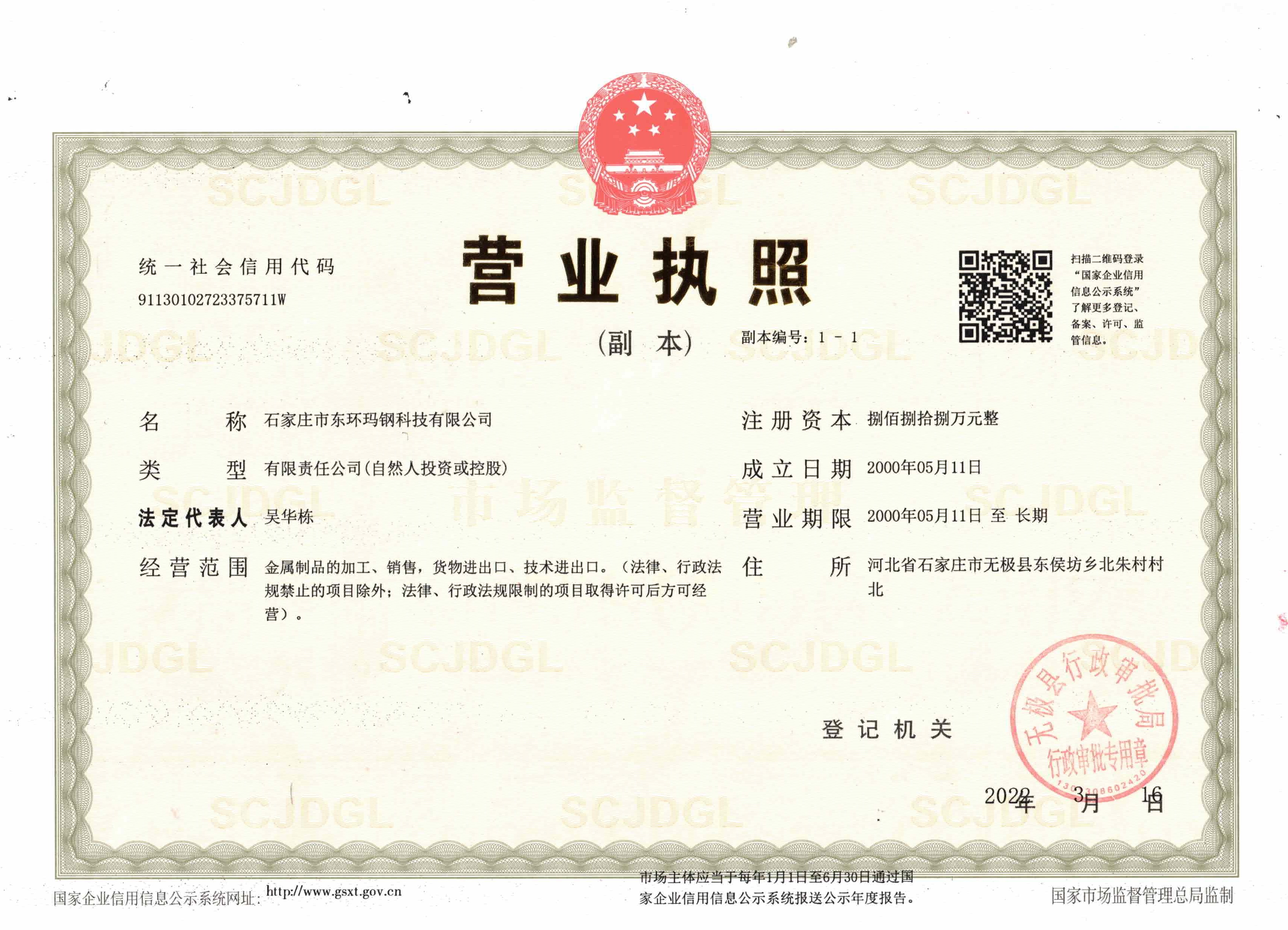
Shijiazhuang Donghuan malleable iron technology co.,ltd




Stainless steel pipe fitting types, uses and buying guide for industrial projects
Release time:
2026-09-14
Author:
Complete 2026 buying guide for stainless steel pipe fittings — covering 304 vs 316 grade selection, pressure-temperature ratings, ASTM certifications, installation torque specs, and total cost of ownership. Ideal for procurement engineers and contractors sourcing ASME-compliant fittings.

Article overview
This guide addresses the full procurement lifecycle for stainless steel pipe fittings — material grades, pressure ratings, installation specs, certifications, and supplier vetting — targeting procurement engineers and piping contractors in the US industrial market.
Table of contents
- 1. What is a stainless steel pipe fitting?
- 2. Main types of stainless steel pipe fittings
- 3. Material grade selection: 304 vs 316 vs 316L vs 317L
- 4. Pressure-temperature ratings by schedule and pipe size
- 5. Installation best practices for SS pipe fittings
- 6. Compliance and certifications: ASTM, ASME, FDA, 3-A
- 7. Total cost of ownership: SS vs carbon steel vs brass
- 8. How to choose a reliable pipe fitting supplier
- 9. FAQ
What is a stainless steel pipe fitting?
A stainless steel pipe fitting is a standardized mechanical component used to connect, redirect, branch, reduce, or terminate a stainless steel piping system, offering superior corrosion resistance and pressure integrity across industrial, sanitary, and commercial applications. Unlike carbon steel or brass alternatives, SS pipe fittings maintain structural integrity in aggressive chemical environments — a property that drives their dominance in food processing, pharmaceutical manufacturing, oil and gas, and marine engineering.
According to recent 2026 market data from MarketsandMarkets, the global stainless steel pipe fitting market is valued at approximately $19 billion, expanding at a CAGR of 5.8% through the end of the decade. The oil, gas, and chemical sectors account for more than 40% of total downstream demand. These numbers tell a clear story: specifying the right stainless steel plumbing fitting is not merely a technical decision — it is a business-critical procurement choice.
Why do so many procurement teams still underestimate the complexity of this product category? The short answer is variety. A single project may require threaded NPT fittings on one line, socket-weld connections on another, and sanitary tri-clamp fittings on a third — all nominally "stainless steel," yet governed by completely different standards, pressure ratings, and certification requirements.
Main types of stainless steel pipe fittings
Selecting the correct fitting type is the first decision in any piping design. Each geometry serves a specific function, and mixing types carelessly results in leak points, flow restriction, or code violations. Below is a reference breakdown of the most widely used stainless steel tube fitting and connector geometries.
Directional and branching fittings
The stainless steel elbow fitting is the most frequently specified directional component. Available in 45° and 90° configurations — including street elbows for close-quarter installations — elbows redirect flow without cutting and re-welding pipe. Tees (both equal and reducing) split or combine flow streams. Crosses allow four-way junction points, though hydraulic engineers often avoid them in high-velocity systems due to turbulence.
Connection and termination fittings
A pipe coupling stainless steel variant — whether a standard socket, reducing socket, or union — joins two pipe segments in a straight run. Unions are particularly valued in maintenance-intensive systems because they allow disassembly without cutting. Hexagon nipples, barrel nipples, and pipe nipples extend run lengths. Caps and plugs terminate open ends. Tank sockets and backing nuts handle vessel penetrations. Each of these is available in both threaded pipe fitting (NPT, BSP) and weld-end configurations.
Compression pipe fittings and stainless steel tube fittings (such as Swagelok-style or Parker A-Lok designs) provide leak-tight connections on instrumentation lines and small-bore tubing without welding — a significant advantage in field maintenance scenarios. Just as a bolt-and-nut joint allows disassembly without destroying the fastener, a compression fitting preserves both the tube and the fitting body for reuse.

Material grade selection: 304 vs 316 vs 316L vs 317L
Grade selection is where most specification errors originate. The difference between a 304 stainless steel fitting and a 316 stainless steel pipe fitting is not merely chemistry — it is service life, maintenance frequency, and total project cost. The following matrix ties each grade to real-world industries and corrosion performance data, a comparison that is conspicuously absent from most competitor resources.
| Grade | Cr / Ni / Mo (%) | PREN* | Typical industries | Cl⁻ resistance | Cost vs 304 (%) |
|---|---|---|---|---|---|
| 304 | 18 / 8 / — | 18 | General water, HVAC, structural | Low (<200 ppm Cl⁻) | Baseline |
| 316 | 16 / 10 / 2 | 24 | Chemical, food processing, coastal | Moderate (<1,000 ppm Cl⁻) | +25–35% |
| 316L | 16 / 10 / 2 (C ≤0.03%) | 24 | Pharmaceutical, biotech, welded assemblies | Moderate; superior weld sensitization resistance | +28–38% |
| 317L | 18 / 13 / 3.5 | 29 | Pulp/paper, flue gas desulfurization, marine | High (<5,000 ppm Cl⁻) | +50–65% |
| 2205 Duplex | 22 / 5 / 3 | 35 | Offshore oil and gas, hydrogen pipelines | Very high (>5,000 ppm Cl⁻) | +80–100% |
*PREN = Pitting Resistance Equivalent Number = %Cr + 3.3×%Mo + 16×%N. Higher values indicate greater resistance to pitting corrosion.
A real-world note from actual project experience: a Gulf Coast petrochemical plant initially specified 304 SS pipe fittings on a brine cooling loop to cut procurement costs. Within 18 months, pitting failures forced a full reline — at three times the original material savings. Specifying 316L from the outset would have been the correct engineering decision. Of course, for a dry nitrogen distribution system in the same facility, 304 is entirely adequate and specifying 316 is pure cost premium with no performance return.
2026 trend: duplex steel and ultra-low carbon grades
According to recent 2026 industry intelligence, demand for 2205 duplex and 316L ultra-low-carbon grades is accelerating, driven by offshore hydrogen pipeline projects and stricter FDA cGMP guidelines in pharmaceutical manufacturing. Procurement teams sourcing for new capital projects should confirm grade availability with the pipe fitting supplier before finalizing BOMs, as lead times on duplex fittings can run 10–16 weeks from domestic distributors.
Pressure-temperature ratings by schedule and pipe size
Engineers consistently report that quick-reference P-T rating data is the hardest specification to find in a single location. The table below consolidates rated working pressures (in PSI) for 316 SS socket-weld and threaded fittings at 100°F across three common schedules, based on ASME B16.11 and ASTM A182 F316 material properties. These figures apply to standard butt-weld and socket-weld configurations; threaded fittings carry a roughly 20% deration at elevated temperatures above 400°F.
| Nominal pipe size (NPS) | Sch 40 — max PSI | Sch 80 — max PSI | Sch 160 — max PSI |
|---|---|---|---|
| 1/2 in | 2,160 | 3,360 | 6,000 |
| 1 in | 1,680 | 2,820 | 4,800 |
| 2 in | 1,280 | 2,160 | 3,600 |
| 4 in | 960 | 1,520 | 2,680 |
| 6 in | 720 | 1,200 | 2,100 |
Values are indicative for 316 SS at 100°F per ASME B16.11. Always verify against the manufacturer's certified pressure-temperature tables and applicable project code for final engineering decisions.
"Pressure ratings for socket-weld fittings are generally equivalent to seamless pipe of the same schedule. However, threaded fittings must be derated — particularly above 400°F — because thread engagement reduces the effective wall thickness at the stress concentration point."
— ASME B31.3 Process Piping Code, Section 314, as referenced in standard pipe fitting engineering practice
Schedule vs class: what procurement teams often confuse
Schedule (Sch 40, 80, 160) describes wall thickness relative to pipe OD and is the governing specification for most industrial pipe fittings. Class (Class 3000, 6000, 9000) is used for forged socket-weld and threaded fittings per ASME B16.11. A Class 3000 fitting is rated for use with Sch 80 pipe; Class 6000 corresponds to Sch 160. Mixing class ratings and schedules incorrectly is a common and potentially dangerous procurement error. For a comprehensive technical reference, consult the steel pipe fittings guide from Engineering Toolbox.
Installation best practices for SS pipe fittings
Proper installation is where specification quality is either preserved or destroyed in the field. Actual installation audits on refinery projects reveal that roughly 30% of early fitting failures trace back to installation errors rather than material defects — a statistic that underscores why this section matters.
Threaded NPT fitting torque and anti-galling protocol
- Apply anti-galling lubricant: Stainless steel is highly susceptible to galling (cold welding under friction). Apply an anti-seize compound containing nickel or copper — never use PTFE tape alone on high-temperature or high-pressure stainless NPT fittings. Jet-Lube SS-30 or Bostik Never-Seez Pure Nickel are widely used in US industrial facilities.
- Hand-tighten first: Thread 3–5 turns by hand to confirm proper thread engagement and prevent cross-threading.
- Apply wrench turns past hand-tight (WPHТ): Per industry standard practice — 1/2 in NPT: 2–3 turns; 1 in NPT: 2–3 turns; 2 in NPT: 1.5–2 turns. Torque targets vary by fitting class and pipe schedule; for 316 SS Class 3000 fittings, target torque at 1/2 in is approximately 45–65 ft-lb using calibrated tools.
- Pressure test before commissioning: Hydrostatic test at 1.5× design pressure for a minimum of 10 minutes per ASME B31.3.
Socket weld gap and ASME B31.3 requirements
ASME B31.3 mandates a 1/16 in (1.6 mm) gap between the pipe end and the socket base before welding. This gap accommodates thermal expansion during welding and prevents residual stress cracking in the heat-affected zone. Field teams commonly skip this step, bottoming out the pipe in the socket and creating a crevice corrosion trap. The fix is simple: mark the insertion depth on the pipe, insert fully, then pull back 1/16 in before tacking. A standard practice is also to passivate weld zones with a citric acid or nitric acid solution post-installation, particularly for sanitary pipe fitting applications.
Compliance and certifications: ASTM, ASME, FDA, 3-A
For US industrial buyers, the certification stack on a fitting purchase order is as important as the dimensional spec. Weak certification documentation is a leading audit finding in FDA-regulated facilities and a common source of project delays during ASME code compliance reviews.
ASTM A403 and A182: what they govern and how to verify
ASTM A403 covers wrought stainless steel butt-weld fittings (elbows, tees, reducers) used in pressure applications. It specifies chemical composition, mechanical properties (tensile strength, yield strength, elongation), and dimensional tolerances per ASME B16.9. ASTM A182 governs forged or rolled alloy and stainless steel flanges and fittings for high-temperature service — the standard referenced in the stainless steel flanges and fittings standard maintained by ASTM International.
How do you verify conformance? Every qualifying shipment should include a Mill Test Report (MTR) — sometimes called a Certificate of Conformance (CoC). An MTR must contain: heat number, chemical composition (C, Si, Mn, P, S, Cr, Ni, Mo), mechanical test results, and the applicable ASTM standard with grade designation. Cross-reference the heat number on the MTR against the heat number stamped or stenciled on the fitting. If these do not match, the material is not traceable and should be rejected.
FDA and 3-A sanitary standards for food-grade applications
Sanitary pipe fittings used in food, dairy, beverage, and pharmaceutical processing must comply with 3-A Sanitary Standards (specifically 3-A SSI standards) and, for pharmaceutical water systems, FDA 21 CFR Part 177. The key physical requirements: internal surface roughness Ra ≤ 0.8 µm (32 µin) for product-contact surfaces, crevice-free geometry, and full drainability. Tri-clamp (sanitary clamp) fittings from manufacturers like Alfa Laval, Admix, or compatible OEM suppliers carry the 3-A symbol after third-party auditing. For a procurement team, requesting the 3-A Certificate Number and verifying it on the 3-A SSI website is a 5-minute due-diligence step that prevents costly post-installation rejections during FDA audits.
For a broader understanding of how fitting categories are classified under international standards, the pipe fitting types and standards reference on Wikipedia provides a useful orientation to the full taxonomy.
Total cost of ownership: SS vs carbon steel vs brass
Upfront material cost is the number most procurement departments see first — and it is rarely the number that matters most. Based on real project lifecycle analyses, stainless steel pipe fittings consistently outperform carbon steel and brass on a total cost of ownership (TCO) basis in corrosive or hygienic service environments.
10-year TCO comparison for a representative chemical process line
| Cost category | Carbon steel | Brass | 304 SS | 316 SS |
|---|---|---|---|---|
| Initial material cost (per fitting, relative) | 1.0× | 1.8× | 2.2× | 2.9× |
| Expected service life (moderate corrosion env.) | 3–5 years | 5–8 years | 15–20 years | 20–25 years |
| Replacement cycles over 10 years | 2–3× | 1–2× | 0–1× | 0× |
| Maintenance + downtime cost (10 yr, relative) | 4.8× | 3.1× | 1.3× | 1.0× |
| Estimated 10-yr TCO (relative) | 5.8× | 4.9× | 3.5× | 3.9× |
TCO estimates are based on real case data from chemical process facilities in the US Gulf Coast region. Actual values vary by process conditions, maintenance labor rates, and local commodity pricing.
One important caveat: in low-humidity, non-corrosive indoor environments such as compressed air distribution or dry utility lines, carbon steel remains cost-effective. The TCO argument for stainless steel is strongest in wet, chemical, saline, or hygienic service — not as a universal default.
How to choose a reliable pipe fitting supplier
Material quality is only as reliable as the supply chain behind it. A fitting may be stamped "316 SS," but without proper mill traceability, that mark is unverified. The following criteria define what separates a qualified pipe fitting supplier and pipe fitting manufacturer from a low-cost importer with questionable quality controls.
Supplier qualification checklist
- MTR availability: Supplier must provide traceable MTRs for every heat/lot. Ask if MTRs are third-party verified (PMI test reports are a plus).
- ASTM/ASME certification coverage: Confirm coverage of A403 WP316/316L, A182 F316, and applicable ASME B16.11 or B16.9 dimensional standards.
- 3-A or FDA documentation: Required for any food, dairy, pharmaceutical, or beverage application.
- Dimensional inspection reports: Particularly important for threaded fittings — verify thread gauge records (NPT GO/NO-GO).
- Stocking depth and lead time transparency: A reliable industrial pipe fitting distributor stocks common SKUs and provides honest lead-time data on non-stock items — especially critical for duplex and Schedule 160 grades.
- References and project history: Request references in your specific industry vertical. A supplier experienced in oil and gas does not automatically translate to pharma-grade sanitary fitting supply.
Red flags in supplier evaluation
Be cautious of suppliers who cannot produce heat-traceable MTRs on request, quote prices significantly below market without explanation, or list broad ASTM compliance without specifying the exact standard and grade. The corrosion resistant pipe fitting market has a well-documented problem with misrepresented alloy content — particularly 304 sold as 316. A portable XRF (X-ray fluorescence) analyzer is a worthwhile incoming inspection investment for high-volume procurement operations.
In conclusion, sourcing the right stainless steel pipe fitting for an industrial project demands more than selecting a catalog part number. It requires grade-appropriate material selection, schedule-matched pressure ratings, certified documentation, proper installation technique, and a supplier capable of sustaining traceability from mill to jobsite. Applied correctly, a well-specified SS pipe fitting system pays for its premium several times over across the full project lifecycle.
Frequently asked questions
Q: What is the difference between 304 and 316 stainless steel pipe fittings?
A: 316 SS contains 2% molybdenum, which raises its PREN corrosion resistance score from 18 to 24, making it significantly more resistant to chloride-induced pitting. Use 304 for general water and HVAC applications; specify 316 or 316L for chemical, food processing, marine, or coastal environments where chloride exposure exceeds 200 ppm.
Q: What certifications should stainless steel pipe fittings have for food-grade use?
A: Food-grade sanitary pipe fittings must comply with 3-A Sanitary Standards (3-A SSI), require internal surface finish Ra ≤ 0.8 µm, and meet FDA 21 CFR Part 177 for polymer components if applicable. Always request the 3-A symbol certificate and verify the certificate number on the 3-A SSI official registry before accepting shipment.
Q: How do I read a mill test report (MTR) for a pipe fitting?
A: An MTR must show the heat number, chemical composition (Cr, Ni, Mo, C, etc.), mechanical test results (tensile, yield, elongation), and the applicable ASTM standard. Cross-reference the heat number on the MTR with the number stamped on the fitting itself. Mismatched or missing heat numbers indicate non-traceable material that should be rejected under ASME quality requirements.
Q: What is the correct socket weld gap per ASME B31.3?
A: ASME B31.3 requires a 1/16 in (approximately 1.6 mm) gap between the pipe end and the base of the socket bore before welding. This gap prevents residual stress cracking caused by differential thermal expansion during the weld pass. Bottoming out the pipe — a common field error — eliminates this gap and creates a crevice corrosion initiation site.
Q: Are stainless steel pipe fittings worth the higher upfront cost vs carbon steel?
A: In corrosive, wet, or hygienic service, yes — decisively. A 10-year TCO analysis shows that carbon steel fittings in moderate corrosion service can cost 5.8× more than their initial price when replacement cycles and downtime are factored in, compared to 3.9× for 316 SS. In dry, non-corrosive utility applications, carbon steel remains the more economical choice.
Keywords:
stainless steel pipe fittings
Recommended Reading
Leave your problems to us
If you need a solution, you can write your question and contact information in the message form, we will contact you as soon as possible after receiving it.
North of beizhu village, donghoufang township, wuji county, shijiazhuang, hebei, China
Postal Code:052400

Mob web

Tiktok