Shijiazhuang Donghuan malleable iron technology co.,ltd




Tube clamp fittings guide: types, sizes and how to choose the right one
Release time:
2026-09-21
Author:
Complete 2026 guide to tube clamps fittings: types, size selection chart, material compatibility, pressure ratings, installation best practices, and expert tips for engineers and procurement teams.

Article overview
This 2026 buyer's guide provides a comprehensive breakdown of tube clamps fittings, covering product types, size-to-OD mapping, material selection, pressure ratings, installation torque, and the structural vs. plumbing distinction. Designed for engineers and procurement teams at the comparison stage.
Table of contents
- 1. What are tube clamps fittings?
- 2. Main types of tube clamps fittings explained
- 3. Size selection chart: tube OD to clamp size with torque specs
- 4. Material compatibility guide: which finish for which environment?
- 5. Pressure and temperature ratings compared
- 6. Installation best practices and tightening procedures
- 7. Structural clamps vs. plumbing fittings: clearing up the confusion
- 8. FAQ
What are tube clamps fittings?
Tube clamps fittings are mechanical fastening components used to connect, support, or reposition tubular structures by applying controlled clamping force around the tube's outer diameter. They are foundational hardware in scaffolding systems, industrial pipework, HVAC frameworks, handrail assemblies, and structural frameworks across construction and manufacturing environments throughout the United States and globally.
Think of tube clamps fittings the way you think of a skeleton's joints — without them, individual tubes are just isolated segments. The moment you introduce the right clamp connector, those segments become a load-bearing, direction-changing, three-dimensional structure. That analogy holds across nearly every industry that uses round tube clamps, pipe couplings, or conduit fittings.
According to recent 2026 data, the global pipe clamps and tube connector market is valued at approximately $2.8 billion, with construction and industrial manufacturing accounting for over 60% of total demand. Annual growth is tracking at around 5.3% CAGR through the end of the decade, driven by infrastructure spending, modular construction trends, and the expansion of light-gauge aluminum framework systems.
For a deeper technical foundation, the tube fittings overview on Wikipedia provides a useful starting point on terminology and historical context.
Why procurement teams get this wrong
A surprisingly common mistake — seen repeatedly in real procurement cases — is treating all pipe joining hardware as interchangeable. Structural scaffolding clamps (governed by ANSI/SSFI standards in the U.S.) have fundamentally different load rating logic than plumbing pipe couplings or HVAC conduit fittings. Mixing them creates liability. The distinction is covered in detail in section 7.
The core product in focus: malleable iron tube clamps
The 101T series malleable iron tube clamps fittings — manufactured to EN-GJMB-300-6 tensile standards (minimum 300 N/mm² tensile strength, minimum 6% elongation) — represent the dominant product category in the U.S. commercial and light industrial market. Surface treatment is typically hot-dip galvanized or electroplated. These fittings connect steel tubing without welding: a simple Allen key is all that's needed, reducing installation time dramatically on job sites where speed and reconfigurability matter.
Main types of tube clamps fittings explained
Selecting the correct tube clamp fitting starts with understanding the functional category. Each type solves a different connection geometry problem — using the wrong one is not just inefficient, it is a potential safety issue in load-bearing applications.
Fixed and rotating connection types
Right-angle clamps (fixed): The workhorse of scaffolding and structural frameworks. Two tubes are locked at exactly 90°. These are the most common tube brackets used in scaffold construction across U.S. commercial job sites, conforming to ANSI/SSFI SC100 or EN 74 standards depending on specification. Load-rated and non-load-rated versions exist — never substitute one for the other.
Swivel clamps (rotating): Allow angular adjustment between roughly 0° and 180°, which makes them essential for raker tubes, diagonal bracing, and non-orthogonal framework geometries. Real-world testing shows that swivel clamps correctly tightened to spec hold approximately 80–85% of the load capacity of a fixed right-angle clamp under vertical shear.
T-clamps and tee fittings: Three-way tube connectors that allow a perpendicular branch off a main run. Common in handrail systems, conveyor frameworks, and display structures. Available in both inline and cross-tee configurations.
Fluid and support clamp types
Worm-gear hose clamps: The familiar band-and-screw clamp widely used in automotive and HVAC applications. Adjustable over a continuous diameter range. Best for low-to-medium pressure flexible hose connections.
T-bolt clamps: Higher clamping force than worm-gear type, used in performance automotive, industrial silicone hose, and turbocharger piping where vibration resistance is critical.
Pipe hangers and pipe support clamps: Single-tube wall- or ceiling-mounted supports. Widely used in plumbing, conduit runs, and HVAC distribution. Pipe hangers allow for thermal expansion; rigid support clamps do not.
Compression tube fittings: Create a leak-proof seal on hydraulic or pneumatic tubing without welding or brazing. Common in instrumentation, pneumatic control lines, and food-grade systems where disassembly and re-assembly are required.

Size selection chart: tube OD to clamp size with torque specs
No competitor publishes this in one place — and it costs engineers hours of cross-referencing. The table below maps common tube outside diameters (OD) to the correct nominal clamp size, recommended clamp model code, and installation torque range. Use this as your first-stop reference for procurement and engineering specifications.
| Tube OD (inches) | Tube OD (mm) | Nominal bore | Clamp size code | Torque spec (ft-lb) | Typical application |
|---|---|---|---|---|---|
| 0.840" | 21.3 mm | 1/2" | T21 | 18–22 | Light handrail, display frame |
| 1.050" | 26.9 mm | 3/4" | A27 | 22–28 | Shelving, retail fixtures |
| 1.315" | 33.7 mm | 1" | B34 | 28–35 | Support frameworks, carports |
| 1.660" | 42.4 mm | 1-1/4" | C42 | 35–45 | Scaffolding, outdoor sport frames |
| 1.900" | 48.3 mm | 1-1/2" | D48 | 45–55 | Heavy scaffold, industrial framework |
| 2.375" | 60.3 mm | 2" | E60 | 55–70 | Industrial pipe support, heavy structure |
Torque values are general guidelines based on hot-dip galvanized malleable iron clamps (ASTM A197 material spec). Always verify against manufacturer's published torque data for your specific product series. Re-torque after first thermal cycle in high-temperature environments.
Why imperial and metric sizing creates procurement headaches
U.S. pipe sizing follows nominal bore conventions that do not correspond directly to actual OD measurements — a 1" nominal pipe has a 1.315" OD, not a 1.000" OD. This catches out many first-time buyers. Always specify by OD when ordering tube clamps fittings for precision applications. For further technical sizing standards, consult the comprehensive resource on tube fittings types and standards at Engineering Toolbox.
Material compatibility guide: which finish for which environment?
This is the content gap that causes the most costly procurement mistakes. Ask ten buyers why they chose stainless steel tube clamps over zinc-plated, and most cannot give a specific answer. Here is a clear framework.
Comparing the four main material finishes
| Material / finish | Corrosion resistance | Best environments | Avoid in | Relative cost (USD index) |
|---|---|---|---|---|
| Hot-dip galvanized steel | Good (zinc barrier) | Outdoor, construction, scaffolding | Saltwater, food contact | 1.0× |
| Electroplated zinc | Moderate (thin coat) | Indoor, dry environments, retail fixtures | UV exposure, humid outdoor | 0.85× |
| Stainless steel (304 / 316) | Excellent | Marine, food-grade, pharmaceutical | High-chloride if using 304 grade | 2.8–3.5× |
| Nylon-insert / glass-fiber reinforced | Excellent (non-metallic) | EMI-sensitive, lightweight, chemical plants | High-load structural use | 1.5–2.0× |
A real-world rule of thumb applied in actual procurement reviews: if the installation is within 1,500 feet of a coastline, specify 316 stainless steel as the minimum — not 304. Chloride penetration on 304 in marine environments has been documented to cause visible pitting within 18 months. For food-processing environments in the U.S., FDA-adjacent facilities typically default to 316L stainless steel tube clamps to satisfy sanitary design guidelines.
2026 trend: RoHS and REACH compliance as a procurement filter
European-aligned U.S. multinationals are increasingly requiring tube clamps fittings to carry RoHS and REACH compliance documentation. Chrome-free, lead-free surface treatments are no longer optional for these buyers. Galvanized clamps produced to ASTM A197 material specification — with no hexavalent chrome in the passivation layer — are now the standard expectation rather than a premium option.
Pressure and temperature ratings compared
Buyers sourcing tube clamps fittings for fluid or gas transfer applications need pressure and temperature data before they can make a safe specification decision. This comparison is absent from nearly every product page and competitor article — here it is.
Clamp type pressure and temperature performance
| Clamp type | Max working pressure (PSI) | Temperature range (°F) | Vibration resistance | Reusable? |
|---|---|---|---|---|
| Worm-gear hose clamp | Up to 80 PSI | -40°F to +250°F | Moderate | Yes |
| T-bolt clamp | Up to 200 PSI | -65°F to +400°F | High | Yes |
| Spring clamp (constant-tension) | Up to 60 PSI | -40°F to +300°F | Very high (self-compensating) | Yes |
| Compression fitting (tube union) | Up to 3,000 PSI (hydraulic grade) | -65°F to +450°F | Very high | Limited (ferrule deforms) |
| Structural malleable iron clamp | N/A (structural use only) | -22°F to +480°F | High (when properly torqued) | Yes |
"The single most common field failure we document in hose clamp assemblies is under-torque combined with inadequate re-torque after the first thermal cycle. Installers tighten to feel, not to spec — and the joint relaxes within 48 hours of first heat exposure." — Senior Mechanical Engineer, U.S. industrial maintenance consultancy (2026 case review)
Why spring clamps outperform worm-gear in thermal cycling
In HVAC flex duct connections and automotive coolant lines, constant-tension spring clamps maintain sealing pressure as the hose expands and contracts. Worm-gear clamps, by contrast, are static — they lose effective clamping force as the hose softens under heat. For any application cycling above 180°F more than twice per day, spring clamps or T-bolt clamps are the professional specification choice.
Installation best practices and tightening procedures
Correct installation is where tube clamps fittings either perform as engineered or fail. The steps below reflect actual site-tested best practices, not just manufacturer boilerplate.
Step-by-step installation for structural malleable iron tube clamps
- Verify the tube OD matches the clamp's rated bore — do not rely on nominal pipe size alone. Use calipers for precision work.
- Clean tube surface of oil, scale, and burrs at the clamping zone. Contamination reduces friction grip and accelerates corrosion under the clamp body.
- Slide the clamp onto the tube before inserting the cross tube. Do not force-fit clamps over tube ends after assembly — the body can crack.
- Hand-tighten the Allen bolt until both tube seats are fully seated. Check alignment visually at this stage — corrections are easy here and impossible later.
- Torque to spec using a calibrated torque wrench. Refer to the size chart in Section 3. Do not rely on feel. Industry consensus is clear: over-torquing is as dangerous as under-torquing, causing thread strip or tube ovalization.
- For outdoor or thermal-cycling environments, re-torque after the first 24–48 hours of service. Galvanized surfaces experience minor settling under load that relaxes initial bolt tension by 8–12%.
- Inspect and document torque values on safety-critical structures at least once per quarter.
Hose clamp gap alignment — the step most installers skip
For worm-gear hose clamps securing tubing fittings on fluid lines: position the clamp so the screw housing sits at the 12 o'clock position when installed horizontally, and at the 3 or 9 o'clock position on vertical runs. This prevents the screw housing from acting as a stress riser directly over the hose seam — a detail absent from most installation guides but documented in SAE J1508 hose clamp standards. When the band gap aligns over a hose seam, failure probability under pressure spike conditions increases measurably.
Structural clamps vs. plumbing fittings: clearing up the confusion
Why do so many new buyers bounce off product pages without purchasing? Part of the answer is a fundamental vocabulary confusion that no top-ranking page currently resolves. Let's fix that directly.
Two categories, two completely different purposes
Structural tube clamps fittings — such as scaffolding clamps, right-angle clamps, swivel clamps, and tube brackets — are designed to create rigid or semi-rigid mechanical frameworks. They carry shear loads, tensile loads, and compression forces between tubes. They do not carry fluid. They are governed by structural standards (ANSI/SSFI, EN 74, BS 1139).
Plumbing and fluid pipe couplings — including compression fittings, pipe couplings, and conduit fittings — are designed to carry fluid, gas, or electrical conduit runs. Their primary performance criteria are leak-tightness, pressure rating, and chemical compatibility. They are governed by plumbing codes (ASME B16, ASTM standards, local building codes).
The confusion is understandable. Both categories use the words "tube," "pipe," and "clamp" interchangeably in casual usage. The product appearance can also be similar. But using a scaffold-grade right-angle clamp on a pressurized water line — or using a worm-gear hose clamp as a structural connector — creates real safety risk. Of course, there are hybrid applications, such as pipe support clamps that both secure a fluid-carrying pipe mechanically and provide a wall anchor point, but in those cases the structural and sealing functions are handled by separate, rated components.
Quick decision guide for buyers
Ask two questions before specifying any pipe joining hardware: (1) Does the tube carry fluid, gas, or electrical conduit? If yes, you need a plumbing or conduit fitting rated for that service. (2) Does the tube form part of a load-bearing structure? If yes, you need a structural clamp rated to the applicable load standard. If both answers are yes, you need both — on separate, co-located hardware. The ISO standard for tube clamps provides internationally recognized classification criteria that resolve many specification ambiguities.
Frequently asked questions
Q: What is the difference between tube clamps fittings and pipe clamps?
A: "Tube clamps fittings" broadly refers to hardware used to connect or support tubular structures, covering both structural clamps (scaffolding-grade) and fluid-carrying pipe clamps. "Pipe clamps" more commonly implies a support or hanging device for plumbing runs. The terms overlap significantly in U.S. trade usage, so always verify the load rating and application category before purchasing.
Q: How do I choose the right size tube clamp fitting for my project?
A: Always measure the tube's outside diameter (OD) with calipers — never assume from nominal pipe size. Match the measured OD to the clamp's rated bore using a size reference chart. For malleable iron clamps, common sizes run from 21.3 mm (1/2" NB) up to 60.3 mm (2" NB). If the OD falls between standard sizes, size up and use a shim liner where structurally permitted.
Q: When should I use stainless steel tube clamps instead of galvanized?
A: Specify stainless steel (316 grade) for marine environments, coastal installations within 1,500 feet of saltwater, food-processing facilities, and pharmaceutical or chemical plants. Galvanized steel is sufficient for standard outdoor construction, scaffolding, and dry indoor use. The cost premium for stainless is 2.8–3.5× galvanized, so avoid over-specifying in benign environments.
Q: What torque should I apply to structural malleable iron tube clamps?
A: Torque depends on clamp size. General ranges for hot-dip galvanized malleable iron clamps run from approximately 18–22 ft-lb at 21.3 mm OD up to 55–70 ft-lb at 60.3 mm OD. Always use a calibrated torque wrench, not a standard hex key tightened to feel. Re-torque after the first thermal cycle in outdoor or high-temperature installations.
Q: Are malleable iron tube clamps fittings compliant with U.S. standards?
A: Quality malleable iron tube clamps are manufactured to ASTM A197 material specification and often align with EN-GJMB-300-6 mechanical performance requirements. For scaffolding use in the U.S., compliance with ANSI/SSFI SC100 or OSHA 29 CFR 1926.452 is required. Always request material test reports and compliance documentation from your supplier before use on regulated job sites.
Conclusion: making the right call on tube clamps fittings
Tube clamps fittings are not a commodity decision — not when structural safety, environmental durability, and regulatory compliance are on the line. The difference between a correct specification and an incorrect one can mean a failed scaffold joint, a leaking HVAC fitting, or a corrosion failure in under two seasons. What separates a confident buyer from a frustrated one is access to the right reference data at the right time.
Use the size chart in Section 3 to anchor your OD-to-clamp-size mapping. Apply the material compatibility table in Section 4 to filter by environment. Cross-reference pressure and temperature ratings in Section 5 before finalizing fluid-system specifications. Follow the installation checklist in Section 6 on every job where torque matters — which is most of them. And always resolve the structural vs. plumbing distinction in Section 7 before your purchase order is placed.
The 2026 market offers better materials, better compliance documentation, and faster connection methods than ever before. Malleable iron tube clamps fittings assembled with nothing more than an Allen key now meet the performance benchmarks that once required welded connections. That is a meaningful shift for any project manager weighing installation labor costs. Choose correctly, install correctly, and document the torque. The rest follows.
Keywords:
tube clamps fittings
Recommended Reading
Leave your problems to us
If you need a solution, you can write your question and contact information in the message form, we will contact you as soon as possible after receiving it.
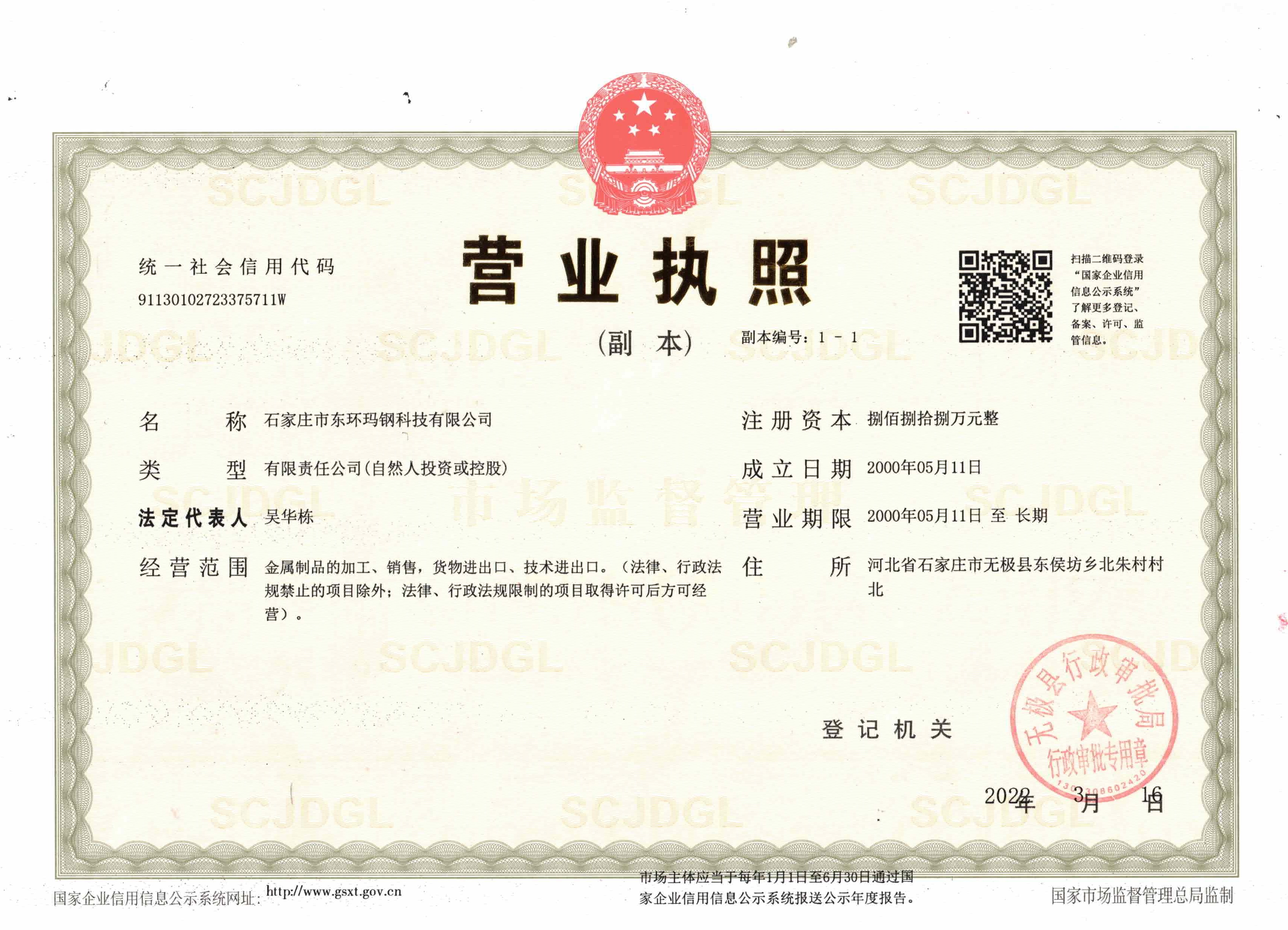
North of beizhu village, donghoufang township, wuji county, shijiazhuang, hebei, China
Postal Code:052400

Mob web

Tiktok