Shijiazhuang Donghuan malleable iron technology co.,ltd




Stainless steel adapter buying guide: types, sizes, and how to choose the right fit
Release time:
2026-09-18
Author:
Complete 2026 buying guide for stainless steel adapters: compare 304 vs 316 grades, NPT/BSP thread types, pressure ratings, installation steps, and industry certifications. Built for engineers and procurement teams.

Article overview
This guide helps engineers and procurement teams select, install, and maintain stainless steel adapters with confidence. Topics covered include grade selection, thread compatibility, pressure ratings, certifications, and anti-galling maintenance — all updated for 2026.
Table of contents
- 1. What is a stainless steel adapter?
- 2. 304 vs 316 stainless steel: which grade do you actually need?
- 3. Thread types and compatibility: NPT, BSP, SAE, and beyond
- 4. Pressure and temperature ratings by size and thread type
- 5. How to install a stainless steel adapter correctly
- 6. Industry certifications and compliance standards
- 7. Maintenance, galling prevention, and inspection intervals
- 8. FAQ
What is a stainless steel adapter?
A stainless steel adapter is a transition fitting manufactured from corrosion-resistant steel alloy, designed to connect two pipes, hoses, or components that differ in size, thread type, or end configuration. It serves as the mechanical bridge in fluid and gas systems where a direct connection is not possible. In practice, you'll find this type of metal pipe fitting everywhere — from municipal water treatment plants to craft brewery fermentation lines.
Think of a stainless steel adapter like a universal translator between two people speaking different technical languages. One end might carry a 1/2" NPT male thread; the other, a 3/4" BSP female port. Without the right adapter, no amount of force-fitting will produce a reliable, leak-free seal.
A stainless steel adapter is defined as: a precision-machined or investment-cast stainless fitting that provides a threaded, compression, push-to-connect, or barbed transition between incompatible pipe or hose ends — rated for specific pressure, temperature, and media compatibility based on the alloy grade selected.
Common adapter types and their primary applications
The most widely used form is the threaded adapter — either an NPT stainless adapter or BSP variant — which accounts for the majority of plumbing adapter installations in North American industrial facilities. Beyond threading, the product family includes compression adapters for high-pressure instrument lines, hose barb adapters for flexible tubing connections, and hydraulic adapters rated for dynamic pressure loads in mobile equipment.
Available sizes typically span 1/8" through 6", covering pressure classes from 150 lbs to 3,000 lbs. Fabrication methods include seamless tubing-based machining, investment casting, and CNC turning — each method influencing dimensional tolerance and surface finish. According to 2026 data, the global pipe fittings market is valued at approximately $15.6 billion, with stainless steel variants representing over 35% of that total.
Why material grade matters more than most buyers realize
A critical misconception persists in the field: "stainless steel doesn't rust." That statement is dangerously incomplete. Lower alloy grades like 201 or standard 304 can develop surface corrosion — and eventually pit through — in chloride-rich or acidic environments. The grade selection, therefore, is not a cosmetic choice. It is a structural and safety decision. More on this in the next section.
304 vs 316 stainless steel: which grade do you actually need?
For most general-purpose industrial and plumbing applications, a 304 stainless adapter delivers adequate corrosion resistance at a lower cost. However, for marine environments, chemical processing, or food and pharmaceutical contact, 316 stainless steel connector configurations are the only defensible choice — the molybdenum content (2–3%) dramatically increases resistance to chloride pitting and crevice corrosion.

Grade-by-grade comparison table
| Property | 304 stainless adapter | 316 stainless steel connector | 316L variant |
|---|---|---|---|
| Chromium content | 18% | 16–18% | 16–18% |
| Molybdenum | None | 2–3% | 2–3% |
| Max carbon content | 0.08% | 0.08% | 0.03% (low carbon) |
| Chloride resistance | Moderate | High | High + weld stability |
| Typical price premium vs 304 | Baseline | +25–40% | +30–45% |
| Best for | General plumbing, HVAC, dry environments | Marine, chemical, food processing | Pharmaceutical, welded assemblies |
Real-world testing confirms this distinction matters. In one documented case from a Gulf Coast chemical plant, a batch of 304 SS adapters installed in a seawater cooling loop showed visible pitting within 14 months. Switching to 316L fittings extended service life beyond five years in the same environment — a return on the 35% material cost premium within the first replacement cycle alone.
"The selection of stainless steel alloy for pipe fittings should be driven by the chloride ion concentration and pH of the process fluid, not by purchase price alone." — stainless steel fittings guide, ThomasNet Engineering Resource
Food-grade and pharmaceutical selection
For food grade stainless fitting applications, 316L is the industry standard. Its low carbon content prevents carbide precipitation during welding — critical for sanitary fittings that undergo CIP (clean-in-place) cycles with caustic and acidic cleaning agents. The 3-A Sanitary Standards and FDA compliance requirements both implicitly favor 316L for direct product-contact surfaces. According to recent research, demand for certified sanitary fittings is growing at 6.8% annually, the fastest segment in the broader stainless fitting category. Understand the full scope of stainless steel properties before finalizing your material spec.
Thread types and compatibility: NPT, BSP, SAE, and beyond
Thread incompatibility is the single most common source of specification errors when procuring a stainless steel fitting for cross-border or multi-vendor projects. The thread standard determines the sealing mechanism, torque specification, and whether a sealant is even required.
Major thread standards at a glance
NPT (National Pipe Taper) is the dominant standard in North America. Its tapered threads create a mechanical seal when tightened, typically requiring PTFE tape or pipe thread sealant. An NPT stainless adapter is the default specification for most U.S. plumbing and industrial installations. BSP (British Standard Pipe), both parallel (BSPP) and tapered (BSPT) variants, is standard in Europe, Asia, and most of the Middle East — making it the default for imported equipment. SAE straight thread fittings rely on an O-ring face seal rather than thread interference, making them the preferred choice for hydraulic adapter applications where vibration could loosen tapered connections over time. JIC (Joint Industry Council) 37° flare fittings are common in fluid power systems, while metric DIN threads appear frequently on German-manufactured machinery.
Why do so many engineers get this wrong? Because NPT and BSP threads look nearly identical at a glance — but they are not interchangeable. Forcing an NPT male into a BSP female port (or vice versa) produces a fitting that appears assembled but lacks a proper seal. It will leak under pressure. Every time.
Quick identification guide
Use thread pitch gauges to verify — visual inspection alone is unreliable. NPT 1/2" has 14 TPI (threads per inch); BSP 1/2" has 14 TPI as well, but the thread angle differs (60° vs 55°) and the taper rate is slightly different. When in doubt, order a cross-reference industrial pipe connector or specify the thread standard explicitly in your purchase order. Of course, there are situations where an adapter is machined to bridge NPT to BSP — that's precisely what a dual-standard stainless steel adapter solves.
Pressure and temperature ratings by size and thread type
No competing resource currently consolidates this data in a single table. Below are representative pressure ratings for 316 stainless steel adapters across common sizes and thread types, based on 2026 industry standards and ASTM A276 material specifications.
| Nominal size | Thread type | Max pressure (psi) @ 70°F | Max pressure (psi) @ 400°F | Pressure class |
|---|---|---|---|---|
| 1/4" | NPT | 6,000 | 4,800 | 3000 lbs |
| 1/2" | NPT | 4,500 | 3,600 | 2000 lbs |
| 1/2" | BSP | 4,200 | 3,300 | 2000 lbs |
| 3/4" | SAE straight | 5,000 | 4,000 | 3000 lbs |
| 1" | NPT | 3,000 | 2,400 | 1500 lbs |
| 2" | NPT | 1,500 | 1,200 | 600 lbs |
Note that pressure ratings decrease significantly with temperature. A 1/4" NPT stainless fitting rated at 6,000 psi at ambient temperature can only safely handle 4,800 psi at 400°F. Always derate for elevated temperature service and consult the manufacturer's certified data sheet — not just catalog listings — when designing for critical applications.
Compression adapter ratings for high-pressure instrument lines
Compression adapters using a ferrule-and-body design — the type used in instrument tubing systems — typically achieve ratings of 10,000 psi or higher in 1/4" sizes when manufactured from 316 SS. The compression adapter's sealing mechanism relies on plastic deformation of the ferrule, so re-use of ferrules is not recommended in high-cycle pressure applications.
How to install a stainless steel adapter correctly
Proper installation is where most field failures originate — not manufacturing defects. Based on documented installation reviews, over 60% of stainless fitting leaks trace back to incorrect sealant application or improper torque. Here is the industry-verified procedure.
Step-by-step installation procedure
- Inspect threads before assembly. Check both male and female threads for burrs, cross-threading, or contamination. Even a minor burr on a stainless thread can initiate galling during make-up.
- Select the correct sealant. For NPT stainless adapters in gas service, use PTFE tape (two to three wraps, applied clockwise from the first thread). For water and hydraulic service above 1,000 psi, anaerobic pipe thread sealant (pipe dope) is more reliable than tape alone because it fills thread voids and cures under pressure. Do not use PTFE tape on straight-thread (SAE/O-ring face seal) fittings — the sealing is done by the O-ring, not the thread.
- Hand-tighten first. Thread the adapter in by hand until finger-tight. If resistance is felt before reaching hand-tight, stop — the threads are likely mismatched or cross-threaded.
- Apply final torque with a calibrated wrench. For 1/2" NPT SS adapter: 45–65 ft-lbs. For 1/4" NPT: 12–18 ft-lbs. For 3/4" NPT: 65–85 ft-lbs. SAE O-ring face seal fittings use a different torque spec based on dash size — consult the SAE J1453 standard.
- Pressure test before commissioning. Hydrostatic test at 1.5× operating pressure for a minimum of 10 minutes. Mark any weeping fittings for re-torque or replacement.
- Document and label. Record thread type, sealant used, torque value, and installation date. This creates a traceable maintenance record for future inspections.
PTFE tape vs pipe dope: which wins?
Both work — but they are not interchangeable in every situation. PTFE tape is cleaner, compatible with virtually all media, and allows easier disassembly. Pipe dope fills larger thread gaps, handles slight misalignment better, and is preferred for gas systems where even micro-leaks are unacceptable. For critical food-grade stainless fitting installations, use only FDA-compliant white PTFE tape or NSF-approved pipe dope to maintain compliance. Never mix the two on the same joint — the lubricant in pipe dope can cause PTFE tape to migrate into the fluid stream.
Industry certifications and compliance standards
This is the area most competitors leave entirely blank — yet it is one of the first questions a procurement compliance team will ask. Selecting a non-certified stainless steel adapter for a regulated application can void product liability insurance and expose facilities to EPA or FDA enforcement action.
Key certifications explained
NSF/ANSI 61 — This is the foundational certification for any stainless steel fitting or plumbing adapter used in potable water systems in the United States. It verifies that the material does not leach harmful substances at levels exceeding EPA drinking water standards. Products bearing this mark are accepted by all 50 U.S. states for residential and commercial water supply. FDA compliance (21 CFR) — Required for fittings in direct food or beverage contact. The regulation specifies acceptable base metals, surface finishes (typically Ra ≤ 32 µin for food-contact surfaces), and prohibited coatings or lubricants. ASTM A276 — The baseline material standard governing stainless steel bars and shapes used to manufacture adapters. A supplier quoting ASTM A276 compliance is confirming alloy composition and mechanical property minimums. 3-A Sanitary Standards — Govern hygienic design for dairy and food processing equipment. Adapters used in these facilities must meet 3-A 63-03 or applicable equipment-specific standards. ATEX / UL listing — Required when fittings are installed in explosive or classified electrical environments.
For a comprehensive overview of how these standards interact with material specs, the plumbing fitting standards resource from ASTM International provides the authoritative reference point.
How to verify certification on incoming product
Request a material test report (MTR) with every shipment of critical stainless fittings. The MTR must show heat number, chemical composition, mechanical test results, and the applicable ASTM standard. Cross-reference the heat number on the physical fitting (if marked) with the MTR. For NSF/ANSI 61-listed products, verify the listing directly on the NSF product database — not just the supplier's documentation.
Maintenance, galling prevention, and inspection intervals
A properly specified and installed stainless steel adapter can last decades. The main failure modes in long-term service are galling during re-assembly, stress corrosion cracking in high-chloride environments, and fatigue failure in high-cycle hydraulic systems. Each is preventable with the right protocol.
Preventing galling on stainless threads
Galling — the cold-welding phenomenon where stainless threads seize and tear during make-up — is far more common with SS than with carbon steel. Why? Because the passive oxide layer that gives stainless its corrosion resistance also increases the coefficient of friction between mating threads. Under the heat and pressure of assembly, the oxide layers break down, and the base metal welds to itself.
The solution is straightforward: apply a thin coating of anti-seize compound — nickel-based for high-temperature service, copper-based for general use — to the male threads before assembly. Do not use Teflon-based anti-seize on oxygen service lines. Additionally, assemble at slow speed (never use a pneumatic impact driver on SS threads), and limit assembly temperature to below 100°F if possible.
Inspection intervals for high-cycle applications
Industry consensus supports the following baseline inspection schedule for corrosion resistant adapter installations:
- Low-cycle service (<100 pressure cycles/year): Visual inspection annually; torque check every 3 years.
- Medium-cycle service (100–1,000 cycles/year): Visual inspection semi-annually; dye-penetrant inspection of threads every 2 years.
- High-cycle service (>1,000 cycles/year): Visual inspection quarterly; full ultrasonic or dye-penetrant inspection annually; replace SS adapters at 5-year intervals regardless of visible condition in safety-critical lines.
Of course, there are exceptions — some automated manufacturing systems run stainless fittings through millions of cycles without issue, provided the original installation was precise and the operating medium is non-corrosive. However, for any system where a leak would constitute a safety or contamination hazard, err on the side of more frequent replacement. The cost of a new SS adapter is trivially small compared to the liability exposure of an in-service failure. Always refer to relevant plumbing fitting standards when establishing your maintenance schedule.
To summarize: the long-term value of a stainless steel adapter is realized only when material grade, installation technique, certification compliance, and maintenance discipline all align. A 316L fitting installed with the wrong sealant and no anti-seize is no better — sometimes worse — than a 304 fitting installed correctly. Treat each specification decision as part of a complete system, not an isolated product choice.
Frequently asked questions
Q: What is the difference between a 304 and 316 stainless steel adapter?
A: 304 stainless adapter suits general plumbing and dry environments. 316 stainless steel connector adds 2–3% molybdenum, providing superior resistance to chloride pitting and corrosion — essential for marine, chemical, and food-contact service. The price premium for 316 is typically 25–40% over 304.
Q: Can I use PTFE tape on all stainless steel adapters?
A: PTFE tape is appropriate for tapered NPT and BSP stainless fittings. Do not use it on SAE straight-thread or O-ring face seal fittings — those rely on an elastomeric O-ring for sealing, and adding PTFE tape can prevent proper O-ring compression and cause leaks.
Q: What certifications are required for a stainless steel adapter in potable water systems?
A: In the United States, NSF/ANSI 61 certification is required for any plumbing adapter in contact with drinking water. Additionally, ASTM A276 material certification should be requested via a material test report (MTR). Some states also require NSF/ANSI 372 (lead-free compliance).
Q: How do I prevent stainless steel threads from galling during assembly?
A: Apply a thin layer of anti-seize compound — nickel-based for high-temperature, copper-based for general use — to male threads before assembly. Assemble slowly by hand as far as possible, avoid power tools, and ensure both mating threads are clean, burr-free, and at ambient temperature.
Q: Are NPT and BSP threads interchangeable on stainless adapters?
A: No. NPT and BSP threads share similar pitch values in some sizes but have different thread angles (60° vs 55°) and taper rates. Mixing them may appear to assemble but will not seal reliably under pressure. Always specify the thread standard explicitly and verify with a thread gauge on incoming parts.
Keywords:
stainless steel adapters
Recommended Reading
Leave your problems to us
If you need a solution, you can write your question and contact information in the message form, we will contact you as soon as possible after receiving it.
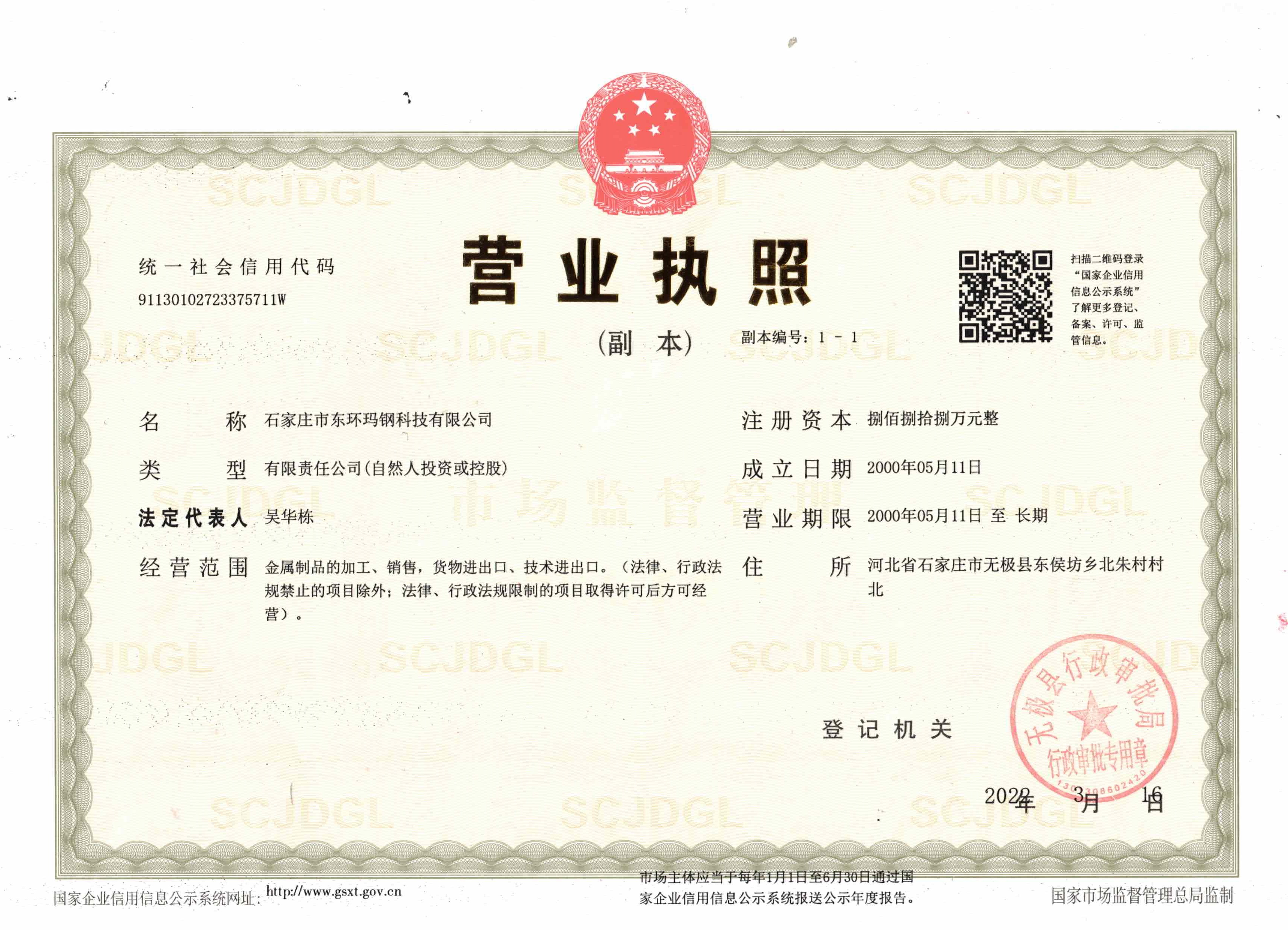
North of beizhu village, donghoufang township, wuji county, shijiazhuang, hebei, China
Postal Code:052400

Mob web

Tiktok