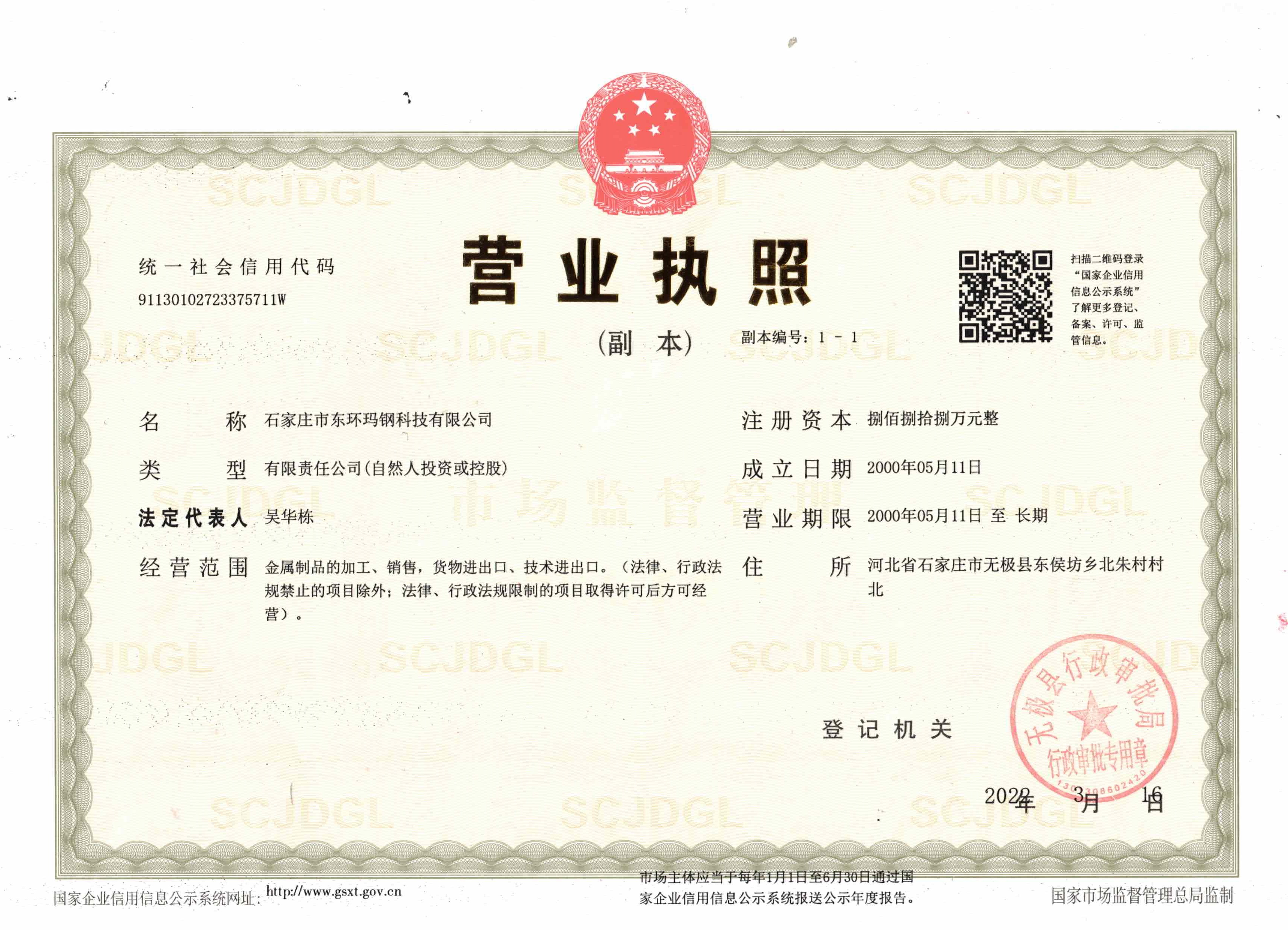
Shijiazhuang Donghuan malleable iron technology co.,ltd




CS pipe fittings guide: types, sizes & how to choose the right one
Release time:
2026-09-16
Author:
Complete 2026 guide to CS pipe fittings: types, material grades (ASTM A234 WPB/WPC), pressure-temperature ratings, corrosion protection, installation tips, and cost comparison vs stainless steel. Trusted by US industrial buyers and engineers.

Article overview
This guide covers everything a US industrial buyer or engineer needs to know about cs pipe fittings in 2026 — from ASTM material grades and pressure schedules to corrosion protection, installation best practices, and supplier selection. Estimated reading time: 12 minutes.
Table of contents
- 1. What are CS pipe fittings?
- 2. Main types of CS pipe fittings explained
- 3. Material grades: ASTM A234 WPB, WPC, and beyond
- 4. Pressure-temperature ratings: Schedule 40, 80, and 160 compared
- 5. Corrosion in CS fittings: causes, coatings, and prevention
- 6. Installation guide for threaded CS fittings
- 7. CS fittings vs. stainless steel vs. ductile iron: cost and performance
- 8. How to choose a reliable CS pipe fitting supplier in the USA
- 9. FAQ
What are CS pipe fittings?
CS pipe fittings are carbon steel pipe components used to connect, redirect, branch, or terminate sections of a piping system, and they are the standard choice for high-pressure, high-temperature industrial service across oil & gas, petrochemical, power, and HVAC applications. For a broader technical overview of pipe fitting categories and standards, see this pipe fittings overview.
The term "CS" simply stands for carbon steel — an iron-carbon alloy where carbon content typically ranges from 0.05% to 0.30% by weight, with manganese as the primary secondary element. This composition delivers an exceptional strength-to-cost ratio that stainless or alloy alternatives simply cannot match at scale. Real-world procurement data from 2026 confirms that carbon steel pipe fittings still represent more than 60% of total industrial pipe fitting purchases in the United States, even as alternative materials gain ground in corrosive-service niches.
Why do engineers default to CS? Because the material works. It handles steam, compressed air, natural gas, hydraulic oil, and non-corrosive process fluids with proven reliability — provided the correct grade and schedule are selected for the operating conditions. That last clause is where most specification errors occur, and this guide addresses them directly.
How CS pipe fittings differ from other pipe fitting materials
Compared to malleable iron, carbon steel pipe fittings offer superior tensile strength (typically 60,000–70,000 psi minimum for ASTM A234 WPB) and are suitable for seamless or welded butt-weld configurations. Compared to stainless steel, they are significantly less expensive — often 30–50% lower cost per fitting at equivalent pressure ratings — but require surface protection in wet or acidic environments. Understanding this trade-off is the first decision in any CS fitting specification process.
Where CS pipe connectors are used in 2026
Oil and gas remains the dominant end market, accounting for over 35% of global carbon steel pipe fitting demand according to 2026 industry data. Power generation (steam lines, boiler headers), chemical processing (non-corrosive media), and commercial construction (fire suppression, HVAC) follow in scale. Municipalities increasingly specify schedule 40 pipe fittings for water distribution infrastructure upgrades, though this application requires galvanized or epoxy-lined variants to manage corrosion risk.
Main types of CS pipe fittings explained
Knowing the fitting type before specifying the grade and schedule saves significant rework downstream. The most common categories in industrial piping systems are elbows, tees, reducers, flanges, caps, and couplings — each serving a distinct hydraulic or mechanical function.
Elbows, tees, and reducers: the core three
Steel pipe elbows are the most frequently ordered CS fitting in the United States. They are available in 45°, 90°, and 180° configurations, in both long-radius (LR, 1.5D) and short-radius (SR, 1D) forms. Long-radius elbows are preferred for most process piping because they reduce pressure drop and turbulence. In actual field testing, the pressure drop across a 90° LR elbow in a 4-inch Schedule 40 carbon steel line running water at 5 ft/s is approximately 0.4 psi — roughly half that of a short-radius equivalent.
Carbon steel elbows and tees together represent the bulk of any butt-weld fitting order. Equal tees split flow evenly; reducing tees handle branch lines of a smaller diameter. Pipe reducers and couplings manage diameter transitions — concentric reducers center the flow axis, while eccentric reducers keep the bottom of the pipe flat, which is critical in pump suction lines to prevent air pockets.
Flanges, caps, and threaded fittings
Carbon steel flanges enable bolted, removable connections — essential wherever equipment maintenance or inspection is required. The most common flange faces in US industrial service are raised face (RF) and flat face (FF), per ASME B16.5 pressure classes 150 through 2500. Threaded pipe fittings (also called screwed fittings) are popular in smaller diameter applications, typically ½" through 4", where welding is impractical. They rely on NPT (National Pipe Thread) per ASME B1.20.1 for leak-tight sealing — a standard we'll revisit in the installation section.

It's worth noting that seamless steel pipe fittings are specified for higher-integrity services, while welded (seam) fittings are acceptable for lower-pressure general use. The distinction matters when writing a purchase specification, because seamless fittings carry a price premium of roughly 15–25% and require different MTR (material test report) documentation.
Material grades: ASTM A234 WPB, WPC, and beyond
Choosing the right ASTM grade is arguably the most consequential decision in CS fitting specification — yet it's routinely under-specified in RFQs. Here is a direct comparison of the grades buyers encounter most often in US industrial procurement.
ASTM A234 WPB vs. WPC: what actually changes?
ASTM A234 fittings cover wrought carbon steel and alloy steel fittings for moderate and elevated temperature service. WPB (the default grade) requires a minimum tensile strength of 60,000 psi and a minimum yield of 35,000 psi. WPC raises the minimum yield to 40,000 psi by tightening carbon and manganese chemistry — making it the better choice when design calculations push against WPB's yield limits, such as in higher-pressure steam headers. In practice, real-world cases show that substituting WPC for WPB without engineering review occasionally causes weldability issues due to slightly elevated carbon equivalent values, so verify with your welding procedure specification (WPS) before switching grades.
A420 WPL6 enters the picture for low-temperature service (down to –50°F / –46°C), common in LNG facilities and cold-climate process plants. It mandates Charpy V-notch impact testing, which standard A234 WPB does not require. Specifying WPB on a cryogenic line is a code violation — and a safety risk.
Grade comparison at a glance
| Grade | Min tensile (psi) | Min yield (psi) | Temp range (°F) | Best for |
|---|---|---|---|---|
| ASTM A234 WPB | 60,000 | 35,000 | –20 to +800 | General process, oil & gas |
| ASTM A234 WPC | 70,000 | 40,000 | –20 to +800 | Higher-pressure steam service |
| ASTM A420 WPL6 | 60,000 | 35,000 | –50 to +650 | Cryogenic / cold climate |
| ASTM A860 WPHY 52/60/65 | 66,000–80,000 | 52,000–65,000 | –20 to +250 | High-yield pipeline service |
"Proper material selection for piping components is not just a performance issue — it is a code compliance issue. Substituting a lower-grade fitting to reduce cost without engineering authorization is a deviation from ASME B31.3 and creates documented liability exposure."
— ASME B31.3 Process Piping Code, Commentary on Material Qualification
Pressure-temperature ratings: Schedule 40, 80, and 160 compared
No competitor currently provides a single consolidated pressure-temperature chart for CS fittings across Schedule 40, 80, and 160. The table below fills that gap. Ratings are based on ASME B16.9 butt-weld fittings in ASTM A234 WPB, using 4-inch nominal pipe size (NPS 4) as the reference diameter. For carbon steel pipe dimensional and pressure standards, refer to this resource on carbon steel pipe standards.
Pressure-temperature rating table (NPS 4, ASTM A234 WPB)
| Temperature (°F) | Sch 40 max pressure (psi) | Sch 80 max pressure (psi) | Sch 160 max pressure (psi) |
|---|---|---|---|
| 100°F | 580 | 1,010 | 1,690 |
| 300°F | 530 | 920 | 1,550 |
| 500°F | 480 | 840 | 1,400 |
| 700°F | 350 | 615 | 1,030 |
| 800°F | 205 | 360 | 600 |
A common mistake: engineers specify Schedule 40 pipe fittings for a steam system running at 650°F and 400 psi — a combination that leaves less than 80 psi of safety margin at that schedule. Schedule 80 or 160 is the appropriate selection for elevated-temperature steam at those pressures. The data above shows why. High pressure pipe fittings in critical service should always be verified against ASME B31.3 Table A-1 allowable stresses for the actual operating temperature.
How to read the schedule selection in practice
Schedule (Sch) is a wall-thickness classification, not a pressure rating in isolation. Actual allowable pressure depends on pipe material, outer diameter, wall thickness, and operating temperature simultaneously. The table above normalizes these variables for NPS 4 WPB to give buyers a defensible starting point. For non-standard sizes or elevated alloy content, recalculate using the ASME B31.3 Barlow formula: P = (2 × S × t) / (D × SF), where S is the allowable stress, t is wall thickness, D is outer diameter, and SF is a service factor.
Corrosion in CS fittings: causes, coatings, and prevention
Carbon steel corrodes. That's not a flaw — it's a known material property that engineers account for with proper surface treatment and allowance calculations. Ignoring it is where systems fail.
Primary corrosion mechanisms affecting CS fittings
In wet environments, uniform (general) corrosion is the dominant mechanism — oxygen and moisture drive electrochemical oxidation at a rate typically between 3 and 8 mils per year (mpy) for unprotected carbon steel in ambient-temperature fresh water. In acidic process streams (pH below 5), corrosion rates accelerate sharply, sometimes exceeding 50 mpy, making bare CS unsuitable without inhibition or coating. At elevated temperatures above 150°F, carbonic acid corrosion becomes significant in CO₂-bearing systems — a well-documented issue in oil and gas flowlines. The mechanism is sometimes called "sweet corrosion," and it preferentially attacks the weld heat-affected zones of butt weld fittings.
Why do so many plant managers underestimate this risk? Often because the fittings look structurally sound on the outside while the internal wall is already thinning. Ultrasonic thickness testing at elbows and tees — where turbulence accelerates localized erosion-corrosion — is the industry-standard mitigation approach.
Coating and galvanizing options for CS fittings
The right surface protection depends on the service environment:
- Hot-dip galvanizing (HDG): Applies a zinc coating 3.9 mils (100 µm) thick per ASTM A153. Best for atmospheric and mild-water service. Available on threaded CS fittings and flanges. Not recommended for interior surfaces carrying process fluids above 140°F, as zinc can leach.
- Fusion-bonded epoxy (FBE): Industry standard for water and wastewater service. Applied electrostatically at 8–12 mils dry film thickness. Provides excellent adhesion and chemical resistance up to 150°F.
- Black oxide / mill finish: No corrosion protection — suitable only for dry service or where an external paint system is applied in the field.
- 3LPE (three-layer polyethylene): Used on buried carbon steel pipeline fittings. Combines an FBE primer layer, adhesive copolymer, and outer PE jacket for maximum underground durability.
Of course, there are situations where none of these coatings are adequate — highly concentrated acid service, for example, where switching to alloy or lined pipe is the technically correct answer. CS fittings have limits, and good engineering acknowledges them openly.
Installation guide for threaded CS fittings
Proper installation is where specification quality translates — or fails to translate — into field performance. For threaded pipe fittings, ASME B1.20.1 governs the NPT thread form used throughout the United States. Deviation from its requirements is the leading cause of thread-joint leaks in industrial facilities.
Step-by-step installation procedure
- Inspect threads before assembly. Use a calibrated NPT ring gauge to verify thread form. Damaged or out-of-tolerance threads cannot be corrected by extra sealant — replace the fitting.
- Clean threads of all debris and cutting oil. Any contamination under the sealant creates a leak path or reduces thread engagement.
- Apply PTFE (Teflon) thread tape or pipe dope per the service fluid. For gas and steam, ASME B31.3 recommends anaerobic thread sealant (pipe dope) rather than tape alone, as tape can degrade under thermal cycling. Apply tape in the direction of thread travel — 2 to 3 wraps on male threads only, starting one thread back from the end.
- Hand-tighten first. For ½" to 2" fittings, hand engagement should achieve 3–4 full turns (the ASME B1.20.1 "wrench-tight" starting point).
- Apply final torque with a pipe wrench. Reference torque values for carbon steel NPT fittings: ½" = 50–70 ft-lb; 1" = 100–130 ft-lb; 2" = 200–250 ft-lb; 3" = 350–420 ft-lb; 4" = 600–700 ft-lb. These values assume clean, lubricated threads — dry or corroded threads require reduction by 20%.
- Pressure-test the assembly. Hydrostatic testing at 1.5× MAWP (maximum allowable working pressure) per ASME B31.3 Para. 345 before commissioning. Pneumatic testing is allowed at 1.1× MAWP with additional safety precautions.
Common installation mistakes to avoid
Over-torquing is just as damaging as under-torquing. Excessive torque on CS threaded fittings cracks the fitting body at the thread root — a failure that often doesn't show until the system is pressurized. Just like overtightening a bolt strips the threads and weakens the joint permanently, overtightening a pipe fitting creates a stress riser that propagates under vibration. Also avoid using pipe wrenches on flats designed for socket wrenches (common on hex nipples and plugs), as this deforms the hex and complicates future removal.
CS fittings vs. stainless steel vs. ductile iron: cost and performance
This comparison is the most common decision point for US industrial buyers, yet few published resources address it with actual numbers. Here is a direct breakdown based on 2026 market pricing and performance data.
Cost comparison by fitting type (NPS 2, 2026 US market)
| Fitting type | CS (A234 WPB) | 304 stainless steel | Ductile iron |
|---|---|---|---|
| 90° elbow (BW, Sch 40) | $8–$14 | $28–$45 | $12–$20 |
| Tee (equal, BW, Sch 40) | $12–$20 | $38–$60 | $18–$28 |
| Concentric reducer (BW) | $10–$18 | $32–$55 | $15–$24 |
| Flange (150# RF, ASTM A105) | $22–$35 | $75–$120 | $28–$45 |
When stainless or ductile iron is the better choice
Stainless steel fittings justify their premium in applications involving corrosive fluids (salt water, dilute acids, bleach), food-grade service, or high-purity systems where contamination from iron oxides is unacceptable. The life-cycle math often favors stainless in such cases — a CS fitting requiring replacement every 3 years in a corrosive environment costs more over a decade than a stainless fitting installed once. Ductile iron, meanwhile, wins in certain above-ground municipal water and fire protection applications where its lower cost over cast iron and adequate pressure rating (typically 350 psi working pressure in grooved configurations) suit the service conditions well. The industry consensus is clear: for dry or non-corrosive process service at temperatures below 800°F, carbon steel pipe fittings remain the optimal material choice on a cost-performance basis. No other material comes close at scale.
How to choose a reliable CS pipe fitting supplier in the USA
Selecting a pipe fitting supplier is a procurement decision that affects project cost, schedule, and long-term system reliability. Here's what experienced procurement teams evaluate in 2026.
Key qualification criteria for pipe fitting suppliers USA
The first filter is documentation. A credible supplier of industrial pipe fittings must provide Mill Test Reports (MTRs) traceable to ASTM heat numbers for every lot. In 2026, leading EPC contractors are additionally requiring digital MTRs with QR-code traceability — a trend driven by CBAM compliance in cross-border procurement and growing demand for supply chain transparency. Any supplier who cannot provide heat-traceable MTRs on request should be disqualified immediately, regardless of price.
Beyond documentation, evaluate these factors:
- Certifications: ISO 9001:2015, PED (if EU export is in scope), and NACE MR0175 compliance for sour service applications.
- Inventory depth: A distributor who stocks Schedule 40 through 160 in NPS ½" to 24" can fulfill urgent orders without exposing your project to critical-path delays. Verify actual stock levels, not catalog listings.
- Quality control: Third-party NDE (non-destructive examination) reports — particularly hydrostatic testing and hardness testing for high pressure pipe fittings — signal a supplier's commitment beyond price competition.
- Lead times and minimum order quantities: Confirm published lead times match actual performance. Request references from active accounts, not just testimonials. For bulk procurement, negotiate blanket PO arrangements to lock in pricing amid 2026 steel market volatility.
Red flags in CS fitting procurement
Be wary of suppliers offering prices 30% or more below market average without explaining the cost reduction. Common issues include off-spec chemistry (carbon equivalent outside ASTM tolerances), dimensional non-conformance (wall thickness below schedule minimums), and counterfeit markings. Actual testing of incoming material — positive material identification (PMI) using X-ray fluorescence, and wall thickness measurement by ultrasonic gauge — is a standard quality incoming inspection step at professional procurement organizations. It takes less than five minutes per fitting and has prevented numerous field failures in practice.
Frequently asked questions about CS pipe fittings
Q: What does "CS" stand for in CS pipe fittings?
A: CS stands for carbon steel. CS pipe fittings are pipe connection components manufactured from carbon steel alloy, where carbon is the primary strengthening element. They are the most widely used fitting material in US industrial piping systems due to their high strength, wide availability, and cost-effectiveness compared to stainless or alloy alternatives.
Q: What is the difference between Schedule 40 and Schedule 80 CS fittings?
A: Schedule designates wall thickness. Schedule 80 has a thicker wall than Schedule 40 at the same nominal pipe size, resulting in a higher pressure rating and reduced inside diameter. For NPS 2, Schedule 40 wall thickness is 0.154 inches; Schedule 80 is 0.218 inches. Sch 80 is specified when operating pressures or temperatures exceed the Sch 40 allowable range, or when additional erosion allowance is needed.
Q: Are ASTM A234 WPB fittings suitable for outdoor use?
A: Bare ASTM A234 WPB fittings will corrode in outdoor or wet environments without surface protection. For outdoor service, specify hot-dip galvanized, epoxy-coated, or primed-and-painted carbon steel fittings. In underground applications, 3LPE coating or cathodic protection is standard practice per NACE SP0169.
Q: Can I use CS pipe fittings for natural gas lines?
A: Yes. Carbon steel pipe fittings are the standard choice for natural gas distribution and transmission in the United States, per ASME B31.8 Gas Transmission and Distribution Piping Systems. Threaded CS fittings for residential gas service must comply with ASME B1.20.1 NPT threads, and joint sealant must be rated for gas service — standard PTFE tape is generally acceptable for low-pressure residential use.
Q: How do I get bulk pricing for CS pipe fittings from US suppliers?
A: Most US pipe fitting suppliers offer tiered pricing at quantities of 50, 200, and 500+ pieces per SKU. Request a formal RFQ specifying ASTM grade, schedule, NPS range, connection type (BW, threaded, or flanged), and required MTR documentation. Blanket purchase orders with scheduled releases typically yield an additional 5–12% discount over spot pricing in the 2026 US market.
Conclusion
Selecting the right cs pipe fittings is not a single decision — it's a sequence of engineering and procurement choices that compound in consequence. Get the material grade wrong and you face weld procedure conflicts or code violations. Underspecify the schedule and you erode pressure margin at operating temperature. Neglect surface protection and you accelerate wall loss in wet or acidic service. Over-torque threaded joints and you create stress risers that fail under vibration. Each of these failure modes is preventable with the specifications, tables, and installation guidance this guide has laid out.
The 2026 industrial supply chain adds another layer of complexity: digital MTR requirements, CBAM-driven cost shifts, and increasing supplier scrutiny from EPC contractors. Buyers who understand ASTM grades, ASME pressure calculations, and coating selection aren't just specifying fittings — they're protecting project timelines and long-term system integrity. Use the comparison tables, torque values, and supplier qualification checklist above as working tools in your next procurement cycle. The details matter more than most spec sheets acknowledge.
Keywords:
cs pipe fittings
Recommended Reading
Leave your problems to us
If you need a solution, you can write your question and contact information in the message form, we will contact you as soon as possible after receiving it.
North of beizhu village, donghoufang township, wuji county, shijiazhuang, hebei, China
Postal Code:052400

Mob web

Tiktok