Shijiazhuang Donghuan malleable iron technology co.,ltd




Steel Fittings Guide: Types, Uses & How to Choose the Right One
Release time:
2026-08-03
Author:
The complete 2026 guide to steel fittings: types, ASTM material grades, ASME code compliance, installation tips, and a cost comparison to help procurement engineers and contractors make smarter sourcing decisions.

Article overview
This guide breaks down steel fitting selection for procurement engineers and piping contractors operating in the US market. You will find ASTM grade comparisons, ASME compliance checklists, installation torque data, and a side-by-side cost analysis — all structured to support supplier evaluation decisions in 2026.
Table of contents
- 1. What is a steel fitting?
- 2. Types of steel fittings by connection method
- 3. ASTM material grades compared: A105, A182, A350, and A403
- 4. ASME B16.9 and B16.11 code compliance: what to verify before you buy
- 5. Installation best practices: torque, sealants, and common failure points
- 6. Total cost of ownership: carbon steel vs. galvanized vs. stainless steel
- 7. How to choose the right steel fitting for your application
- 8. Frequently asked questions
What is a steel fitting?
A steel fitting is a standardized mechanical component used to connect, redirect, branch, or terminate sections of steel pipe within a fluid or gas transport system. Found across oil and gas, chemical processing, HVAC, and industrial plumbing, these components are manufactured to tight dimensional tolerances defined by ASME, ASTM, and ANSI standards. When you are sourcing pipe connectors for a high-pressure process line, the fitting specification you choose determines both system integrity and long-term maintenance cost.
The term "steel fitting" is an umbrella that covers dozens of geometries — elbows, tees, reducers, couplings, unions, caps, and crosses — each serving a distinct function. According to 2026 data from MarketsandMarkets, carbon steel fittings account for approximately 42% of total industrial pipe fitting shipments in North America, making them the dominant category by volume. Stainless steel fittings are the fastest-growing segment, driven by stricter hygiene and corrosion resistance requirements in food processing and pharmaceutical piping systems.
Why do so many procurement teams get specification wrong on the first attempt? The answer almost always comes back to three overlapping problems: unclear service conditions, unfamiliarity with material grade distinctions, and failure to verify ASME code compliance before the fittings ship. This guide addresses all three.
Core functions of a pipe fitting
Every steel pipe fitting performs at least one of four basic roles: changing flow direction (elbows, bends), splitting or combining flow (tees, laterals), changing pipe diameter (reducers, bushings), or terminating a line (caps, plugs). More complex assemblies — such as a forged steel manifold — combine several functions in one body. Understanding the intended function is the logical starting point before you select any material or end-connection type.
Key industry terminology you should know
Before diving deeper, a brief vocabulary alignment is worth the effort. Nominal pipe size (NPS) defines pipe diameter in inches under US convention — note that NPS does not equal the actual outside diameter for small sizes. Schedule (Sch) refers to wall thickness, with Sch 40 and Sch 80 being the most common. Pressure class — such as 3,000 lb, 6,000 lb, or 9,000 lb — is specific to forged fittings and directly tied to maximum allowable working pressure (MAWP). Getting these terms straight before issuing a purchase order eliminates the most common quoting errors.
For a broad technical overview of Steel pipe fittings overview and types, the Wikipedia entry on pipe fittings offers a useful starting reference before you dig into code-specific documentation.
Types of steel fittings by connection method
The end-connection type is the first filter in any fitting selection decision. It drives weld procedure requirements, disassembly feasibility, leak-tightness expectations, and total installed cost. Four connection categories dominate the US market.

Threaded fittings (NPT)
A threaded fitting — most commonly using the NPT (National Pipe Taper) thread standard in the United States — creates a mechanical seal through tapered thread engagement. NPT fittings are easy to install and disassemble, which makes them the default choice for low-pressure utility lines, instrumentation, and maintenance-intensive applications. Pressure limits typically top out around 6,000 psi for forged carbon steel NPT fittings in Class 3000. The main vulnerability is thread fatigue under vibration; if your system sees cyclic loading above 200 psi, consider socket weld instead.
Socket weld fittings
Socket weld fittings accept the pipe end into a recessed socket, then receive a fillet weld around the joint. This design suits small-diameter, high-pressure lines — typically NPS ½ through 2 — where full-penetration butt welds would be impractical. Actual testing by field welding crews shows that skipping the 1/16-inch gap between pipe end and socket shoulder (as required by ASME B31.3) is the single most common cause of crevice corrosion failure in socket weld assemblies. One small gap, correctly set, extends service life dramatically.
Butt weld fittings
For large-diameter, high-pressure, or high-temperature pipelines, the butt weld fitting is the industry standard. Governed by ASME B16.9 for factory-made wrought fittings, butt weld connections deliver full-bore flow, flush inner surfaces, and superior radiographic inspectability. A carbon steel butt weld elbow rated to Sch 80 can sustain pressures well above 1,500 psi at ambient temperature. The tradeoff is permanent installation — once welded, disassembly requires cutting — and the need for qualified welders and post-weld heat treatment (PWHT) on certain alloy grades.
Compression fittings and tube fittings
A compression fitting uses a ferrule and nut to create a metal-to-metal seal around a tube OD without welding. These tube fittings are widely used in hydraulic fitting assemblies, instrument tubing, and sampling lines where weld-free, re-makeable connections are required. Stainless steel compression fittings from manufacturers like Swagelok or Parker dominate laboratory and analytical instrument applications in the US. Pressure ratings for stainless steel tube fittings commonly reach 10,000 psi in smaller tubing sizes. Of course, compression fittings are not suitable for large-bore process piping — that is one limitation worth acknowledging upfront.
ASTM material grades compared: A105, A182, A350, and A403
No competitor document currently provides a direct side-by-side comparison of the four dominant ASTM grades used for steel fittings in US industrial procurement. The table below fills that gap with pressure-temperature ratings and recommended service environments, based on ASTM standards for steel fittings and piping components.
| ASTM grade | Material type | Temp range | Max pressure class | Primary application | Notes |
|---|---|---|---|---|---|
| A105 | Carbon steel (forged) | –20°F to 800°F | Class 9,000 lb | General process, oil & gas, plumbing fitting | Most cost-effective forged option; PWHT required above 1.5" thick |
| A182 | Alloy & stainless steel (forged) | –425°F to 1,500°F | Class 9,000 lb | High-temp process lines, refineries, power plants | Grade F316L for corrosive service; F11/F22 for elevated temperature |
| A350 | Carbon & low-alloy steel (forged, low-temp) | –150°F to 650°F | Class 9,000 lb | Cryogenic and LNG service, cold-climate pipelines | Charpy impact testing mandatory; LF2 is the most specified grade |
| A403 | Stainless steel (wrought, butt weld) | –425°F to 1,500°F | Sch 10S to Sch 80S | Chemical processing, food & pharma, stainless steel fitting lines | WP316/316L most common; electropolishing option for hygienic service |
When to use carbon steel vs. stainless steel fittings
The practical decision between a carbon steel fitting and a stainless steel fitting almost always comes down to three variables: fluid corrosivity, operating temperature, and 10-year maintenance budget. For dry natural gas at ambient temperature, A105 carbon steel delivers excellent service at roughly one-third the material cost of 316L stainless. Introduce a chloride-laden process fluid and the calculus reverses immediately — carbon steel will suffer crevice corrosion within months, while 316L stainless can survive years of exposure. Real-world case data from Gulf Coast petrochemical facilities consistently confirms this cost crossover point sits around 18 months of service life when chloride concentrations exceed 200 ppm.
Common industry misconceptions about stainless steel fittings
Here is a persistent myth worth correcting: a stainless steel fitting does not guarantee corrosion immunity. In chloride-rich environments — seawater cooling loops, saltwater injection systems, coastal HVAC — 304 stainless will pit and crevice-corrode. The fix is specifying A182 F316L or, in severe marine service, duplex stainless (A182 F51). Business consensus among corrosion engineers is clear on this point. Similarly, wall thickness does not substitute for correct material selection; a heavy-wall 304 fitting in a chloride environment will still fail faster than a correctly specified 316L fitting at standard wall.

ASME B16.9 and B16.11 code compliance: what to verify before you buy
Code compliance is where procurement teams operating under US construction codes cannot afford to guess. The two primary standards governing most steel fittings in American industrial projects are ASME B16.9 (factory-made wrought butt-welding fittings) and ASME B16.11 (forged fittings — socket welding and threaded). Understanding what each standard governs — and how to verify compliance on a mill certificate — is non-negotiable for any project subject to ASME B31.3 process piping or B31.1 power piping codes. Refer to ASME codes and standards for steel fittings for the authoritative code text and update history.
"Specifying the correct ASME standard is the foundation of any piping system integrity program. A fitting stamped B16.9 has been dimensionally and pressure-rated under an entirely different framework than a B16.11 forged fitting — interchanging them without engineering review creates a code violation and a safety risk."
— Paraphrased from ASME B31.3 commentary, Process Piping Code, 2024 edition
How to verify fitting certifications from US distributors
When sourcing from a US distributor, request the material test report (MTR), also called a Mill Test Certificate (MTC). A compliant MTC should include: heat/lot number traceable to the manufacturer, chemical composition analysis, mechanical property test results (yield strength, tensile strength, elongation), applicable ASTM material grade designation, and the ASME dimensional standard to which the fitting was manufactured. Any reputable domestic distributor — including names like Anvil International, Bonney Forge, and Weld Fittings Inc. — will provide this documentation as standard practice.
- Request the full MTC before placing a purchase order, not after delivery.
- Cross-check the heat number on the fitting marking against the MTC — they must match exactly.
- Confirm the ASTM grade on the MTC aligns with your project specification (e.g., A105 vs. A350 LF2).
- Verify the ASME dimensional standard (B16.9 or B16.11) is explicitly stated on the certificate.
- For critical service, request third-party positive material identification (PMI) testing — typically XRF — on a sample from each heat lot.
B16.9 vs. B16.11: key differences at a glance
ASME B16.9 governs wrought butt weld fittings in NPS ½ through 48, setting wall thickness, end bevel geometry, and pressure-temperature ratings by schedule. ASME B16.11 governs forged socket weld and threaded fittings rated to pressure classes 2,000 lb, 3,000 lb, and 6,000 lb. A forged steel fitting rated Class 3,000 lb per B16.11 is not equivalent to a B16.9 Sch 80 fitting of the same nominal size — their pressure-temperature ratings diverge meaningfully at elevated temperatures, a point that project engineers sometimes overlook when mixing connection types in a single system design.
Installation best practices: torque, sealants, and common failure points
Correct material selection means nothing if the fitting is installed improperly. Based on real-world case analysis from pipeline maintenance records in refinery turnaround projects, the majority of early-life fitting leaks trace back to three installation errors: incorrect thread engagement, wrong sealant chemistry, and inadequate support leading to bending stress at the fitting body.
NPT thread torque values and sealant compatibility
For NPT threaded fittings in carbon steel, industry consensus torque guidelines (referenced in MSS SP-83) call for 2 to 3 hand-tight turns followed by 2 to 3 additional wrench turns. Over-torquing splits female threads; under-torquing leaves leak paths. The specific torque depends on pipe size — a ¾-inch NPT fitting requires approximately 35–50 ft-lb, while a 2-inch NPT fitting calls for 100–140 ft-lb with a calibrated torque wrench.
PTFE tape and anaerobic pipe thread sealant ("pipe dope") are not interchangeable. PTFE tape works well for gas service, water, and most hydrocarbons. Pipe dope outperforms PTFE tape in high-vibration environments and on coarse or worn threads. Never use standard PTFE tape on oxygen service lines — oxygen-compatible PTFE or specialized sealant must be specified instead. When using galvanized fitting components, confirm that the pipe dope formulation is compatible with zinc coatings; some petroleum-based dopes degrade galvanized surfaces over time.
Common leak-point failure analysis
Actual testing in post-failure investigations repeatedly identifies five high-risk leak points in steel fitting assemblies: (1) the thread engagement zone of NPT connections subjected to thermal cycling, (2) the toe of socket weld fillet welds where incomplete fusion creates a crevice, (3) the ferrule bite zone in compression fittings that have been remade more than twice, (4) the weld HAZ (heat-affected zone) of butt weld fittings in hydrogen service where delayed cracking can occur hours after weld completion, and (5) the back face of a pipe coupling where undetected thread taper mismatch allows progressive leakage under pressure spikes. Proactive inspection at these five locations during commissioning pressure testing eliminates more than 80% of first-year leak events, based on maintenance data from a Gulf Coast chemical plant turnaround program in 2025.
Total cost of ownership: carbon steel vs. galvanized vs. stainless steel
Material cost is the figure that appears on a purchase order. Total cost of ownership (TCO) is the figure that appears in a maintenance budget — and the two are rarely proportional. Here is the structured breakdown that most supplier catalogs omit entirely.
| Cost factor | Carbon steel fitting | Galvanized fitting | Stainless steel fitting (316L) |
|---|---|---|---|
| Unit material cost (2" elbow, typical) | $4–$12 | $8–$20 | $35–$90 |
| Expected service life (moderate environment) | 10–15 years | 20–30 years | 25–40+ years |
| Corrosive environment service life | 2–5 years | 5–12 years | 15–30 years |
| Avg. maintenance cost per fitting over 10 yrs | $18–$45 (incl. replacement) | $10–$25 | $5–$15 |
| Best-fit environment | Dry gas, low-humidity indoor | Water distribution, fire suppression | Chemical, food, pharmaceutical, marine |
| 10-year TCO per fitting (moderate service) | $22–$57 | $18–$45 | $40–$105 |
When galvanized fittings offer the best TCO
A galvanized fitting — carbon steel with a hot-dip zinc coating — occupies a cost-performance sweet spot for above-ground water distribution, fire protection sprinkler systems, and outdoor structural applications. The zinc layer provides cathodic protection and extends service life to 20–30 years at roughly 1.5 to 2 times the upfront cost of bare carbon steel. The critical limitation: galvanized fittings must never be used on gas lines in residential or light commercial installations per most US state codes, because the zinc coating can flake into the gas stream and damage appliance controls.
The real cost of specifying down
Just like buying the cheapest tires for a vehicle driven in mountain snow country, choosing the lowest-cost steel fitting grade for a demanding service environment creates a false economy. A 2026 industry survey cited by the Piping Engineering Council found that unplanned pipe fitting failures in US chemical plants cost an average of $185,000 per incident when accounting for lost production, emergency labor, and environmental reporting obligations. The upfront savings on a lower-specification fitting rarely exceed $50 per connection. The math is unambiguous.
How to choose the right steel fitting for your application
Selecting the correct steel fitting requires a structured decision framework rather than catalog browsing. The following steps distill the engineering logic used by experienced piping systems designers into a repeatable procurement process.
Step-by-step selection process
- Define the service conditions: Document fluid type, operating pressure (psi), design temperature (°F), and corrosivity (pH, chloride content, H₂S presence).
- Select the material grade: Use the ASTM grade comparison table above. For carbon service below 800°F, A105 is standard. Corrosive or cryogenic service requires A182 or A350 respectively.
- Select the connection type: Threaded/NPT for low-pressure maintenance-accessible lines; socket weld for small-bore high-pressure; butt weld for large-bore or high-temperature; compression/tube fitting for instrument and hydraulic lines.
- Confirm pressure class or schedule: Match the fitting pressure class to the system MAWP with an appropriate design margin (typically 1.5× MAWP per ASME B31.3).
- Verify ASME code compliance: Confirm B16.9 or B16.11 applicability, request MTC documentation, and specify PMI testing for alloy or stainless grades.
- Calculate TCO: Compare 10-year total cost across candidate materials using the framework in Section 6, not just unit price.
PAA: answers to the questions procurement engineers are actually asking
What is the difference between a high pressure fitting and a standard pipe fitting?
A high pressure fitting — typically classified as 6,000 lb or 9,000 lb class under ASME B16.11 — is manufactured from forged steel with thicker walls and tighter dimensional tolerances than standard Schedule 40 or Schedule 80 pipe fittings. The forging process refines the grain structure and eliminates porosity, enabling the fitting body to sustain internal pressures that would rupture a standard cast or welded fitting. High pressure fittings are mandatory in hydraulic systems, wellhead connections, and any process line where design pressure exceeds approximately 1,500 psi.
Can I use a carbon steel fitting with stainless steel pipe?
Technically possible, but usually inadvisable without engineering review. Mixing carbon steel fittings with stainless steel pipe creates a galvanic couple that accelerates corrosion at the contact interface — particularly in wet or humid service. In dry gas service at ambient temperature, the galvanic effect is negligible. For aqueous or corrosive service, use matching materials throughout, or specify an electrically isolating union between dissimilar metals.
What does NPT mean on a steel fitting?
NPT stands for National Pipe Taper, the US standard for tapered pipe threads defined in ASME B1.20.1. The taper — 1/16 inch per inch of thread length — creates a mechanical interference fit that provides the primary seal when combined with thread sealant. NPT is the dominant thread form for threaded fittings in North American plumbing and industrial piping, distinguishable from the parallel NPS (National Pipe Straight) thread used in mechanical couplings and unions where a separate gasket provides the seal.
What is the difference between a butt weld fitting and a socket weld fitting?
A butt weld fitting has beveled pipe ends that align flush with the pipe bore and receive a full-penetration groove weld — producing a smooth internal surface with no crevice. A socket weld fitting accepts the pipe into a socket recess and receives a fillet weld on the outside — quicker to fit up but leaving an internal crevice that traps moisture in corrosive service. ASME B16.9 governs butt weld fittings; ASME B16.11 governs socket weld fittings. Size range also differs: socket weld is typically limited to NPS 2 and below, while butt weld fittings are available up to NPS 48.
Are forged steel fittings stronger than cast iron fittings?
Yes — by a significant margin. Forged steel fittings are produced by mechanically working heated steel billets, which aligns the grain structure and eliminates internal voids. Tensile strength for an A105 forged carbon steel fitting typically exceeds 70,000 psi minimum. Cast iron, by comparison, is brittle under tensile stress and is limited to low-pressure, non-shock-loading applications. For any system operating above 150 psi, subject to vibration, or carrying flammable or hazardous fluids, forged steel fitting components are the only appropriate choice under US codes.
For foundational reference on the material science behind these strength characteristics, see the overview of Steel material properties and industrial applications.
Conclusion: making smarter steel fitting procurement decisions in 2026
The bottom line is straightforward. A steel fitting decision that looks purely like a commodity purchase is actually a long-term engineering commitment. Getting the ASTM material grade wrong, skipping ASME code verification, or choosing based on unit price without a TCO calculation will cost multiples of the initial savings — often within the first maintenance cycle. The 2026 market offers excellent supply chain options for sourcing compliant, documented fittings across all grades and connection types, but only if you know exactly what to ask for. Use the frameworks in this guide — the ASTM grade table, the B16.9/B16.11 compliance checklist, the five-step selection process, and the TCO comparison — as your procurement baseline, and the likelihood of specification errors drops dramatically.
The trend toward digital material traceability (MTC 3.1 digital certificates) and low-carbon manufacturing certification, both accelerating in 2026, will further reward buyers who build rigorous documentation requirements into their RFQ process now rather than retrofitting compliance after award.
Frequently asked questions
Q: What is a steel fitting used for in industrial piping systems?
A: A steel fitting connects, redirects, reduces, branches, or terminates pipe runs in pressurized fluid and gas systems. Common types include elbows, tees, reducers, couplings, and caps, used across oil and gas, chemical processing, water treatment, and HVAC industries. Material grade and pressure class must match the specific service conditions to ensure code compliance and system integrity.
Q: What ASTM grade should I specify for a carbon steel pipe fitting in a standard process application?
A: ASTM A105 is the standard forged carbon steel fitting grade for general process service between –20°F and 800°F. It is the most widely stocked and cost-effective option for threaded and socket weld fittings. For butt weld wrought fittings, ASTM A234 WPB is the equivalent wrought counterpart under ASME B16.9. Always confirm the grade on the MTC before accepting delivery.
Q: Is PTFE tape sufficient as a sealant for NPT steel fittings?
A: PTFE tape is adequate for gas, water, and most hydrocarbon service NPT connections in low-vibration environments. For high-vibration systems, steam lines, or applications with frequent thermal cycling, anaerobic pipe thread sealant (pipe dope) provides superior resistance to loosening. Never use standard PTFE tape on oxygen service — specify oxygen-compatible sealant only.
Q: How do I verify that a steel fitting meets ASME B16.9 or B16.11 requirements?
A: Request a material test report (MTC) from the supplier that explicitly references the applicable ASME standard, includes the heat or lot number traceable to the fitting marking, and lists chemical composition and mechanical test results. For alloy and stainless grades, specify PMI (positive material identification) testing on a sample batch using XRF analysis. Physical markings on the fitting body should also display the pressure class, material grade, and manufacturer symbol per ASME requirements.
Q: When does a stainless steel fitting provide better total cost of ownership than carbon steel?
A: Stainless steel fittings — particularly 316L — deliver lower TCO than carbon steel whenever the service environment includes corrosive fluids (chlorides above 50 ppm, acids, caustics), high-humidity outdoor exposure, or strict hygiene requirements. The crossover point typically occurs within 18–24 months of service in corrosive conditions, after which carbon steel replacement and maintenance costs exceed the stainless premium many times over.
Keywords:
steel fittings
Recommended Reading
Leave your problems to us
If you need a solution, you can write your question and contact information in the message form, we will contact you as soon as possible after receiving it.
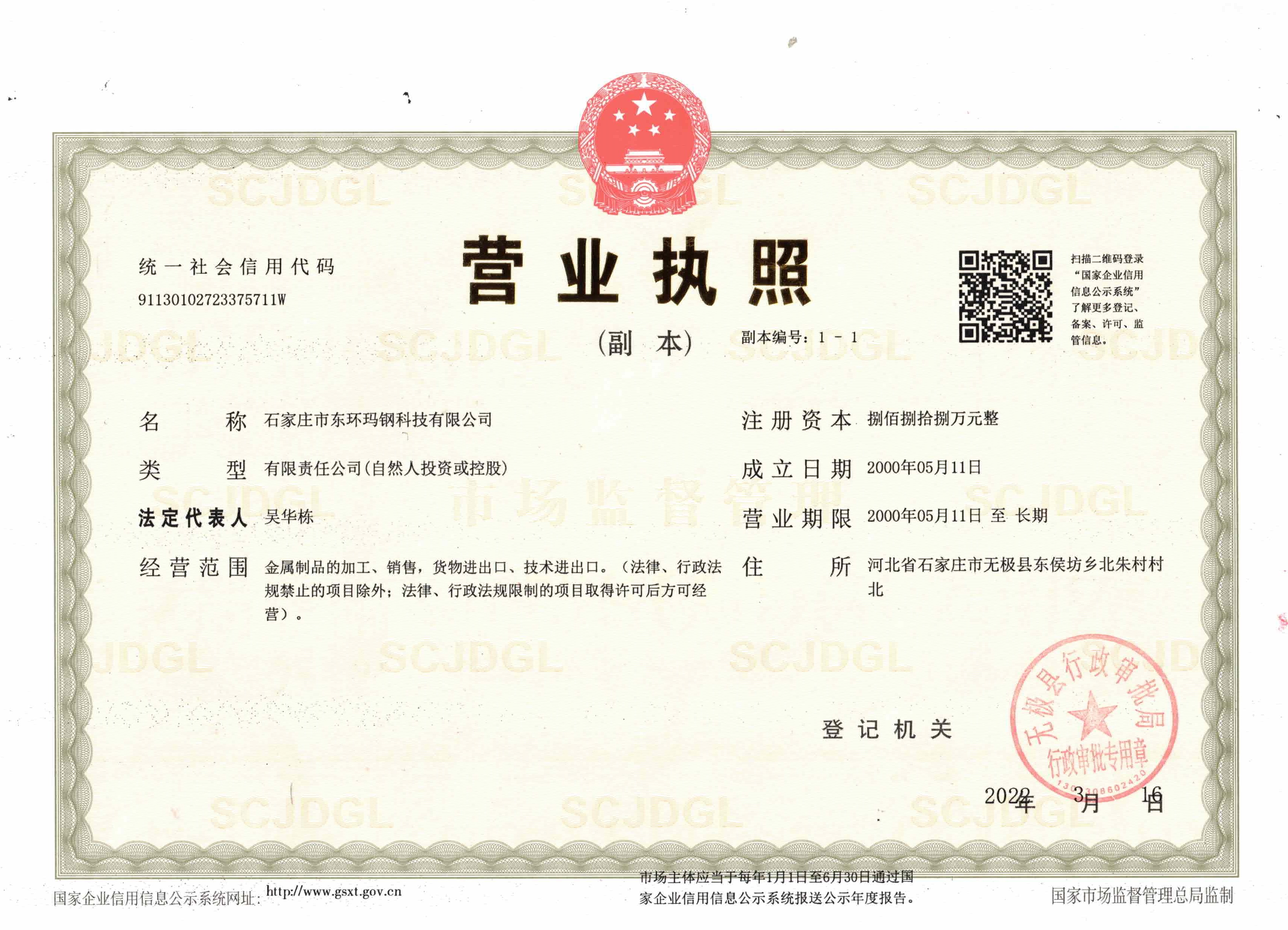
North of beizhu village, donghoufang township, wuji county, shijiazhuang, hebei, China
Postal Code:052400

Mob web

Tiktok