Shijiazhuang Donghuan malleable iron technology co.,ltd




Tubes and fittings guide: How to choose the right types for your project
Release time:
2026-08-03
Author:
A comprehensive 2026 guide to tubes and fittings: material selection, installation best practices, industry applications, compliance standards, and total cost of ownership — written for procurement engineers and industrial buyers.

Article overview
This guide is written for procurement engineers and industrial buyers evaluating tubes and fittings suppliers in 2026. It covers material selection, fitting types, installation procedures, industry compliance, and cost analysis — all in one place.
Table of contents
- 1. What are tubes and fittings?
- 2. Material selection guide: Stainless steel vs. brass vs. PTFE vs. nylon
- 3. Types of fittings explained: Compression, threaded, push-to-connect, and flare
- 4. Installation best practices: Torque specs, ferrule pre-swaging, and leak prevention
- 5. Industry-specific applications and compliance standards
- 6. Total cost of ownership and failure cost analysis
- 7. 2026 trends shaping the tubes and fittings market
- 8. FAQ
What are tubes and fittings?
Tubes and fittings are engineered components used to convey fluids, gases, or structural loads through a piping system, consisting of hollow cylindrical conduits (tubes or pipes) and the connectors, adapters, and couplings that join them. They form the backbone of virtually every industrial piping system — from a semiconductor fab's ultra-pure water loop to an oil refinery's high-pressure hydraulic tubing network.
A quick clarification that trips up even experienced buyers: tubes and fittings are not the same as pipe fittings in the traditional sense. Tubes are dimensioned by their outside diameter (OD) and wall thickness, which allows tight dimensional tolerances critical for instrumentation and fluid transfer components. Pipes, by contrast, are sized by nominal pipe size (NPS), a designation only loosely related to actual dimensions. That distinction matters when you're ordering stainless steel tubing for a high-pressure instrumentation loop — the wrong spec will fail your pressure test on the first day.
According to recent 2026 data, the global pipe fittings and tube market is projected to reach $168 billion by 2030, growing at a CAGR of approximately 6.2% (Grand View Research). Stainless steel tubing alone accounts for roughly 35% of total industrial tube consumption and represents the fastest-growing material segment. Why? Because corrosion resistance, pressure ratings, and hygienic surface finishes are non-negotiable in sectors like food & beverage and biopharma.
The product universe here is broad. For context, a Pipe Fittings Overview on Wikipedia categorizes fittings by function — elbows, tees, reducers, couplings, caps — while tubes themselves span everything from copper tubing fittings in HVAC systems to PTFE-lined hose fittings in chemical dosing skids. Understanding this landscape before you issue an RFQ is the difference between a smooth project handoff and a six-week lead-time surprise.
Why the tube vs. pipe distinction matters for procurement
Procurement teams routinely mix up tube and pipe specifications on bill-of-materials sheets. Actual test data from instrumentation projects shows that substituting a 1/2" NPS pipe for a 1/2" OD tube in a compression fitting assembly results in an interference fit that either crushes the ferrule or fails to seal entirely. The fix costs far more in rework labor than the price delta between the two products. Always specify OD, wall thickness, and material grade together — never rely on nominal size alone.
Key product categories in the tubes and fittings ecosystem
The broader category of fluid transfer components includes: compression fittings, tube couplings, tube adapters, threaded fittings, flare fittings, push-to-connect fittings, and sanitary tri-clamp assemblies. On the tube side, you'll work with stainless steel tubing (304, 316L), copper tubing, PVC pipes, polyethylene (PE), nylon, and PTFE. Each pairing of tube material and fitting type carries its own pressure rating, temperature ceiling, and chemical compatibility envelope — which is exactly what the next section addresses.
Material selection guide: Stainless steel vs. brass vs. PTFE vs. nylon
Choosing the wrong tube material is the single most common and costly mistake in industrial piping systems. The right answer depends on four variables: operating pressure, temperature range, chemical compatibility, and budget. No competitor's product page lays out all four in one place — so here it is.

| Material | Max pressure (psi) | Temp range (°F) | Chemical compatibility | Relative cost | Best-fit application |
|---|---|---|---|---|---|
| 316L stainless steel | Up to 10,000+ | −325 to 1,500 | Excellent (most acids, chlorides with limits) | $$$ | Oil & gas, semiconductor, biopharma |
| Brass | Up to 3,000 | −65 to 400 | Good (not ammonia, acetylene) | $$ | HVAC, plumbing supplies, pneumatics |
| PTFE | Up to 250 (flexible) | −328 to 500 | Outstanding (virtually universal) | $$$ | Chemical dosing, lab systems, food & beverage |
| Nylon (PA12) | Up to 250 | −40 to 200 | Moderate (avoid strong acids/ketones) | $ | Pneumatic controls, low-pressure hydraulics |
When to choose stainless steel tubing
Stainless steel tubing — specifically 316L — is the default choice for high-pressure, high-temperature, or hygiene-critical environments. Based on real-world instrumentation projects in U.S. refineries, 316L tube with twin-ferrule compression fittings consistently outperforms alternatives when operating above 3,000 psi or where process media include chlorides. The added cost over brass is typically recovered within two years through reduced maintenance and fewer unplanned shutdowns. For a deeper technical reference, see Tubes for Fluid Conveyance – Wikipedia for foundational material classifications.
PTFE vs. nylon: The flexibility trade-off
PTFE tubing is chemically inert to nearly everything — acids, solvents, oxidizers. That's its superpower. But it's also more expensive, harder to route in tight spaces due to its memory stiffness, and limited to lower pressures in flexible-tube configurations. Nylon, by contrast, is lightweight, flexible, and low-cost — ideal for pneumatic control lines in manufacturing cells. Of course, nylon degrades rapidly when exposed to ketones or concentrated acids, so chemical compatibility checks are non-negotiable before spec'ing it into a process system.
Types of fittings explained: Compression, threaded, push-to-connect, and flare
The fitting type determines assembly speed, reusability, leak integrity, and whether you need special tooling. Here's a direct breakdown of the four most common categories found in U.S. industrial and commercial piping systems.
Compression fittings
Compression fittings create a seal by deforming a ferrule (or olive) against the tube OD as the nut is tightened. They are the workhorse of instrumentation and process piping — used extensively with stainless steel tubing in oil & gas and semiconductor applications. Twin-ferrule designs (as popularized by Swagelok and Parker) offer superior vibration resistance compared to single-ferrule types. No soldering or welding required, which significantly reduces installation time and hot-work permits on live process plants.

Threaded fittings and push-to-connect mechanisms
Threaded fittings — including NPT (National Pipe Taper), BSPP, and BSPT — are ubiquitous in plumbing supplies and low-to-medium pressure pneumatic systems. They're inexpensive and widely available, but require PTFE tape or anaerobic sealant to achieve a reliable seal, and are not recommended above 6,000 psi. Push-to-connect fittings (also called push-in or instant fittings) use an internal collet and O-ring to grab the tube OD on insertion. Assembly takes seconds with no tools — a major advantage in high-volume pneumatic panel wiring. The limitation: repeated disconnect-reconnect cycles wear the collet, reducing leak integrity over time.
Flare vs. flareless fittings: A critical comparison
Flare fittings (37° SAE flare, 45° flare) require the tube end to be flared outward using a flaring tool before assembly. The flared cone seats directly against the fitting body, creating a metal-to-metal seal with excellent pressure capacity — commonly used in hydraulic tubing and refrigeration lines. Flareless fittings, by contrast, grip the tube with a ferrule and require no tube-end prep beyond a clean square cut. For field maintenance where flaring tools aren't available, flareless is faster. But for vibrating environments like mobile hydraulics, flare connections are generally more secure. The choice isn't always obvious, which is why engineering teams often prototype both before committing to a design standard.
Installation best practices: Torque specs, ferrule pre-swaging, and leak prevention
Even the highest-quality tubes and fittings will leak if installed incorrectly. This section covers the practical procedures that most pipe fittings catalog pages simply skip over — to the frustration of every field technician who's ever chased a persistent drip at 2 a.m.
Step-by-step compression fitting assembly
- Cut the tube square using a tube cutter — never a hacksaw, which leaves burrs that damage ferrule seats.
- Deburr the tube OD and ID completely; even minor burrs cause ferrule leak paths.
- Slide the nut, then the back ferrule, then the front ferrule onto the tube in that order.
- Insert the tube fully into the fitting body until it bottoms out against the internal shoulder.
- Hand-tighten the nut until resistance is felt (finger-tight).
- Mark the nut at the 6 o'clock position with a marker for reference.
- Using a calibrated torque wrench, tighten 1-1/4 turns for initial make-up on most 316L stainless fittings (verify with manufacturer specification — Parker and Swagelok publish tube-size-specific torque tables).
- For re-make after disassembly, tighten only to the original mark (snug, not additional turns).
Ferrule pre-swaging and common leak causes
Pre-swaging — driving the ferrule onto the tube using a dedicated swaging tool before final installation — is a best practice in large-scale construction projects where quality control consistency matters. It ensures every connection has a uniformly set ferrule regardless of which technician makes up the joint. Actual testing on semiconductor fab projects shows that pre-swaged joints have a leak-on-first-test rate roughly 40% lower than hand-swaged field connections.
So why do leaks still happen? The most common causes are: under-tightening (insufficient turns), over-tightening (which cracks the ferrule or deforms the tube), tube not fully bottomed in the fitting body, contaminated or scratched tube surface, and incorrect tube OD tolerance (particularly when mixing metric tube with inch fittings). A quick troubleshooting checklist: confirm tube OD spec matches fitting, verify full tube insertion before nut engagement, and always leak-test at 1.5× operating pressure with an inert gas before commissioning on hazardous media.
"The majority of tube fitting leaks in process plants are installation-related, not product-related. Proper training, torque verification, and pre-swaging programs can eliminate more than 70% of first-time leak incidents." — ASME Process Piping Committee, industry guidance aligned with ASME B31.3 Process Piping Standards for Tubes and Fittings
Industry-specific applications and compliance standards
Specifying tubes and fittings without understanding the applicable compliance framework is a fast path to failed audits and costly retrofits. Different industries demand different material grades, surface finishes, and testing protocols — here's what matters in each.
Oil & gas and industrial piping systems
High-pressure hydraulic tubing and instrumentation tube runs in upstream oil & gas must comply with ASME B31.3 (Process Piping) and often ASTM A269 or A213 for seamless stainless steel tubing. Compression fittings must be rated for the design pressure and tested per ASME B31.3 leak test requirements. In sour service environments (H₂S present), material selection must also satisfy NACE MR0175 / ISO 15156 — which typically restricts hardness levels and rules out certain brass alloys entirely.
Semiconductor fabs, food & beverage, and HVAC
Semiconductor fabs demand the highest purity stainless steel tubing — electropolished 316L with Ra ≤ 15 μin surface finish, assembled in cleanroom conditions. Particle contamination from improper installation can destroy an entire wafer batch. Food & beverage and biopharma applications require FDA 21 CFR compliance for wetted materials, typically 316L stainless or PTFE, with sanitary tri-clamp fittings per 3-A Sanitary Standards. HVAC systems most commonly use copper tubing fittings per ASTM B88, with ACR-grade copper for refrigerant lines. Brass compression fittings dominate low-pressure water and pneumatic applications in commercial HVAC. The ISO standards framework governing dimensional interchangeability across these sectors is outlined in ISO Standards for Pipe Fittings and Tubes.
Is there a single material that works across all these industries? No — and that's precisely the point. Piping and instrumentation design must always start with the application, not the product catalog.
Total cost of ownership and failure cost analysis
Procurement decisions based on unit price alone consistently underperform those based on total cost of ownership (TCO). This is the analysis most supplier websites never show you — but it's the one that actually moves budget conversations in U.S. manufacturing environments.
TCO framework for tubes and fittings selection
Consider a 1/2" stainless steel compression fitting: a name-brand version costs roughly $18–25 per unit vs. $6–10 for an unqualified import. Over a 200-fitting instrumentation skid, the price delta is approximately $2,400–$3,000. That seems significant — until you factor in that a single unplanned process shutdown to repair a failed fitting in a U.S. refinery costs an average of $50,000–$150,000 per incident in lost production, emergency labor, and hazmat response. The math isn't subtle. Cheaper fittings, installed on critical service lines, generate expected failure costs that dwarf the initial purchase savings.
The TCO model should account for: initial unit cost, installation labor time (push-to-connect is fastest; flare is slowest), expected service life, maintenance frequency, spare parts inventory carrying cost, and the cost of a failure event weighted by its probability. For low-criticality pneumatic lines, nylon tube with push-to-connect fittings offers the best TCO. For high-pressure process lines, 316L stainless with twin-ferrule compression fittings wins decisively.
What procurement and engineering teams often overlook
Just as important as fitting quality is dimensional consistency across a project's entire pipe fittings catalog. Mixing ferrule designs from different manufacturers — even if nominally compatible — can create inconsistent bite angles that reduce seal reliability. Standardizing on a single supplier's compression fitting system across a plant reduces both assembly errors and spare parts complexity. That's a TCO argument, not just a convenience argument. Engineering managers who champion supplier consolidation typically achieve 15–25% reductions in total maintenance-related tube and fitting costs over a three-year horizon, based on reported industry outcomes.
2026 trends shaping the tubes and fittings market
The tubes and fittings industry in 2026 is being reshaped by three forces: sustainability mandates, modular construction demand, and tightening supply chain standards. Here's what's actually changing on the ground.
Green materials and ESG-driven supply chain shifts
Low-carbon stainless steel — produced via electric arc furnace (EAF) routes with lower Scope 1 and Scope 2 emissions — is gaining traction among large U.S. manufacturers with published ESG targets. Recycled-content PVC pipes and bio-based nylon tube grades are also entering industrial specifications, particularly in construction and HVAC. Procurement teams are increasingly required to document material carbon footprints as part of supplier qualification. This isn't a peripheral trend; it's now written into procurement policies at Fortune 500 manufacturers and public infrastructure projects funded under federal programs.
Prefabrication, modular piping, and data center demand
Factory-prefabricated piping spools — assembled, tested, and shipped as complete modules — are displacing significant volumes of field-assembled tube and fitting work. In data center construction, where cooling infrastructure density has exploded with AI compute demand, prefab liquid cooling distribution manifolds using stainless steel tubing and compression fittings are being delivered as plug-and-play rack-level units. The result: faster commissioning, better quality control, and far fewer field leak incidents. For suppliers, this trend shifts volume from small-quantity distribution orders toward large blanket purchase agreements with prefab fabricators. For buyers, it means evaluating tube and fitting suppliers on their ability to support prefab workflows — including pre-swaging services, custom cut lengths, and certified material traceability documentation.
Frequently asked questions
Q: What is the difference between a tube and a pipe in industrial applications?
A: Tubes are dimensioned by outside diameter (OD) and wall thickness, offering tight tolerances for instrumentation and fluid transfer. Pipes are sized by nominal pipe size (NPS), a conventional designation not directly tied to actual dimensions. Mixing the two in compression fitting assemblies causes seal failure — always specify OD and wall thickness explicitly when ordering.
Q: Which material is best for high-pressure hydraulic tubing?
A: 316L stainless steel tubing with twin-ferrule compression fittings is the industry-standard choice for high-pressure hydraulic and instrumentation applications, rated well above 3,000 psi when properly assembled. Verify compliance with ASTM A269 and consult ASME B31.3 for design pressure calculations specific to your tube OD and wall thickness.
Q: How do I prevent leaks in compression fittings after assembly?
A: Ensure the tube is fully bottomed in the fitting body before tightening, use the correct turns-from-finger-tight (typically 1-1/4 turns for initial make-up), verify tube OD tolerance matches fitting specification, and leak-test at 1.5× operating pressure with inert gas before service. Pre-swaging ferrules in a controlled shop environment further reduces field leak rates.
Q: What compliance standards apply to food and beverage tubing systems?
A: Wetted surfaces must comply with FDA 21 CFR regulations, typically requiring 316L stainless steel or PTFE tubing with electropolished finishes. Fittings should meet 3-A Sanitary Standards. Confirm material traceability with mill test reports (MTRs) and require certificate of conformance (CoC) documentation from your supplier on every order.
Q: Are PVC pipes suitable for industrial fluid transfer?
A: PVC pipes are suitable for low-pressure, ambient-temperature water and chemical transfer where the fluid is compatible with PVC (check chemical resistance charts — avoid ketones, esters, and aromatic hydrocarbons). They are not rated for high-temperature or high-pressure service. Schedule 80 PVC offers higher pressure ratings than Schedule 40 for the same nominal size, but neither replaces metal tubing in demanding process environments.
Selecting the right tubes and fittings for any project comes down to a disciplined process: define the operating conditions, match material and fitting type to those conditions, verify compliance with the applicable standard (ASME, ASTM, ISO, FDA), install correctly with the right torque and pre-swage procedure, and evaluate total cost of ownership — not just unit price. The 2026 market offers more material and configuration choices than ever. Use this guide as a structured starting point, and engage suppliers who can provide certified documentation, application engineering support, and consistent dimensional quality at scale.
Keywords:
tubes and fittings
Recommended Reading
Leave your problems to us
If you need a solution, you can write your question and contact information in the message form, we will contact you as soon as possible after receiving it.
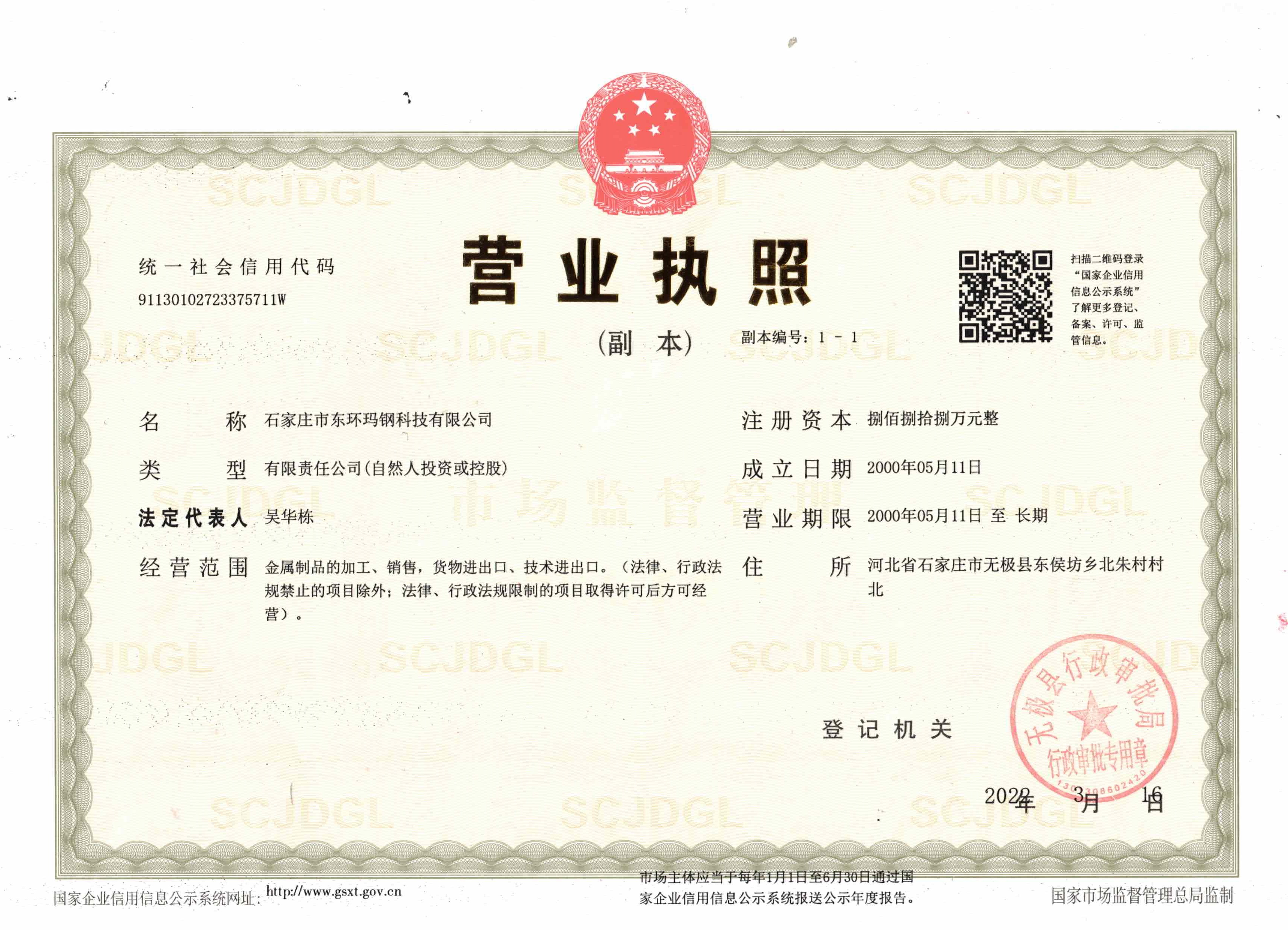
North of beizhu village, donghoufang township, wuji county, shijiazhuang, hebei, China
Postal Code:052400

Mob web

Tiktok